Home Insulation & Energy Repairs 2026: Weatherization (WAP)
Last updated:
Apply on the official site →Paying to heat a drafty house is a bill you can lower permanently, not just this month. The Weatherization Assistance Program (WAP) pays for insulation, air sealing, and heating-system work in homes of people with limited income. As USA.gov puts it: “For home improvements that save money on energy, you may qualify for help through the Weatherization Assistance Program (WAP).”
This is a federal government program, run by the U.S. Department of Energy and delivered by state and local agencies. There is no national application and no fee to apply.
What Is the Weatherization Assistance Program?
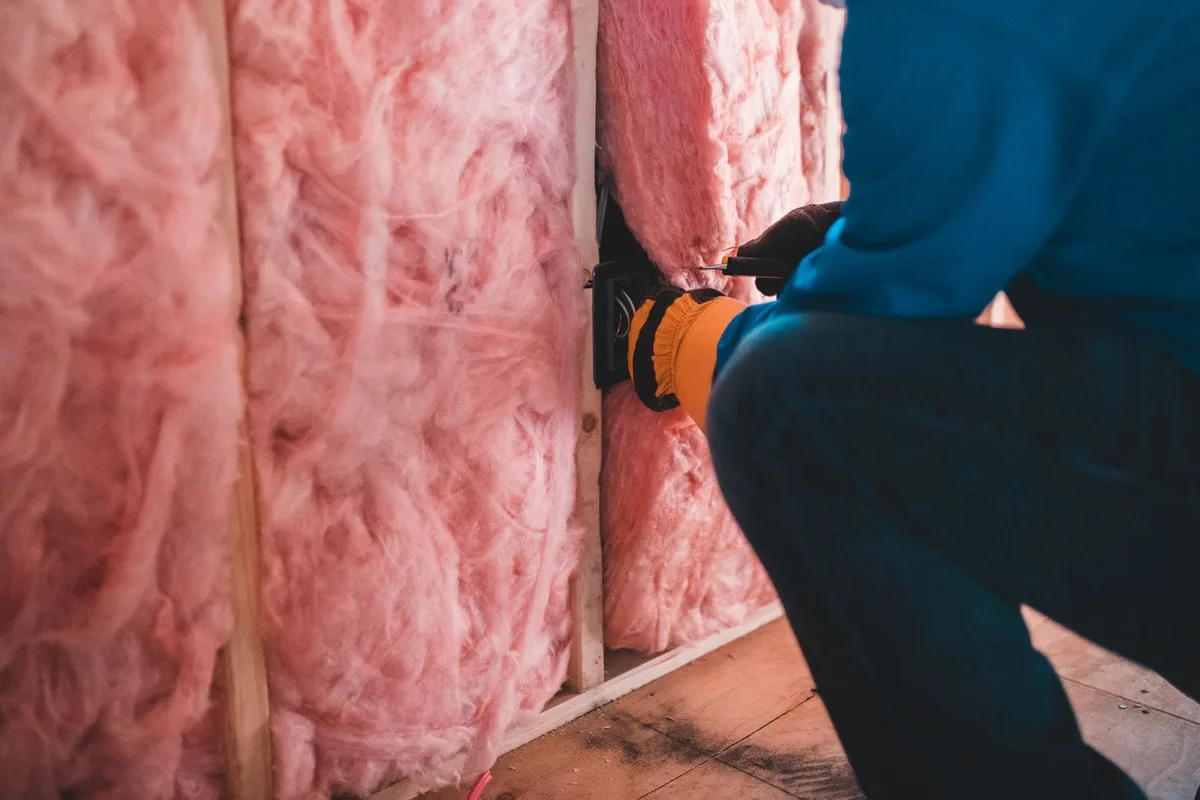
WAP “reduces energy costs for low-income households by increasing the energy efficiency of their homes, while ensuring their health and safety,” according to the U.S. Department of Energy.
It is not a new or small program. DOE reports that WAP has served more than 7.2 million families since 1976, weatherizes about 32,000 homes a year, and supports 8,500 jobs. Households that get the work done save “$372 or more every year” on energy, per the same DOE page.
One important thing to understand up front: WAP does not send you money. Your local provider sends trained workers and contractors to do work on the home.
What Weatherization Actually Pays For
The exact list is set by your state and by what the energy audit finds in your home. New York State Homes and Community Renewal lists the typical measures as:
- Sealing cracks and holes to stop heat loss
- Adding attic or wall insulation
- Repairing or replacing heating systems
- Installing efficient lighting and appliances
Pennsylvania’s program describes the same core work — blower-door-guided air sealing, insulation, heating system modifications, minor repairs, and energy-conservation education for the household — and reports an average expenditure of $8,547 per household. That is spent on your home, not billed to you.
Who Qualifies for Weatherization in 2026
The Department of Energy sets the floor:
“Households at or below 200% of the poverty income guidelines or that receive Supplemental Security Income are considered under DOE guidelines as eligible for weatherization services. In addition, each state or territory may elect to use the U.S. Department of Health & Human Services’ (HHS) Low-Income Home Energy Assistance Program (LIHEAP) eligibility criteria of 60% of state-median income.”
That is the plain-language version. The regulation behind it, 10 CFR 440.22, is worth reading side by side with it, because on two of the three routes the rule is wider than the website:
| Route | What DOE’s page says | What 10 CFR 440.22(a) says |
|---|---|---|
| Income | ”at or below 200% of the poverty income guidelines” | Same — income “at or below 200 percent of the poverty level” |
| Benefits | households “that receive Supplemental Security Income” | a household “which contains a member who has received cash assistance payments under Title IV or XVI of the Social Security Act or applicable State or local law at any time during the 12-month period preceding the determination” |
| LIHEAP option | the state “may elect to use… LIHEAP eligibility criteria of 60% of state-median income” | the state may elect the LIHEAP basis “provided that such basis is at least 200 percent of the poverty level” |
Three practical consequences:
- Title IV means TANF, not only SSI. Title XVI of the Social Security Act is SSI; Title IV is the cash assistance now delivered as TANF. Both count.
- It is past tense, and the window is twelve months. Cash assistance received “at any time during the 12-month period preceding” the decision qualifies the home. Someone whose SSI or TANF stopped eight months ago is still inside the rule as written.
- State and local cash assistance counts too. The phrase “or applicable State or local law” means general assistance or state supplement programs can be the qualifying payment, not just the federal ones.
Ask your provider about these three lines specifically if a screener has told you that you do not qualify because you are “not on SSI now.” The screening question and the regulation are not the same question.
If your provider tells you your state uses the LIHEAP option instead, our table of LIHEAP income limits by state shows each state’s LIHEAP standard — 60% of state median income or a percentage of poverty — so you can see which number your state is working from.
New York is a real example of a state using the LIHEAP-style limit. Its applicant page now says you “may qualify if your household income is at or below 60% of the state median income” — not 200% of poverty. (The FAQ further down the same page still says “at or below federal low-income guidelines,” so ask your provider which number it applies.)
Some states also treat other benefits as automatic proof. In New York, if anyone in your home receives SSI, Public Assistance, or HEAP (the state’s LIHEAP program), the household is automatically income-eligible.
200% of the poverty guidelines, 2026
The 2026 HHS poverty guidelines were published in the Federal Register on January 15, 2026. The table below doubles them. These are our calculations from the official guidelines, for the 48 contiguous states and DC — Alaska and Hawaii have separate, higher guidelines, and your state may use the 60%-of-state-median-income rule instead. Always check your state’s published limit. One footnote from HHS: because of the federal government shutdown in October 2025, the 2026 guidelines were calculated from 11 months of 2025 price data (October was never published), compared with all 12 months of 2024.
| Household size | 100% of 2026 guidelines | 200% (WAP income ceiling) |
|---|---|---|
| 1 | $15,960 | $31,920 |
| 2 | $21,640 | $43,280 |
| 3 | $27,320 | $54,640 |
| 4 | $33,000 | $66,000 |
| 5 | $38,680 | $77,360 |
| 6 | $44,360 | $88,720 |
| 7 | $50,040 | $100,080 |
| 8 | $55,720 | $111,440 |
| Each additional person | +$5,680 | +$11,360 |
Source: HHS ASPE 2026 Poverty Guidelines. Alaska (1 person: $19,950) and Hawaii (1 person: $18,360) use higher figures.
Who gets served first
Being eligible and being scheduled are two different things. DOE states: “Priority is given to the elderly, families with one or more members with a disability, families with children, high-energy users, or households with a high energy burden.” That is not a courtesy — 10 CFR 440.16 requires every state to publish and implement procedures ensuring priority for those same five groups before it spends any grant money. Say so when you apply if any of them describe your household.
Renters Can Apply Too
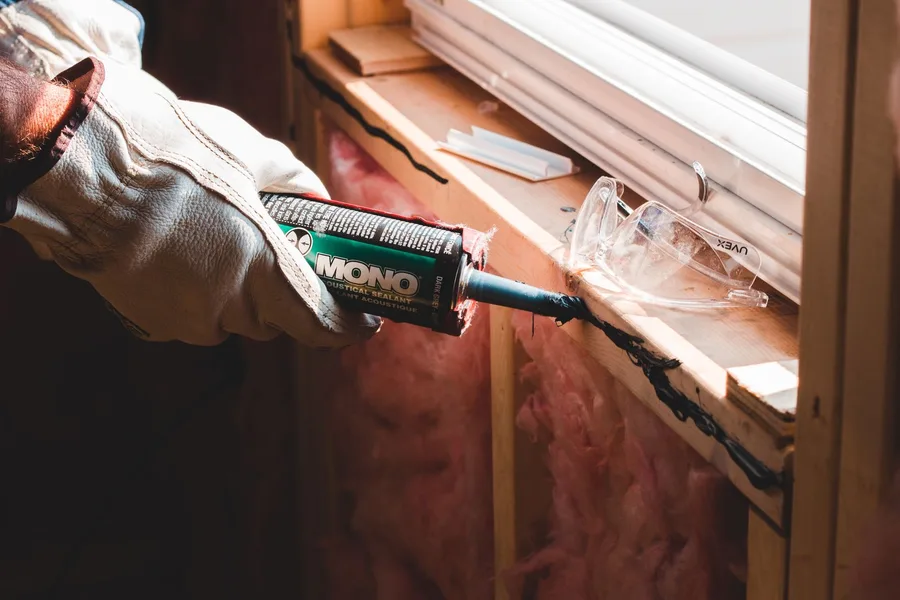
This surprises people. Per DOE, both homeowners and renters are eligible to apply. If you rent, “the weatherization provider will work with you and your landlord to receive permission before weatherization work can begin.”
The federal rule sets out what has to be true before a rental building is done, and two of those conditions are for your protection rather than the landlord’s:
- The building has to be mostly eligible households. At least 66 percent of the units — 50 percent in duplexes and four-unit buildings, and in certain larger multi-family buildings — must be eligible units, or be on track to become eligible within 180 days under a rehabilitation program. This is why a provider sometimes says no to a building even though your own household clearly qualifies.
- The benefits have to reach the tenants. States must have procedures ensuring the benefits “accrue primarily to the low-income tenants residing in such units,” including where tenants pay for energy through the rent.
- Your rent is protected afterward. For a reasonable period after the work is finished, tenants in a weatherized unit “will not be subjected to rent increases unless those increases are demonstrably related to matters other than the weatherization work performed.” And the burden of proof is on the landlord: states must set up a complaint process in which owners, responding to a tenant complaint, “shall demonstrate that the rent increase concerned is related to matters other than the weatherization work performed.” The rule also says no “undue or excessive enhancement” of the property’s value may occur.
If the reason you have not applied is that you expect the landlord to raise your rent afterward, ask your state’s weatherization office how to file a complaint under that paragraph. It exists.
New York spells out the money side: homeowners and renters pay no cost for services, while owners of rental buildings must contribute to the cost of improvements on their properties. That is allowed by the federal rule, which lets a state require financial participation from owners of multifamily buildings “when feasible.” Rules on the landlord contribution vary by state, so ask your local provider.
And if you are living in a shelter: the regulation says plainly that “a State may weatherize shelters,” counting each 800 square feet or each floor as a dwelling unit. Shelters are not outside this program.
How to Apply for Weatherization, Step by Step
DOE’s application process has four steps:
- Determine your eligibility. Check the income rules above against your state’s published limit.
- Identify your local weatherization provider. There is no federal application. Start from DOE’s how to apply page and use the map to open your state, tribal, or territorial administrator’s site. Most states publish a provider list organized by county with an address, phone number, or website; some offer an online application.
- Complete the application with that provider. You will be asked for proof of income for the prior year, such as pay stubs or social security payments. Once income is verified and you are eligible, your name goes on a waitlist.
- Prepare for the services. Your provider schedules the work when your turn comes.
In New York, applicants can use the state’s provider directory or call the WAP Central Office at 518-474-5700.
What Happens at the Energy Audit
Before any work is chosen, an energy auditor assesses the home. Per DOE, that visit includes a computerized assessment, a review of your energy bills, blower-door testing to find air leaks, and an inspection of your equipment and the areas of the home where improvements or safety issues may exist. The auditor produces a recommended scope of work, and a final inspection confirms the work was completed.
The audit is why nobody can tell you in advance exactly what your home will get. The measures are chosen from what will actually cut your energy use — and health and safety problems the audit turns up are part of the program’s job, not an add-on.
Watch Out: Nobody Charges You to Apply
WAP is delivered by state-designated agencies and local providers. There is no application fee, and no legitimate provider asks for payment to put you on the list. If a company offers to “get you approved” for a fee, or asks for your bank details to apply, walk away and go through your state administrator’s provider list instead.
While You Wait, Lower This Month’s Bill
Weatherization is a long-game fix — the waitlist is real. These help sooner:
- LIHEAP helps pay heating and cooling bills, including energy crises like a shutoff notice. It is the companion program to weatherization, and in many states the same eligibility opens both.
- Dial 211 to reach a local specialist who knows which bill-assistance programs are funded in your area right now.
- Lifeline takes up to $9.25 a month off a phone or internet bill.
- If the house needs repairs that go beyond energy work, those are separate programs: USDA Section 504 home repair loans and grants (the grant side is for homeowners age 62 or older) and the nonprofit Rebuilding Together.
- If groceries are tight too, see our food stamps (SNAP) guide for the FY 2026 income limits.
How We Checked This
The program facts on this page — the savings figure, the homes-served counts, the four application steps, the audit description, the priority groups — come from the U.S. Department of Energy’s own pages at energy.gov, and were re-checked there. The 200% figures in the table are our own arithmetic on the 2026 HHS poverty guidelines, and we say so where the table appears. The state-level detail is attributed to the New York and Pennsylvania agencies it comes from, because those rules are theirs and not federal.
Then we did the thing that changed this guide: we read the regulation — the current eCFR text of 10 CFR 440.22 and 10 CFR 440.16, rather than the annually printed edition of the CFR, which can lag behind amendments.
Where the official summary and the regulation diverge. DOE’s how-to-apply page compresses the benefit route to households “that receive Supplemental Security Income.” The rule is materially wider than that sentence. A dwelling is eligible if it “contains a member who has received cash assistance payments under Title IV or XVI of the Social Security Act or applicable State or local law at any time during the 12-month period preceding the determination of eligibility.” Title IV is TANF, not just SSI; the tense is past; the window is a year; and state or local cash assistance counts. A household screened out because nobody is on SSI today may still be eligible under the regulation as written. We rewrote the eligibility section and the FAQ to match the rule instead of the summary.
Two more things we found in the same section and added above, because they answer questions renters actually have. First, the LIHEAP alternative is not a loophole for a stingier state limit: the state may use it “provided that such basis is at least 200 percent of the poverty level.” Second — and this is the paragraph nobody quotes — federal rules require states to protect weatherized tenants from rent increases tied to the work, and to run a complaint procedure in which the landlord “shall demonstrate that the rent increase concerned is related to matters other than the weatherization work performed.” The regulation also allows states to weatherize shelters.
We did not find a federal source publishing a typical waiting time, and we are not going to invent one; the guide says to ask your provider, and that remains the honest answer. If your state agency tells you something different from this page, it is right about your case — please tell us so we can re-check the guide.
Weatherization income limits, waiting times, landlord-contribution rules, and the exact measures installed are set state by state within the federal rules above, and the poverty guidelines change every January. DOE, ASPE, hcr.ny.gov and dced.pa.gov were verified on July 30, 2026; the current eCFR text of 10 CFR 440.16 and 440.22 was read on August 30, 2026.
Re-checked on October 9, 2026. We re-read DOE’s program and how-to-apply pages (the $372 savings, 32,000 homes a year, 8,500 jobs, 7.2 million families and the SSI sentence are unchanged), the ASPE 2026 guidelines (all figures unchanged, including Alaska $19,950 and Hawaii $18,360 for one person), Pennsylvania’s page ($8,547 average unchanged) and the eCFR text of 10 CFR 440.16 and 440.22 (title 10 up to date as of October 7, 2026; part 440 has no change since 2016, and every quote above matches). One change: New York’s applicant page now states its income test as 60% of state median income, which we added to the eligibility section. We also added HHS’s note about how the 2026 guidelines were calculated.
This is general information, not legal or financial advice.
Frequently Asked Questions
What is the income limit for weatherization assistance in 2026?
Under 10 CFR 440.22, a home is eligible if the household's income is at or below 200% of the poverty level. Using the 2026 HHS poverty guidelines for the 48 contiguous states and DC, that is about $31,920 a year for one person and $66,000 for a household of four. The regulation also has a second, wider door than DOE's plain-language page describes: the home qualifies if it contains a member who has received cash assistance under Title IV or Title XVI of the Social Security Act — TANF or SSI — "or applicable State or local law" at any time during the 12 months before the eligibility decision. Past tense, and it counts state and local cash assistance too. A state may also elect to use its LIHEAP eligibility criteria, but only where that basis is itself at least 200% of the poverty level.
Is weatherization really free?
For the household, usually yes — but the rule is set by your state, not by the federal program. New York State, for example, states plainly that there is 'no cost for services' for homeowners and renters, while owners of rental buildings must contribute to the cost of improvements on their properties. The federal DOE pages do not state a household charge anywhere. Ask your local provider to confirm before work starts, and never pay a fee to apply.
Can renters get weatherization assistance?
Yes. The Department of Energy says both homeowners and renters are eligible to apply, and 10 CFR 440.22 sets out how: the provider needs the written permission of the owner, and in a multi-unit building at least 66% of the units — 50% in duplexes and four-unit buildings — must be eligible units. The same regulation protects you afterward. For a reasonable period after the work is done, tenants in a weatherized unit "will not be subjected to rent increases unless those increases are demonstrably related to matters other than the weatherization work performed," and states must run a complaint procedure where the landlord has to show any increase was for some other reason. If you have been holding off because you are afraid the improvements will raise your rent, that is the paragraph to ask your provider about.
How long does the weatherization waitlist take?
The Department of Energy says that once your income is verified, your name is placed on a waitlist — but no official federal page publishes a typical wait time, and it depends on your state's funding and how many households are ahead of you. Ask your local provider for their current estimate when you apply, and mention it if someone in the home is elderly, has a disability, or if you have a very high energy bill, because those households get priority.
Can I get LIHEAP and weatherization at the same time?
They are two different programs and you can pursue both. LIHEAP (run by HHS) helps pay heating and cooling bills; weatherization (run by DOE) pays to make the home itself use less energy. They are also connected on the eligibility side: 10 CFR 440.22 lets a state elect LIHEAP eligibility as the basis for weatherization, so long as that basis is at least 200% of the poverty level — and in New York, someone in the home receiving HEAP, the state's LIHEAP program, makes the household automatically income-eligible.
Sources
- eCFR — 10 CFR 440.22, Eligible dwelling units (current text; a dwelling is eligible if occupied by a family unit "(1) Whose income is at or below 200 percent of the poverty level…, (2) Which contains a member who has received cash assistance payments under Title IV or XVI of the Social Security Act or applicable State or local law at any time during the 12-month period preceding the determination of eligibility…; or (3) If the State elects, is eligible for assistance under the Low-Income Home Energy Assistance Act of 1981, provided that such basis is at least 200 percent of the poverty level"; rental buildings require "the written permission of the owner or his agent" and that "Not less than 66 percent (50 percent for duplexes and four-unit buildings…)" of units be eligible; tenants "will not be subjected to rent increases unless those increases are demonstrably related to matters other than the weatherization work performed", enforced "through procedures established by the State by which tenants may file complaints"; "A State may weatherize shelters")
- eCFR — 10 CFR 440.16, Minimum program requirements ("Priority is given to identifying and providing weatherization assistance to: (1) Elderly persons; (2) Persons with disabilities; (3) Families with children; (4) High residential energy users; and (5) Households with a high energy burden"; "The benefits of weatherization to occupants of rental units are protected in accordance with § 440.22(b)(3)")
- U.S. Department of Energy — Weatherization Assistance Program (program scope, homes served, average savings)
- U.S. Department of Energy — How to Apply for Weatherization Assistance (income rules, priority groups, 4 steps, energy audit)
- HHS ASPE — 2026 Poverty Guidelines (basis for the 200% figures)
- New York State Homes and Community Renewal — Weatherization Applicants (services list, no cost to homeowners and renters, automatic eligibility)
- Pennsylvania DCED — Weatherization Assistance Program (200% FPL rule, average expenditure per household)
- USA.gov — Help with energy bills (LIHEAP and WAP)
Keep reading
- California CARE Program 2026: Income Limits & How to Apply CARE takes 30-35% off a California electric bill — and a one-person household gets the same $43,280 income limit as a two-person household Read guide →
- Help Paying Bills for Veterans 2026: VFW vs American Legion The VFW's $2,500 bill grant is for active-duty members only — and it made 13 grants in fiscal year 2025 Read guide →
- Can They Shut Off My Heat in Winter? 2026–27 State Rules 28 states limit winter shutoffs by date — but the bill keeps growing. Minnesota's season started October 1 Read guide →
This is general information, not legal or financial advice.