Home Repair Help 2026: Rebuilding Together & Who Qualifies
Last updated:
Apply on the official site →If your roof leaks, your furnace quit, or you cannot get into your own bathroom safely, the repair estimate is usually the end of the conversation. Rebuilding Together is a national network of local nonprofits whose entire purpose is to do those repairs for homeowners who cannot pay for them.
Note: Rebuilding Together is a nonprofit organization, not a government program. The national office does not repair homes itself. Your local affiliate does the work, sets the eligibility rules, and receives your application.
What Rebuilding Together Is
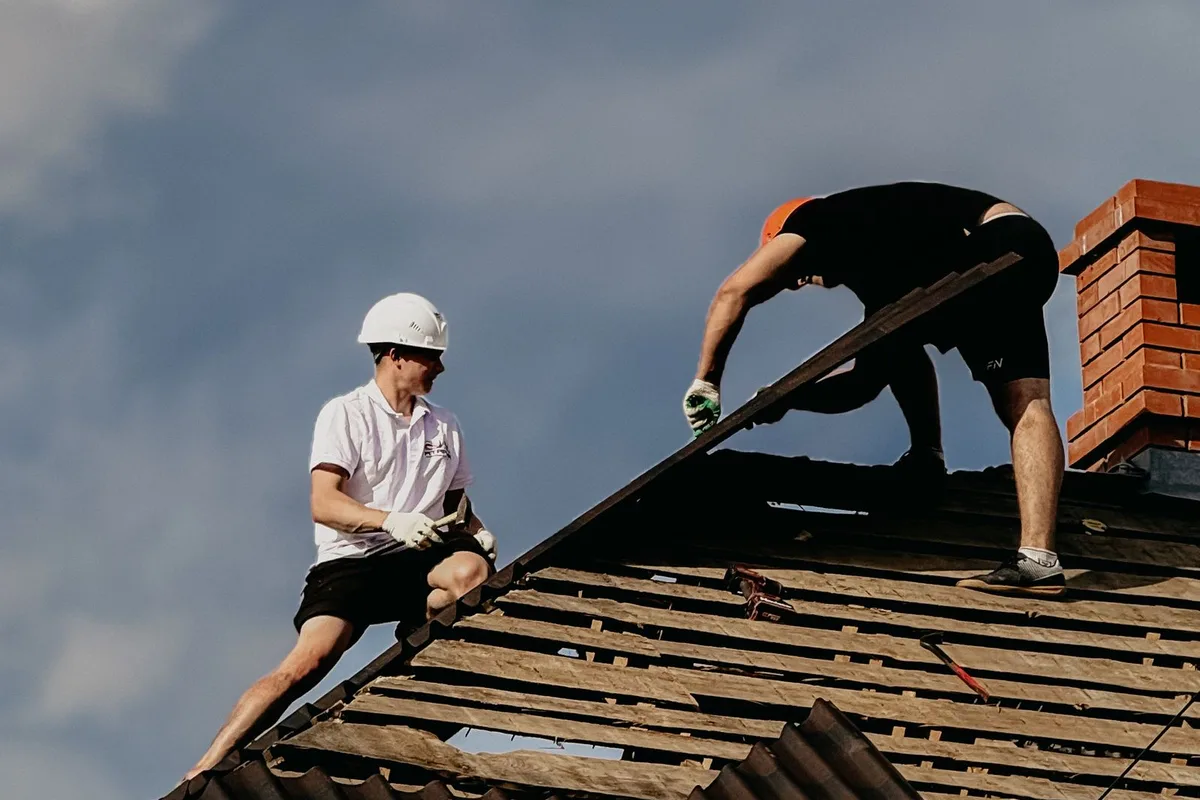
Rebuilding Together’s tagline is “Repairing homes, revitalizing communities, rebuilding lives.” Per its FAQ, the network has more than 100 affiliates across the country, operating in 38 states and the District of Columbia.
That number matters in both directions. It means there is probably an affiliate within reach of most metro areas — and it means 12 states have none. This is not a program that covers every ZIP code, so the first step is checking, not applying.
Who Qualifies
Two filters, and the second one is the one that decides your case.
The national guideline. The FAQ says income eligibility is typically at or below 80% of the local AMI (area median income), and that “most of the neighbors we serve are veterans, people with disabilities, older adults or families with children.”
Your affiliate’s actual rules. The FAQ is explicit that requirements vary by affiliate. A real example — Rebuilding Together Houston — shows how much they can vary:
- 50% or lower of area median income for its community revitalization program
- 80% or lower of area median income for its veterans program
- No age requirement, though the affiliate notes many people it serves are seniors
- You must own and live in the home full-time and be listed on the deed
- You must not own more than one property
- You must be current on property taxes, or have an official payment agreement with the county tax office
So “80% AMI” is a starting expectation, not a promise. Ask your affiliate for its own income table before you gather documents.
If You Rent
You are not automatically excluded. The national FAQ says that “while most Rebuilding Together affiliates focus specifically on providing home repair help for those who own their homes, some affiliates do offer assistance to renters.” Ask.
What They Actually Repair
From the FAQ, common repairs include:
- Bathroom modifications, such as grab bars
- Roof repairs
- Wheelchair ramp installation
- HVAC system repairs — heating and cooling
- Replacing windows and doors
- Mold remediation
- Interior and exterior painting
- Yard maintenance
- Fire safety prevention, such as smoke alarm installation
The pattern is safety, accessibility, and habitability. This is not a remodeling program, and asking for a kitchen upgrade will not get you far.
The Four National Programs
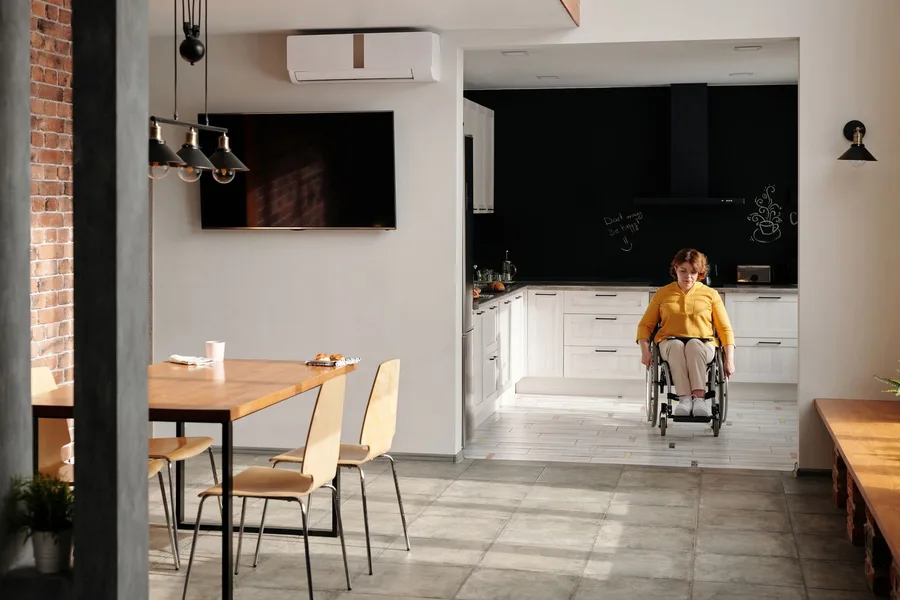
Affiliates deliver the work through four program lines. Knowing the name that fits your situation helps you ask the right question on the phone:
| Program | Who it is built for |
|---|---|
| Safe at Home | Home modifications for low-income older adults and people with disabilities — accessibility, fall reduction, aging in place. Rebuilding Together says Safe at Home “serves veterans and their families through Veterans at Home,” which provides modifications and repairs to veterans and their families — ask for Veterans at Home by name, but understand it sits inside Safe at Home |
| She Builds | Critical repairs for women-headed households and women-focused community spaces |
| Disaster Readiness and Recovery | Mitigation, preparedness, response and long-term recovery after natural disasters |
| Building a Healthy Neighborhood | Longer-term, neighborhood-level revitalization with residents and local partners |
Not every affiliate runs every program.
What It Costs
This is the question to settle first, and the honest answer is: confirm with your affiliate.
Rebuilding Together’s national FAQ does not state a nationwide no-cost policy. Individual affiliates do. Rebuilding Together Houston states plainly that “all repairs completed by Rebuilding Together Houston are at NO COST to the homeowner” and that “Rebuilding Together will not put a lien on your property.”
That second sentence is worth reading twice. Some home-repair financing does attach a lien to your home. When you call your affiliate, ask both questions: what do I pay, and does anything get recorded against my property?
→ You should never pay a fee to apply, or pay anyone to “match” you with an affiliate. Rebuilding Together’s own locator is free and public.
How to Apply
- Find your affiliate. Use the official locator at rebuildingtogether.org/find-your-local-affiliate and search by ZIP code or state.
- Go to that affiliate’s own website. The locator page states: “Information on how to apply for help can be found on each affiliate’s website.”
- Apply through the affiliate directly. The national office does not take applications. Expect to show proof of income, proof of ownership, and proof that you live there.
- Ask the four questions before you invest time: What is your income limit? What do I pay? Is there a waiting list? Do you cover my repair type?
If the locator returns nothing near you, do not stop there — go to the government option below and to 2-1-1.
The Government Companion: USDA Section 504
If your home is in a rural area, there is a federal program built for exactly this need. USDA Rural Development’s Single Family Housing Repair Loans & Grants — known as Section 504 Home Repair — offers:
- Loans up to $40,000 to very-low-income homeowners, to repair, improve or modernize a home
- Grants up to $10,000 to homeowners age 62 or older, to remove health and safety hazards
- Combined up to $50,000 in assistance if you take both
The loan terms are unusually favorable: fixed at 1% interest for 20 years. To qualify you must own and occupy the house, be unable to obtain affordable credit elsewhere, and have a household income under the very-low limit for your county.
Two conditions to know before you apply:
- Grants must be repaid if you sell the property within 3 years, and the grant side carries a $10,000 lifetime limit — it is not $10,000 every time you need work done.
- A loan balance over $25,000 triggers full title service, which is a real cost and a real step, not a formality.
- Applications are accepted year round through your local RD office — USDA lists the processing window as ongoing from October 1 to September 30 — and approval time depends on funding availability in your area.
Rural eligibility is by address, not by how rural your area feels — check your specific address on the USDA Eligibility Site.
Other Routes If Neither Fits
- Weatherization Assistance Program — free energy-efficiency work (insulation, air sealing, heating system repair) for income-eligible households. See our Weatherization Assistance Program guide.
- Habitat for Humanity — many local affiliates run home repair programs alongside homeownership. See our Habitat for Humanity guide.
- 2-1-1 — free, confidential referral to local repair and emergency housing programs. See our 211 guide.
- Your Area Agency on Aging, if you are 60 or older — many run their own minor home repair and modification programs.
Before You Call
Have these ready. Affiliates ask for the same things almost everywhere:
- Proof of income for everyone in the household
- The deed or proof you own the home
- Proof you live there full-time
- Your property tax status
- A short, specific description of the repair — “the roof leaks over the back bedroom” beats “the house needs work”
How We Checked This
We reopened all five sources on September 5, 2026 and read them against what this guide says. Three things had changed, and we changed the guide to match.
- There are four national programs on the page today, not five. The programs page publishes four headings: Building a Healthy Neighborhood, Disaster Readiness and Recovery, Safe at Home, and She Builds. Veterans at Home has not gone away — it is described inside Safe at Home (“Safe at Home serves veterans and their families through Veterans at Home”). We had listed it as a fifth program; it is a track within one. If you are a veteran, ask for Veterans at Home by name anyway, because that is what affiliates call it.
- The USDA disaster figures are not on the page. An earlier version of this guide listed $15,000 in grant funds and a $55,000 combined ceiling for presidentially declared disaster areas. On September 5 the Section 504 page states only: maximum loan $40,000, maximum grant $10,000, combined up to $50,000. We removed the disaster numbers rather than keep quoting figures we could not find on USDA’s own page.
- Two USDA conditions we had not surfaced. Grants carry a $10,000 lifetime limit, and a Section 504 loan balance above $25,000 requires full title service. Both are on the page, and both change the arithmetic for anyone thinking about a second round of work.
What did not change: “more than 100 affiliates” in “38 states and the District of Columbia,” the 80% AMI guideline, the answer about renters, and the repair list all read the same as before. So does Rebuilding Together Houston’s language — “all repairs completed by Rebuilding Together Houston are at NO COST to the homeowner,” “Rebuilding Together will not put a lien on your property,” and a third line worth adding: “Rebuilding Together staff and contractors will never ask you for money.”
One caution about that Houston example. Its Community Revitalization program is currently limited to five ZIP codes — 77003, 77011, 77012 and 77023 in the East End, and 77004 in the Third Ward — and the affiliate now also runs Extreme Heat and Accessibility Ramp programs that this guide did not mention. We use Houston to show how much affiliate rules vary, not as a description of your affiliate. Yours will differ, possibly a lot.
A note on wording: both Rebuilding Together’s FAQ and the Houston page write “Annual Median Income” and “Average Median Income” where the housing world says area median income. It is the same test — the median income for your area, published by HUD — so do not be thrown if the phrasing on your affiliate’s page looks unfamiliar.
Rebuilding Together publishes no national income table, no application form, and no waiting-time estimate, because it does not run the intake. That information exists only at your affiliate. If what you are told there contradicts this page, the affiliate is right about your case — and we would like to know about it.
Last updated: September 5, 2026. Figures are 2026 program figures from the official sources listed above. Rebuilding Together is a nonprofit organization, not a government agency, and eligibility rules are set by each local affiliate. General information, not legal or financial advice. This is not a government website, and we never charge fees.
Frequently Asked Questions
Who qualifies for Rebuilding Together home repairs?
Rebuilding Together's FAQ says income eligibility is typically "at or below 80% of the local AMI" — your area median income — and that "most of the neighbors we serve are veterans, people with disabilities, older adults or families with children." But it also says requirements vary by affiliate, so the only reliable answer comes from the affiliate that covers your address. Some set a tighter limit for certain programs: Rebuilding Together Houston, for example, uses 50% of area median income for its community revitalization work and 80% for its veterans program.
Does Rebuilding Together charge homeowners for repairs?
It depends on the affiliate, and you should confirm before you apply. Rebuilding Together's national FAQ does not state a nationwide no-cost policy. Individual affiliates do: Rebuilding Together Houston states that "all repairs completed by Rebuilding Together Houston are at NO COST to the homeowner" and that "Rebuilding Together will not put a lien on your property." What is universal is that you should never pay a fee to a third party to apply, or to be "matched" with an affiliate.
Can renters get help from Rebuilding Together?
Sometimes. The national FAQ says that "while most Rebuilding Together affiliates focus specifically on providing home repair help for those who own their homes, some affiliates do offer assistance to renters." If you rent, ask your local affiliate directly rather than assuming you are excluded. Repairs to a rental are normally the landlord's legal responsibility under your state's habitability rules, so ask your local housing office about that route too.
What kinds of repairs does Rebuilding Together do?
The national FAQ lists common repairs as "bathroom modifications (such as grab bars), roof repairs, installation of wheelchair ramps, repairing HVAC systems, replacing windows and doors, mold remediation, interior and exterior painting, yard maintenance and fire safety prevention (such as smoke alarms installations)." The emphasis is on safety, accessibility and keeping the home habitable — not remodeling or cosmetic upgrades.
Is there a government program for home repairs too?
Yes, if you live in a rural area. USDA Rural Development's Section 504 Home Repair program offers loans of up to $40,000 to very-low-income homeowners and grants of up to $10,000 to homeowners age 62 or older to remove health and safety hazards. The loan rate is fixed at 1% for 20 years, loans and grants can be combined for up to $50,000, and applications are accepted year round through your local RD office. Grants carry a $10,000 lifetime limit and must be repaid if you sell the home within 3 years.
How long does it take to get help?
There is no national timeline, because each affiliate schedules its own projects and depends on volunteers, donated materials and grant funding. Rebuilding Together's locator page states that "the services and process for applying may vary depending on your closest location." Treat this as planning-ahead help, not emergency repair. If you have an urgent hazard — no heat, an active leak, an unsafe electrical problem — call 2-1-1 first for local emergency options.
Sources
- Rebuilding Together — FAQ (more than 100 affiliates, 38 states and DC, 80% AMI guideline, repair types, renters)
- Rebuilding Together — Programs (four program headings as published on September 5, 2026: Building a Healthy Neighborhood, Disaster Readiness and Recovery, Safe at Home, She Builds; "Safe at Home serves veterans and their families through Veterans at Home" — Veterans at Home is described inside Safe at Home, not as a separate fifth program)
- Rebuilding Together — Find Your Local Affiliate (locator; each affiliate sets its own application process)
- Rebuilding Together Houston — Apply for Aid (example affiliate: no cost to the homeowner, no lien, 50%/80% AMI tiers, ownership requirements)
- USDA Rural Development — Single Family Housing Repair Loans & Grants (Section 504: "Maximum loan is $40,000", "Maximum grant is $10,000", "Loans and grants can be combined for up to $50,000 in assistance"; "Loans are termed for 20 years", "Loan interest rate is fixed at 1%"; "Grants have a lifetime limit of $10,000"; "Grants must be repaid if the property is sold in less than 3 years"; "Full title service is required if the total outstanding balance on Section 504 loans is greater than $25,000"; applications processed on an ongoing basis October 1 – September 30)
Keep reading
- Charities That Help With Rent: Catholic Charities USA (2026) Emergency rent help, housing, and food through 170 local Catholic Charities agencies Read guide →
- Home Repair Grants for Seniors 2026: USDA Section 504 A $10,000 USDA grant to fix hazards in your home — for owners 62 and older, with nothing to pay back if you keep the home 3 years Read guide →
- Habitat for Humanity 2026: Who Qualifies & How to Apply Affordable-mortgage homeownership and home repairs through local Habitat affiliates Read guide →
This is general information, not legal or financial advice.