Home Repair Grants for Seniors 2026: USDA Section 504
Last updated:
Apply on the official site →If your roof leaks over the bedroom, the furnace is dead, or the back steps have finally become the thing your family worries about, there is a federal program that will pay to fix it — and for homeowners 62 and older, it does not have to be paid back.
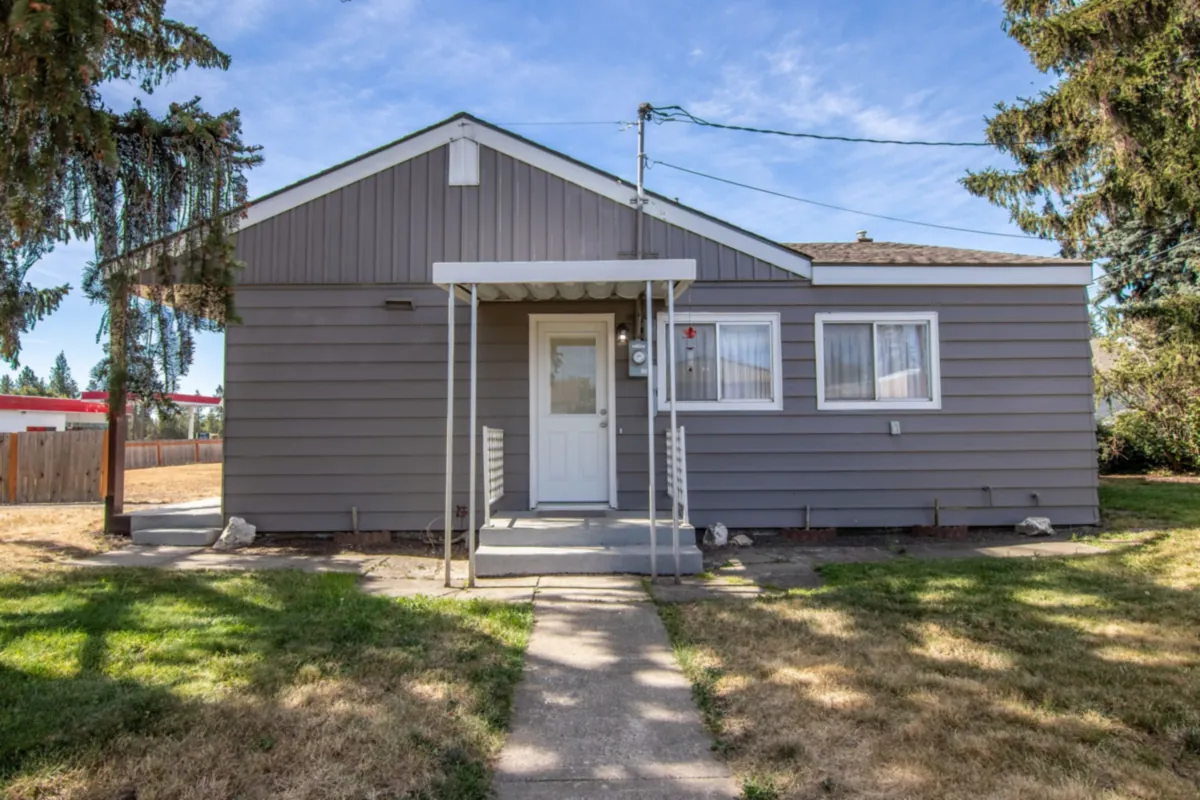
It is called Section 504 Home Repair, run by USDA Rural Development. Most people never hear of it, partly because “USDA” sounds like it should be about farming. It is not. It is about houses.
Here is the number that matters most: a grant of up to $10,000, for homeowners 62 or older in eligible rural areas, to remove health and safety hazards. If you are under 62, the same program offers a loan of up to $40,000 at 1% fixed interest for 20 years.
The Two Halves of One Program
Section 504 is really two kinds of help sharing one application. Which one you get depends mostly on your age.
| Grant | Loan | |
|---|---|---|
| Maximum | $10,000 (lifetime) | $40,000 |
| Age requirement | 62 or older | None |
| Interest | None — it is a grant | 1% fixed |
| Term | None | 20 years |
| Repayment | Only if you sell within 3 years | Monthly |
| What it can fix | Health and safety hazards; accessibility for a household member with a disability | General repairs and improvements, plus hazards |
USDA says the two “can be combined for up to $50,000 in assistance.” Earlier versions of this USDA page also listed higher caps for homes damaged in a presidentially declared disaster area. Those figures are not on the live page as of September 5, 2026, so we do not state them here. If a declared disaster affected your home, ask your local RD office directly whether any exception applies.
One qualifier on the loan side, straight from the regulation: the $40,000 is a ceiling, not an entitlement. The actual maximum “is limited to the principal balance that can be supported given the amount the applicant has available, as determined by RHS, to repay a loan at 1 percent interest with a 20-year term” (7 CFR 3550.112). USDA will not lend you more than your budget shows you can repay.
The Dollar Caps Are Not in the Regulation
This one only shows up if you open the rule itself, and it should change how much weight you put on any number you read online — including the ones above. 7 CFR 3550.112 contains no dollar figures at all. It sets both maximums as percentages:
“The sum of all outstanding section 504 loans to one household for one dwelling may not exceed an amount determined by the Agency based on factors such as average loan amounts and repair costs, but no greater than twenty percent of the national average area loan limit.” — 7 CFR 3550.112(a)
“The lifetime total of the grant assistance to any one household or one dwelling may not exceed ten percent of the national average area loan limit.” — 7 CFR 3550.112(c)
The $40,000 and $10,000 are the amounts USDA currently publishes underneath those ceilings. They come from an agency decision, not from a number written into the Code of Federal Regulations — the 2022 amendment that restructured this section (87 FR 6772) is what took the old fixed dollar amounts out of the rule.
The practical consequence: these caps can move without any change to federal regulation. Read the figure off USDA’s own program page on the day you apply, rather than trusting an article — this one included — that was written earlier.
Age Is Not the Only Thing That Decides Grant vs. Loan
This is the part USDA’s own program page leaves out, and it changes what you should expect. Being 62 makes you eligible for the grant; it does not by itself get you one. The National Council on Aging states the split the way USDA field offices actually apply it: loans go to “homeowners who can repay a low-interest loan,” and grants go to “homeowners age 62+ who cannot afford to repay a loan.”
There is a middle option too, and it is common: “if you can repay part of the funds received (but not all), you may qualify for a combination of a loan and grant.”
USDA’s own application page states the three inputs without ceremony: “eligibility for repair assistance considers the applicant’s age, household income, and Total Debt (TD) ratio.” Two of those three are about whether you could carry a payment — which is why a 62-year-old with a comfortable debt ratio may be pointed toward the loan rather than the grant.
You do not have to work this out yourself. USDA staff run a 504 Automated Worksheet, which the agency describes as “a tool designed to identify what type of assistance a homeowner may receive” — though USDA is careful to add that it “is not a final eligibility determination.” Bring your income and expenses to the prequalification step and let the office tell you which side of the line you fall on.
Who Qualifies
USDA lists four requirements on its program page. To qualify, you must:
- Be the homeowner and occupy the house
- Be unable to obtain affordable credit elsewhere
- Have a household income that does not exceed the low and very-low limit by county — and for a grant, income must not exceed the very low limit
- For grants, be age 62 or older
The regulation adds two more that are easy to miss. You must be a U.S. citizen or a non-citizen who qualifies as a legal alien (7 CFR 3550.103(d)), and for the loan only, you must show adequate repayment ability supported by a budget — with the option to add a cosigner or another household member to the application if your own budget falls short.
There is also one disqualifier that reaches both halves of the program rather than just the loan: “an applicant with an outstanding judgment obtained by the United States in a federal court, other than the United States Tax Court, is not eligible for a loan or grant from RHS” (7 CFR 3550.103(i)). The rest of that section’s credit tests are written for loan applicants — and it is worth knowing that a bankruptcy in which debts were discharged more than 36 months before the date of application is explicitly listed among the things that “will not be considered indicators of unacceptable credit."
"Be the Homeowner” Does Not Mean a Deed in Your Name
USDA’s program page says only “be the homeowner and occupy the house,” which reads like a test you either pass with a clean recorded deed or fail. The regulation is far wider than that. 7 CFR 3550.107 lists seven acceptable forms of ownership interest, and full fee title is only the first of them:
- Full fee ownership — a fully marketable title with a deed vesting a fee interest in you.
- A secure leasehold interest. A written lease is required, and the length differs by which half of the program you want: for a grant, “the remaining lease period must be at least 5 years”; for a loan, the unexpired portion must run at least 2 years beyond the term of the note. A leasehold for mutual help housing financed by HUD on Indian lands “requires no minimum lease period.”
- A life estate interest, as long as it gives you “rights of present possession, control, and beneficial use of the property.”
- An undivided interest — the heirs’-property case, where a house passed to several relatives without probate. For a grant or an unsecured loan, the condition is simply that “any co-owners living or planning to live in the dwelling sign the repayment agreement.”
- Possessory rights on an American Indian reservation or state-owned land, including an American Indian’s interest in land held under trust patents or deeds restricted against alienation.
- A land purchase contract, if you are current on all payments and are reasonably likely to keep meeting them.
- Alternative evidence of ownership, when none of the above exists on paper. RHS may accept records of the local taxing authority showing you as owner and paying the taxes; “affidavits by others in the community stating that the applicant has occupied the property as the apparent owner for a period of not less than 10 years, and is generally believed to be the owner”; or “any instrument, whether or not recorded, which is commonly accepted as evidence of ownership.”
That last bullet is the one to carry into the office with you. A house you have lived in and paid the taxes on for decades, with no deed anyone can locate, is not automatically outside this program — and that is a regulation-level answer, not a local courtesy.
The Income Rule, Stated Honestly
There is no national income number for this program, and you should be suspicious of any page that gives you one. The limit is a “very low” income limit set county by county, and the test is applied to adjusted income — income after deductions the regulation describes as accounting “for varying household circumstances and expenses.”
The practical move is to skip the arithmetic and use USDA’s own lookup. The USDA eligibility site will check both things at once: whether your income fits, and whether your address sits in an eligible rural area.
The Savings Rule Almost Nobody Mentions
This one surprises people, and it is worth knowing before you apply rather than after. Applicants must “lack the personal resources to meet their needs,” and the regulation puts a figure on it:
“Elderly families must use any net family assets in excess of $20,000 to reduce their section 504 request. Non-elderly families must use any net family assets in excess of $15,000 to reduce their section 504 request.” — 7 CFR 3550.103(e)
Read that carefully, because it is less harsh than it first sounds. Assets above the threshold reduce the amount you can request — they do not disqualify you. And the count excludes the value of your home and a minimum adequate site, so the house you are trying to repair is not counted against you.
What the Money Can and Cannot Fix
Grant funds are narrow. They “may be used only to pay costs for repairs and improvements that will remove identified health and safety hazards or to repair or remodel dwellings to make them accessible and useable for household members with disabilities” (7 CFR 3550.102(a)).
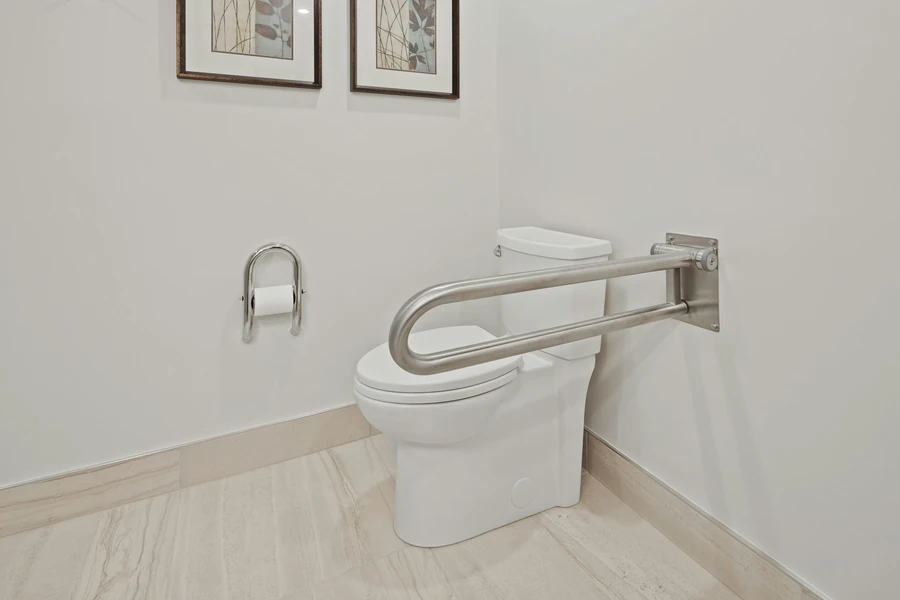
That second clause is the underused half of this program. A ramp, a walk-in shower, a widened doorway or a lowered counter for a household member with a disability is an eligible grant purpose in its own right — the house does not have to be hazardous.
Loan funds are broader: “general repairs and improvements to properties or … remove health and safety hazards, as long as the dwelling remains modest in size and design.”
Either kind of funding can also cover the costs that come attached to the work — title clearance and closing fees, appraisals and surveys, special design features or equipment needed because of a disability, utility connection fees, and real estate taxes due at closing.
Section 504 funds cannot be used to:
- Build a new dwelling
- Repair a home in such poor condition that it “will continue to have major hazards” after the work
- Move a mobile or manufactured home from one site to another
- Pay for off-site improvements, apart from utility installation and assessment costs
- Refinance a debt you took on before the date of application
That second restriction sounds harsher than it is, and a different section softens it: a dwelling repaired with Section 504 funds “need not be brought to the agency development standards of 7 CFR part 1924, subpart A, nor must all existing hazards be removed. However, the dwelling may not continue to have major health or safety hazards” (7 CFR 3550.106(b)). The test is whether major hazards would remain after the work — not whether the house comes out perfect.
And if the work costs less than expected, “unused grant funds must be returned to the Rural Housing Service.”
The Three-Year Rule
This is the one condition on the grant, and it deserves a straight answer rather than fine print:
“Grant recipients are required to sign a repayment agreement which specifies that the full amount of the grant must be repaid if the property is sold in less than 3 years from the date the grant agreement was signed.” — 7 CFR 3550.114
So the grant is not conditional on your health, your income later, or your heirs. It is conditional on one thing: keeping the home for three years from the date you sign. Past that, you owe nothing.
If you already know you will be selling soon, say so during the interview. The loan side, or a local repair program, may fit better than a grant you would have to hand back.
Mobile and Manufactured Homes
Repairs to remove health and safety hazards can be made to a mobile or manufactured home, but two conditions apply (7 CFR 3550.102(c)):
- You own both the home and the site, and lived in the home before filing the application.
- The home is on a permanent foundation, or will be put on one using Section 504 funds.
Owning the land is where most of these applications stop. If you rent your lot in a manufactured home community, this program will not reach you — but a local Community Action Agency or a nonprofit repair program often will.
How to Apply
There is no deadline. USDA accepts applications “through your local RD office year round,” on a rolling basis from October 1 through September 30.
Step 1 — Prequalify (optional, but do it). USDA encourages, but does not require, an informal prequalification before you apply. You contact your local Rural Development office with two forms:
- Form RD 3550-35, Section 504 Home Repair Loan and Grant Program Intake Form
- Form RD 3550-1, Authorization to Release Information
This step exists so you find out early whether the program fits, before assembling a full application.
Step 2 — Check your address and income. Use the USDA eligibility site to confirm the property is in an eligible rural area and that your income is within the county’s very-low limit.
Step 3 — Apply through your local RD office. The full application adds:
- Form RD 410-4, Uniform Residential Loan Application (also available in Spanish as Solicitud de Préstamo Residencial Único)
- Form RD 3550-4, Employment and Asset Certification (also available in Spanish)
- The items on the Attachment 12-E checklist your office provides
Step 4 — Wait on funding, not on paperwork. USDA is candid that “approval times depend on funding availability in your area.” There is no published processing time, and there is no way to buy your way up the list.
What Actually Happens When the Office Runs Out of Money
“Funding availability” is the whole of USDA’s public answer. The regulation says considerably more about how that queue works, and its rules are worth knowing before you are standing in it (7 CFR 3550.104):
- File anyway. “Applications will be accepted even when funds are not available.” Being told the office has nothing left this year is not a reason to walk away without filing.
- Hazards are funded ahead of accessibility work. “When funding is not sufficient to serve all eligible applicants, applications for assistance to remove health and safety hazards will receive priority for funding.” Both are legitimate grant purposes, but in a shortage they are not equal — so if your project genuinely includes a hazard as well as an access modification, say so plainly on the application rather than describing only the ramp.
- Veterans break the tie. “In the case of applications with equivalent priority status that are received on the same day, preference will be extended to applicants qualifying for a veterans’ preference.”
- First-come, first-served comes last, not first. “After selection for processing, requests for assistance are funded on a first-come, first-served basis” — that is, only after the priority sort above has already happened.
One more thing to watch the mail for: RHS “may periodically request in writing that applicants reconfirm their interest,” and “may withdraw the application of any applicant who does not respond within the specified timeframe.” A file can be closed for silence alone.
This program is free to apply for. USDA does not charge an application fee, and no one needs to be paid to file these forms for you.
There is one precise exception, and it runs in your favor. Loan and grant funds may pay “fees to public and private nonprofit organizations that are tax exempt under the Internal Revenue Code for the development and packaging of applications” (7 CFR 3550.102(d)(5)) — and USDA confirms on its application page that “allowable packaging fees to any public, tribe or private nonprofit organizations may be included in repair loans and grants.” A nonprofit housing agency can be paid out of the award to help you assemble the file. Those packagers must first sign a memorandum of understanding with the USDA state office.
What is barred is the other kind. Section 504 funds may not “pay fees, commission, or charges to for-profit entities related to loan packaging or referral of prospective applicants to RHS” (7 CFR 3550.102(e)(6)). So when a for-profit company offers to get you a “guaranteed” USDA grant for a fee, the regulation does not merely disapprove of the arrangement — it forbids the program’s money from paying for it.
If Section 504 Does Not Fit
The two most common reasons people fall out of this program are living outside an eligible rural area and not owning the land under a manufactured home. Neither means there is no help:
- Rebuilding Together — a nonprofit that provides free home repairs, with no rural requirement
- Weatherization Assistance Program — free energy-related repairs, including some health and safety work, and it serves renters as well as owners
- LIHEAP — help with heating and cooling bills, and in many states with furnace repair or replacement
- 211 — a free call that maps the local repair and emergency programs in your county
How We Checked This
We read the primary sources for this guide directly rather than summarizing other websites. The eligibility tests, the ownership rules, the funding-priority order and the grant purposes come from the regulation itself — 7 CFR part 3550, subpart C, read section by section on eCFR — and the dollar figures, forms and application steps come from USDA Rural Development’s own Section 504 program page, including the “To Apply” tab that most write-ups never open.
Three places where the regulation and the usual retelling do not match, and we went with the regulation:
- The caps. Nearly every article states “$10,000” and “$40,000” as though they were the law. 7 CFR 3550.112 contains no dollar amounts — only percentage ceilings tied to the national average area loan limit. The dollar figures are USDA’s published administrative amounts, which is why we tell you to re-read them on the program page before you apply.
- “You must own the home.” USDA’s four-bullet eligibility list makes this sound like a deed test. 7 CFR 3550.107 accepts seven forms of ownership interest, down to community affidavits of ten years’ apparent ownership — a difference that matters enormously for heirs’ property.
- “First come, first served.” That is how the wait is usually described. Under 7 CFR 3550.104(c) it is the last sort applied, after hazard-removal priority and a veterans’-preference tiebreaker.
If your local Rural Development office tells you something that contradicts this page, trust the office for your own case — the field handbook, HB-1-3550, governs day-to-day practice — and tell us so we can re-check the guide.
The regulation and the USDA program page were re-read and verified on August 24, 2026. No figure on this page changed between publication and that re-check.
Last updated: August 13, 2026. Figures are the 2026 program maximums published by USDA Rural Development and can change; the income limit is set by county and is applied to adjusted income.
This is general information, not legal or financial advice. This is not a government website. We never charge fees. Always confirm details with USDA Rural Development or your local RD office.
Frequently Asked Questions
Do you have to pay back a USDA Section 504 home repair grant?
Not if you keep the home for three years. There is one condition, and it is written into a form you sign: "Grant recipients are required to sign a repayment agreement which specifies that the full amount of the grant must be repaid if the property is sold in less than 3 years from the date the grant agreement was signed," per 7 CFR 3550.114. Stay past that three-year mark and the grant is simply yours — there is no monthly payment, no interest, and no lien to pay off. Sell in year one or two and USDA asks for the full amount back.
How old do you have to be to get the USDA home repair grant?
62. USDA states the rule plainly on its program page — "For grants, be age 62 or older" — and the regulation adds when it is measured: "an applicant must be 62 years of age or older at the time of application," per 7 CFR 3550.103(b). If you are under 62 you are not shut out of the program; you are just in the loan half of it. The Section 504 loan has no age requirement and runs at 1% fixed for 20 years.
How much money can you get from USDA Section 504?
Up to $10,000 as a grant and up to $40,000 as a loan, and USDA says the two "can be combined for up to $50,000 in assistance." The $10,000 grant figure is a lifetime limit, not a per-year one — USDA states that "grants have a lifetime limit of $10,000." Note: earlier versions of USDA's page listed higher caps for presidentially declared disaster areas. Those figures are not on the live page as of September 5, 2026, so we no longer state them. Ask your local RD office whether any disaster-area exception applies to you.
What can the Section 504 grant actually pay for?
Two things, and the list is narrower than most people expect. Grant funds "may be used only to pay costs for repairs and improvements that will remove identified health and safety hazards or to repair or remodel dwellings to make them accessible and useable for household members with disabilities," per 7 CFR 3550.102(a). The accessibility half is the part people miss — a ramp, a walk-in shower or a widened doorway for a household member with a disability qualifies even when nothing in the house is hazardous. The loan is broader: it covers "general repairs and improvements," not just hazards. Anything left over goes back — "unused grant funds must be returned to the Rural Housing Service."
What income do you need to qualify for Section 504?
There is no single national figure, and any site that gives you one is guessing. USDA sets a "very low" income limit that is different in every county, and the rule is that "the household's adjusted income must not exceed the applicable very low-income limit" at the time of approval, per 7 CFR 3550.103(c). Two details matter. First, it is *adjusted* income, not gross — the regulation describes deductions "to account for varying household circumstances and expenses." Second, you can look up your own county on the USDA eligibility site rather than guessing. Enter your address there and it also tells you whether the property sits in an eligible rural area.
Can you get Section 504 help for a mobile or manufactured home?
Yes, for hazard removal, with conditions. Repairs to remove health and safety hazards may be made to mobile or manufactured homes provided "the applicant owns the home and site and has occupied the home prior to filing an application" and the home "is on a permanent foundation or will be put on a permanent foundation with section 504 funds," per 7 CFR 3550.102(c). Owning the land as well as the home is the requirement that stops most applications — renting the lot in a mobile home park does not meet it. The funds also cannot be used to move a manufactured home from one site to another.
Can you get a Section 504 grant if the house is heir property or you have no deed?
Often, yes. USDA's program page says only "be the homeowner and occupy the house," but 7 CFR 3550.107 accepts seven forms of ownership interest, not just a recorded deed. An undivided interest — the heirs'-property case — works for a grant as long as "any co-owners living or planning to live in the dwelling sign the repayment agreement." Where no paperwork exists at all, RHS may accept records of the local taxing authority showing you as owner, "affidavits by others in the community stating that the applicant has occupied the property as the apparent owner for a period of not less than 10 years," or "any instrument, whether or not recorded, which is commonly accepted as evidence of ownership." A written lease also qualifies, though for a grant the lease must have at least 5 years left to run.
What happens if your local USDA office has run out of Section 504 money?
File anyway. The regulation is explicit that "applications will be accepted even when funds are not available" (7 CFR 3550.104(a)). When there is not enough money for everyone, the order is set by rule rather than by arrival: requests to remove health and safety hazards "receive priority for funding"; among applications with equivalent priority received on the same day, "preference will be extended to applicants qualifying for a veterans' preference"; and only after that sort are requests funded first-come, first-served. Watch your mail while you wait — RHS may write to ask you to reconfirm your interest and may withdraw the application of anyone who does not answer within the stated time.
Is there a deadline to apply for Section 504?
No. USDA accepts these applications "through your local RD office year round," and its own application window runs continuously from October 1 to September 30. What does vary is money: USDA notes that "approval times depend on funding availability in your area." That is the practical reason to start early in the federal fiscal year rather than late, and the reason two neighbors in different counties can wait very different amounts of time.
Sources
- USDA Rural Development — Single Family Housing Repair Loans & Grants ("Also known as the Section 504 Home Repair program, this provides loans to low and very-low-income homeowners to repair, improve or modernize their homes or grants to elderly low and very-low income homeowners to remove health and safety hazards"; to qualify you must "Be the homeowner and occupy the house," "Be unable to obtain affordable credit elsewhere," "Have a household income that does not exceed the very low limit by county," and "For grants, be age 62 or older"; "Maximum loan is $40,000," "Maximum grant is $10,000," "Loans and grants can be combined for up to $50,000 in assistance" (re-checked on the live page 2026-09-05: the presidentially-declared-disaster figures are no longer on it); "Loans are termed for 20 years," "Loan interest rate is fixed at 1%," "Full title service is required if the total outstanding balance on Section 504 loans is greater than $25,000," "Grants have a lifetime limit of $10,000," "Grants must be repaid if the property is sold in less than 3 years"; "Applications for this program are accepted through your local RD office year round"; application period "from October 1- September 30")
- 7 CFR 3550.103 — Eligibility requirements ("(a) Owner-occupant. Applicants must own … and occupy the dwelling"; "(b) Age (grant only). To be eligible for grant assistance, an applicant must be 62 years of age or older at the time of application"; "(c) Income eligibility. At the time of loan or grant approval, the household's adjusted income must not exceed the applicable very low-income limit"; "(d) Citizenship status. The applicant must be a U.S. citizen or a non-citizen who qualifies as a legal alien"; "(e) … Elderly families must use any net family assets in excess of $20,000 to reduce their section 504 request. Non-elderly families must use any net family assets in excess of $15,000" — assets here exclude "the value of the dwelling and a minimum adequate site"; "(h) Repayment ability (loans only)")
- 7 CFR 3550.102 — Grant and loan purposes ("(a) Grant funds. Grant funds may be used only to pay costs for repairs and improvements that will remove identified health and safety hazards or to repair or remodel dwellings to make them accessible and useable for household members with disabilities. Unused grant funds must be returned to the Rural Housing Service (RHS)"; "(b) Loan funds. Loan funds may be used to make general repairs and improvements to properties or to remove health and safety hazards, as long as the dwelling remains modest in size and design"; mobile and manufactured homes are eligible for hazard-removal repairs if the applicant "owns the home and site and has occupied the home prior to filing an application" and the home is or will be "on a permanent foundation"; funds may not be used to "Assist in the construction of a new dwelling," to repair a dwelling that "will continue to have major hazards," to "Move a mobile home or manufactured home from one site to another," or to "Refinance any debt or obligation of the applicant incurred before the date of application")
- 7 CFR 3550.104 — Applications ("Applications will be accepted even when funds are not available"; "(c) Processing priorities. When funding is not sufficient to serve all eligible applicants, applications for assistance to remove health and safety hazards will receive priority for funding. In the case of applications with equivalent priority status that are received on the same day, preference will be extended to applicants qualifying for a veterans' preference. After selection for processing, requests for assistance are funded on a first-come, first-served basis"; RHS "may withdraw the application of any applicant who does not respond within the specified timeframe")
- 7 CFR 3550.106 — Dwelling requirements ("(b) Post-repair condition. Dwellings repaired with section 504 funds need not be brought to the agency development standards of 7 CFR part 1924, subpart A, nor must all existing hazards be removed. However, the dwelling may not continue to have major health or safety hazards")
- 7 CFR 3550.107 — Ownership requirements (seven acceptable forms of ownership interest: full fee ownership; secure leasehold — "For grants, the remaining lease period must be at least 5 years"; life estate interest; undivided interest — for grants and unsecured loans, "if any co-owners living or planning to live in the dwelling sign the repayment agreement"; possessory rights on an American Indian reservation or State-owned land; land purchase contract; and alternative evidence including local taxing-authority records, "affidavits by others in the community stating that the applicant has occupied the property as the apparent owner for a period of not less than 10 years," or "any instrument, whether or not recorded, which is commonly accepted as evidence of ownership")
- 7 CFR 3550.114 — Repayment agreement (grants only) ("Grant recipients are required to sign a repayment agreement which specifies that the full amount of the grant must be repaid if the property is sold in less than 3 years from the date the grant agreement was signed.")
- 7 CFR 3550.112 — Maximum loan and grant ("(b) Maximum loan based upon ability to pay. The maximum loan is limited to the principal balance that can be supported given the amount the applicant has available, as determined by RHS, to repay a loan at 1 percent interest with a 20-year term.")
- 7 CFR 3550.10 — Definitions ("Very low-income. An adjusted income limit developed in consultation with HUD under 42 U.S.C. 1437a(b)(2)(D)"; "Adjusted income. Used to determine whether an applicant is income-eligible. Adjusted income provides for deductions to account for varying household circumstances and expenses")
- National Council on Aging (NCOA) — What Is the USDA Single Family Housing Repair Loans and Grants Program? (page last updated August 5, 2026; loans are for "Homeowners who can repay a low-interest loan" and grants are for "Homeowners age 62+ who cannot afford to repay a loan"; "If you can repay part of the funds received (but not all), you may qualify for a combination of a loan and grant"; "The maximum loan amount is $40,000 and is to be repaid over 20 years on a monthly basis. Interest is at a fixed rate of 1%")
- USDA Rural Development — Property Eligibility Site (address lookup for eligible rural areas, and income eligibility by county)
- USDA Rural Development — Section 504 intake forms (Form RD 3550-35, Section 504 Home Repair Loan and Grant Program Intake Form; Form RD 3550-1, Authorization to Release Information)
Keep reading
- Charities That Help With Rent: Catholic Charities USA (2026) Emergency rent help, housing, and food through 170 local Catholic Charities agencies Read guide →
- Home Repair Help 2026: Rebuilding Together & Who Qualifies More than 100 local affiliates repair homes for low-income owners — many at no cost Read guide →
- Habitat for Humanity 2026: Who Qualifies & How to Apply Affordable-mortgage homeownership and home repairs through local Habitat affiliates Read guide →
This is general information, not legal or financial advice.