Public Housing 2026: Income Limits & How to Apply
Last updated:
Apply on the official site →Public housing is rental housing owned and run by your local housing agency, rented to people with low incomes at a rent tied to what they earn. It is the oldest federal housing program, and it is not the same thing as Section 8 — with public housing you rent the agency’s own apartment or house, instead of getting a voucher to rent from a private landlord.
Two things surprise most people who look into it: the income ceiling is higher than they expect, and the rent is not a fixed price — you get a choice between two ways of calculating it, once a year.
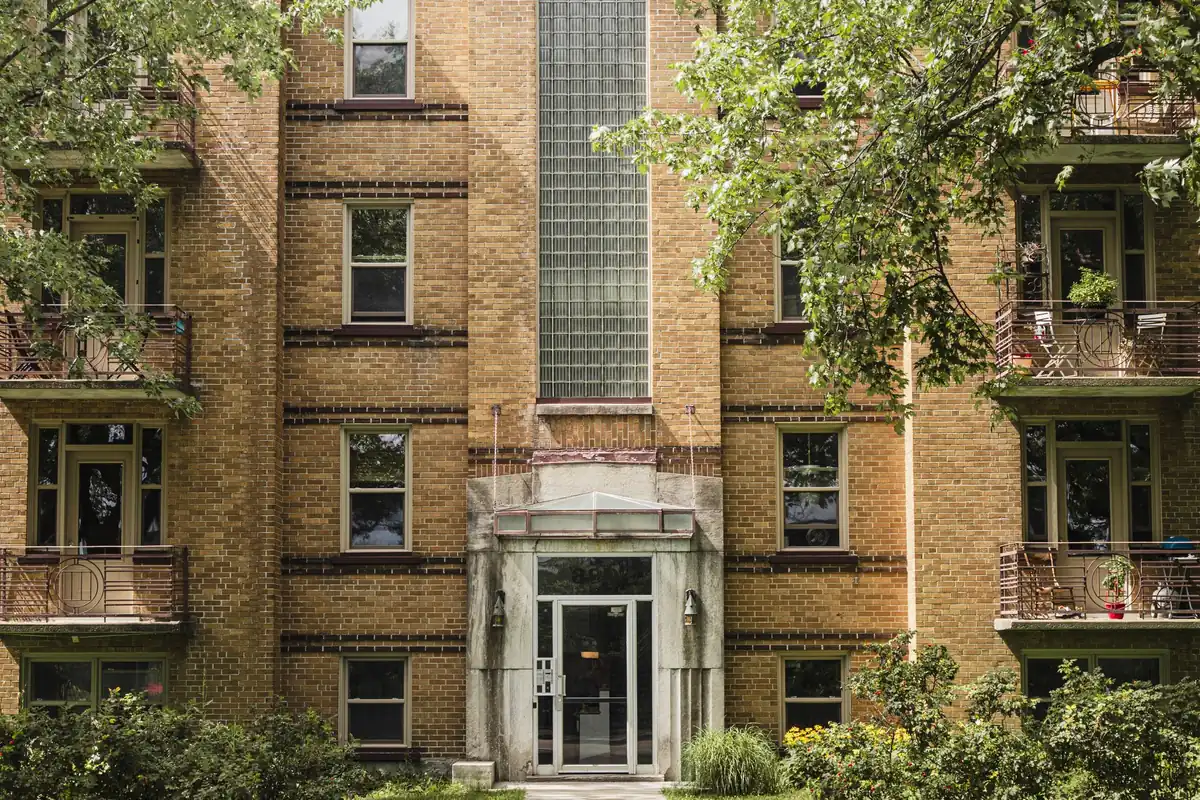
Public Housing at a Glance (2026)
| Question | Answer |
|---|---|
| What you get | An apartment or house owned by your local housing agency (PHA) |
| Income limit | Up to 80% of your area’s median income (24 CFR 960.201, 5.603) — look up your area |
| Your rent | Your yearly choice: a flat rent, or an income-based rent (usually 30% of adjusted income) |
| Minimum rent | Up to $50, and it must be waived for financial hardship (24 CFR 5.630) |
| Asset limit | Net assets over $100,000 disqualify a family (24 CFR 5.618) |
| Where to apply | Your local Public Housing Agency (PHA directory) |
| Cost to apply | Free — always |
| Wait time | Often long; lists are sometimes closed |
Public Housing vs. Section 8: The Difference That Matters
People use “low-income housing,” “income-based apartments,” and “Section 8” to mean all of it. For applying, the difference is real:
| Public housing | Section 8 voucher | |
|---|---|---|
| Who owns the home | The housing agency | A private landlord |
| How you find a home | The agency offers you one of its units | You go find a unit yourself |
| What you apply to | That agency’s public housing waiting list | That agency’s voucher waiting list |
| If you move | You leave the program | The voucher can move with you |
They are run by the same local agencies and use the same HUD income limits, but they are separate waiting lists with separate applications. Being on one does not put you on the other. If both are open, apply to both.
If someone in your household is 62 or older, there is a third kind of waiting list worth joining: Section 202 senior apartments, which nonprofits own and run. You apply at each building, not through the housing agency.
Who Qualifies for Public Housing?
Federal rule 24 CFR 960.201 sets three basic tests. You must:
- Be a family as HUD defines it. The rule adds directly that “Such eligible applicants include single persons” — you do not need children or a spouse.
- Be income-eligible. The regulation is blunt: “No family other than a low income family is eligible for admission to a PHA’s public housing program.”
- Meet the asset and property rules in 24 CFR 5.618.
Your PHA will also verify citizenship or eligible immigration status, and it screens applicants — a record of criminal activity affecting other residents’ health or safety can lead to denial (24 CFR 960.203).
The income limit, in dollars
“Low income family” has a precise meaning in 24 CFR 5.603: annual income that does not exceed 80 percent of the median income for the area, adjusted for household size. HUD publishes the actual dollar figures every year. The FY 2026 limits took effect May 1, 2026.
Because it is a percentage of local income, the dollar limit swings enormously. In HUD’s official FY 2026 income limits file, the 80% limit for a family of four runs from $22,300 in the lowest-limit area to $174,550 in the highest; across the 2,635 HUD income-limit areas in that file the midpoint is about $71,850. Three real examples:
| Area (FY 2026) | Extremely low income (family of 4) | Low income — the eligibility ceiling (family of 4) |
|---|---|---|
| New York, NY HUD Metro FMR Area | $50,900 | $135,700 |
| Los Angeles–Long Beach–Glendale, CA | $50,000 | $133,250 |
| Detroit–Warren–Livonia, MI | $33,000 | $83,850 |
Source: HUD USER, FY 2026 Section 8 Income Limits (effective May 1, 2026).
Do not use those three numbers for your own household — look up your county. The point is that “too much income for public housing” is a guess people make about themselves that is often wrong.
But being under the ceiling is not the whole story
Here is the part that decides how fast you are likely to be called. 24 CFR 960.202 requires that “Not less than 40 percent of the families admitted to a PHA’s public housing program during the PHA fiscal year from the PHA waiting list shall be extremely low income families.”
Extremely low income means the higher of the HHS poverty guideline for your household size or 30% of area median (24 CFR 5.603) — the left column in the table above.
So both things are true, and both matter:
- You can be eligible with an income up to 80% of area median.
- At least 4 in 10 admissions each year must go to families at or below the extremely-low-income line.
If your income is in the upper part of the range, you are allowed to apply and should — but expect the wait to reflect that rule.
The asset and property rules
Added to the program in 2023 and now in force, 24 CFR 5.618 says a family cannot be housed if:
- Net family assets exceed $100,000 (HUD adjusts this figure each year for inflation), or
- The family owns real property that is suitable for them to live in and has the legal right to live there and to sell it.
There is also a threshold most people never hear about, in 24 CFR 5.618(b): if your net family assets are $50,000 or less (also adjusted annually), the PHA “may determine the net assets of a family based on a certification by the family… without taking additional steps to verify the accuracy of the declaration.” In plain terms, most households simply sign a statement — the document hunt for every account only starts above that line. The declaration does have to state the income you expect from those assets, and that income counts.
The property rule has written exceptions — including a family that is offering the property for sale, a survivor of domestic violence, dating violence, sexual assault or stalking, and property jointly owned with someone outside the household who lives there. A property is also not “suitable” if it does not meet a household member’s disability-related needs, is too small for the family, is unsafe, or is located so far away that living there would be a hardship.
How Much Rent Will You Pay?
This is where public housing differs most from a voucher. Under 24 CFR 960.253, once a year your PHA must give you the choice between two rents:
Option 1 — Flat rent. A fixed amount based on the unit’s market rental value, set at no less than 80% of the applicable Fair Market Rent. It does not change when your income changes. Families who expect their income to rise often choose this.
Two protections ride along with the flat rent, and neither is widely known. First, a jump is capped: “If a new flat rent would cause a family’s rent to increase by more than 35 percent, the family’s rent increase must be phased in at 35 percent annually” (24 CFR 960.253(b)(6)). Second — and this is the one to remember if your income drops mid-year — you are not locked in until the next annual choice. Paragraph (d) of the same section says a family paying a flat rent “may at any time request a switch to payment of income-based rent (before the next annual option to select the type of rent) if the family is unable to pay flat rent because of financial hardship,” and if the PHA finds the hardship, it “must immediately allow the requested switch.”
Option 2 — Income-based rent. Calculated from your income using 24 CFR 5.628, which sets your Total Tenant Payment as the highest of:
- 30% of your monthly adjusted income,
- 10% of your monthly income,
- the part of a welfare grant specifically designated for housing, or
- the minimum rent.
For most households the first figure is the highest — which is why “30% of income” is the number everyone quotes. “Adjusted” income is your income after deductions your PHA applies, so it is usually lower than your gross pay.
The minimum rent. A PHA may set a minimum rent of up to $50 for public housing (24 CFR 5.630). That same rule says the agency must grant an exemption if a family cannot pay it because of financial hardship — including while the family is waiting on a decision for another assistance program. If you are told to pay a minimum rent you cannot afford, ask your PHA in writing for the hardship exemption.
The part of the hardship rule nobody quotes
Asking is not just a request that sits in a queue. Under the same section, the request itself triggers two protections immediately, before the PHA has decided anything:
- The charge stops while they decide. “If a family requests a financial hardship exemption, the PHA must suspend the minimum rent requirement beginning the month following the family’s request for a hardship exemption, and continuing until the PHA determines whether there is a qualifying financial hardship and whether it is temporary or long term.”
- You cannot be evicted over it for 90 days. “The PHA may not evict the family for nonpayment of minimum rent during the 90-day period beginning the month following the family’s request for a hardship exemption.”
What happens next depends on the finding. If the hardship is long term, the exemption lasts as long as the hardship does. If it is temporary, the minimum rent is reinstated back to the start of the suspension — but the PHA “must offer the family a reasonable repayment agreement” rather than demanding the whole balance at once. One limit worth knowing: the exemption covers only the minimum rent, not the other pieces of the total tenant payment calculation.
Two practical consequences. Put the request in writing and date it, because the suspension is measured from the month after the request. And make the request as soon as you know you cannot pay — not after the arrears build up.
What Happens If Your Income Goes Up?
A common fear — that a raise costs you your home — is not what the rule says. 24 CFR 960.507 sets it out:
- There is a separate, much higher over-income limit: your area’s very-low-income limit multiplied by 2.4.
- You have to be above that limit for more than 24 consecutive months before anything changes.
- Your PHA must tell you in writing within 30 days of the income exam that found you over the limit.
- After 24 straight months over it, the PHA applies its over-income policy — which can mean paying a higher “non-public housing” rent, not automatic eviction.
Report income changes honestly and on time. The rule gives you two years of runway; hiding income does not.
How to Apply
There is no national public housing application. You apply to a local housing agency, and it is free.

- Find your PHA. Use HUD’s PHA contact directory to find the agencies near you.
- Look up your income limit for your county and household size at huduser.gov before you decide you don’t qualify.
- Check whether the waiting list is open. Lists close when they get too long, and reopen with little notice. Ask the agency how it announces openings.
- Ask which preferences the agency offers — and say if one applies to you. 24 CFR 960.206 requires that the PHA “must inform all applicants about available preferences and must give applicants an opportunity to show that they qualify.” Preferences are the single biggest lever on your wait, and they are only applied if the agency knows they apply to you.
- Apply to more than one agency. Residency requirements are prohibited by the same rule, so you may apply outside the area where you live. (An agency may still give a preference to local residents.)
- Gather documents: proof of income for everyone in the household, Social Security numbers, ID, and your current housing information. Requirements vary by agency.
- Keep your address and phone number current. If the agency cannot reach you when your name comes up, you can lose your place.
- Apply for the voucher list too if it is open — separate list, separate odds.
Nobody can charge you to apply. There is no fee to join a public housing waiting list and no legitimate service that moves you up one. If a website or a person asks for money to get you on a list, that is not your housing agency.
While You Wait
Waiting lists for public housing are long in most of the country, and that wait is real. Programs that lower other bills can help in the meantime:
- LIHEAP help with energy bills
- SNAP food benefits
- The Lifeline phone and internet discount
- 211, for local rent and utility help
If you are facing an immediate housing emergency rather than planning ahead, 211 is the faster call — public housing is a waiting-list program, not an emergency one.
How We Checked This
This guide was published on August 17, 2026 from the regulations themselves. On September 2, 2026 we pulled the current text of 24 CFR part 5, subpart F and all of 24 CFR part 960 again and read every figure in this guide against the source, then re-checked HUD’s income limits page.
Nothing changed. Every number in this guide is the same today as when we published it. Word for word from the current text: a low income family is one “whose annual income does not exceed 80 percent of the median income for the area” (5.603); “No family other than a low income family is eligible for admission to a PHA’s public housing program” and “Such eligible applicants include single persons” (960.201); “Not less than 40 percent of the families admitted… shall be extremely low income families. This is called the ‘basic targeting requirement’” (960.202); “Residency requirements are prohibited” (960.206); the flat rent floor of “no less than 80 percent of the applicable Fair Market Rent” and the annual choice between the two rents (960.253); the minimum rent of “up to $50” for public housing (5.630); the over-income limit “determined by multiplying the applicable income limit for a very low-income family… by a factor of 2.4” (960.507); and the $100,000 net-asset bar (5.618). HUD USER still shows the FY 2026 income limits as effective May 1, 2026, so the dollar figures in the table above are the current ones.
What the re-read added — three rules that only show up in the full regulation. First, the minimum-rent hardship request has teeth before the decision: the PHA “must suspend the minimum rent requirement beginning the month following the family’s request,” and “may not evict the family for nonpayment of minimum rent during the 90-day period beginning the month following the family’s request.” Second, a family on a flat rent can switch to income-based rent “at any time” for hardship, and the PHA “must immediately allow the requested switch” — you are not trapped until your next annual choice. Third, 5.618(b) lets a PHA accept a family’s own certification that net assets are $50,000 or less “without taking additional steps to verify the accuracy of the declaration,” which is why the asset rule is paperwork for very few applicants. We also added the 35 percent annual phase-in cap on flat-rent increases from 960.253(b)(6).
One number we could not fully pin down, and we are saying so. Both asset figures — the $100,000 disqualification and the $50,000 certification threshold — are written in the regulation with the words “which amount will be adjusted annually by HUD in accordance with the Consumer Price Index for Urban Wage Earners and Clerical Workers.” We searched the Federal Register’s HUD documents for a 2025 or 2026 adjustment notice and found none, and HUD’s own inflationary-adjustment document returned a 403 error to us. So the figures above are the regulation’s own numbers, and the current adjusted amounts may be modestly higher. If you are near either line, ask your PHA for the figure it is using this year — do not assume you are over it.
One access note: eCFR’s ordinary web pages redirect automated requests, so the regulation text was read through eCFR’s versioner API against the most recent published Title 24 text (issued August 31, 2026); the links in this guide point to the human-readable sections.
What we still cannot tell you: your local agency’s preferences, whether its list is open, how long its wait actually is, and what its written hardship policy says. Those four decide real cases, and all four live only in your PHA’s own documents.
This guide reflects federal public housing regulations at 24 CFR parts 5 and 960 as published on eCFR (current as of August 31, 2026) and HUD’s FY 2026 income limits (effective May 1, 2026), re-verified September 2, 2026. Local PHA rules vary — always confirm details with your housing agency. This is general information, not legal or financial advice.
Frequently Asked Questions
What is the income limit for public housing in 2026?
There is no single national dollar amount — HUD sets limits by area and household size, and the FY 2026 limits took effect May 1, 2026. The rule is a percentage: federal regulation 24 CFR 960.201 says 'No family other than a low income family is eligible for admission,' and 24 CFR 5.603 defines a low income family as one whose annual income does not exceed 80 percent of the area median. In HUD's official FY 2026 file, that 80 percent limit for a family of four ranges from $22,300 to $174,550 depending on where you live — for example $135,700 in the New York metro area and $83,850 in the Detroit metro area. Look up your own county at huduser.gov.
What is the difference between public housing and Section 8?
Public housing is an apartment or house owned and managed by your local housing agency (PHA) — you rent the agency's unit. Section 8 (the Housing Choice Voucher program) gives you a voucher to rent from a private landlord you find yourself. They are separate programs with separate applications and separate waiting lists, though the same PHA usually runs both, and both use HUD's income limits. You can apply for both.
How much rent do you pay in public housing?
Once a year your PHA must offer you a choice between two rents (24 CFR 960.253). One is a flat rent, set by the unit's market value and no less than 80 percent of the local Fair Market Rent. The other is an income-based rent, which uses the formula in 24 CFR 5.628: the highest of 30 percent of your monthly adjusted income, 10 percent of your monthly income, the housing portion of a welfare grant, or the minimum rent. For most households the 30 percent figure is the highest, which is why people say public housing rent is 30 percent of income. Either way, a PHA may charge a minimum rent of up to $50 — and it must waive that minimum if you cannot pay it because of financial hardship.
Can you be kicked out of public housing if you start earning more?
Not right away. Under 24 CFR 960.507 a family's income must not exceed the over-income limit for more than 24 consecutive months, and that limit is the very-low-income limit for your area multiplied by 2.4 — a much higher number than the limit to get in. Your PHA must notify you in writing within 30 days of the income exam that found you over the limit. If you are still over it after 24 straight months, the PHA follows its policy for over-income families, which can mean paying a higher non-public-housing rent rather than being evicted.
Can a single person with no children get public housing?
Yes. 24 CFR 960.201 says an applicant must be a family as HUD defines it, and adds plainly that 'Such eligible applicants include single persons.' A household of one is a household.
Do you have to already live in the city to apply for its public housing?
No. Federal rule 24 CFR 960.206 states that residency requirements are prohibited. A PHA may give a preference to people who already live in its area, which can move them up the list, but it cannot refuse to let you apply because you live somewhere else.
What happens if you cannot pay the minimum rent?
Ask for a hardship exemption in writing, and the protection starts before the answer does. 24 CFR 5.630 says that once a family requests a financial hardship exemption, the PHA 'must suspend the minimum rent requirement beginning the month following the family's request' and keep it suspended until it decides. The same rule then says the PHA 'may not evict the family for nonpayment of minimum rent during the 90-day period beginning the month following the family's request for a hardship exemption.' If the hardship turns out to be long term, the family is exempt for as long as it lasts; if it is temporary, the minimum rent is reinstated but the PHA must offer a reasonable repayment agreement rather than demanding the back rent at once.
Can you switch from flat rent to income-based rent if you lose your job?
Yes, and you do not have to wait for the annual choice. 24 CFR 960.253(d) says a family paying a flat rent 'may at any time request a switch to payment of income-based rent' if it cannot pay the flat rent because of financial hardship, and if the PHA agrees it 'must immediately allow the requested switch.' That is the rule to cite if your hours are cut in March and your next rent choice is not until October.
Does it cost anything to apply for public housing?
No. Applying to a PHA waiting list is free. Nobody can legitimately charge you a fee to apply, to get you on a list, or to move you up one. If someone asks for payment, it is not the housing agency.
Sources
- 24 CFR 960.201 — Eligibility (an applicant must be a family, must be income-eligible, and must meet the net asset and property ownership restrictions; 'No family other than a low income family is eligible for admission')
- 24 CFR 5.603 — Definitions (low income family = 80% of area median income; very low income = 50%; extremely low-income = the higher of the HHS poverty guideline or 30% of area median)
- 24 CFR 960.202 — Tenant selection policies ('Not less than 40 percent of the families admitted to a PHA's public housing program during the PHA fiscal year from the PHA waiting list shall be extremely low income families')
- 24 CFR 5.618 — Restriction on assistance to families based on assets (net assets over $100,000, adjusted annually, or present ownership of real property suitable for the family to live in)
- 24 CFR 960.253 — Choice of rent (once a year the PHA must give each family the choice between a flat rent and an income-based rent; flat rent is no less than 80% of the applicable Fair Market Rent)
- 24 CFR 5.628 — Total tenant payment (the highest of 30% of monthly adjusted income, 10% of monthly income, the designated welfare housing payment, or the minimum rent)
- 24 CFR 5.630 — Minimum rent (a PHA may set a minimum rent of up to $50 for public housing, and must grant a hardship exemption when a family cannot pay it)
- 24 CFR 960.507 — Families exceeding the income limit (families must not be over the over-income limit for more than 24 consecutive months; the limit is the very-low-income limit multiplied by 2.4)
- 24 CFR 960.206 — Waiting list: local preferences ('The PHA must inform all applicants about available preferences and must give applicants an opportunity to show that they qualify'; residency requirements are prohibited)
- 24 CFR 5.618(b) — Self-certification of assets (a PHA may accept a family's own declaration that net family assets do not exceed $50,000, adjusted annually, without taking additional steps to verify it)
- HUD USER — FY 2026 Income Limits (effective May 1, 2026), including the official Section 8 income limits data file
- HUD — Public Housing Agency (PHA) Contact Directory
Keep reading
- Charities That Help With Rent: Catholic Charities USA (2026) Emergency rent help, housing, and food through 170 local Catholic Charities agencies Read guide →
- Home Repair Help 2026: Rebuilding Together & Who Qualifies More than 100 local affiliates repair homes for low-income owners — many at no cost Read guide →
- Home Repair Grants for Seniors 2026: USDA Section 504 A $10,000 USDA grant to fix hazards in your home — for owners 62 and older, with nothing to pay back if you keep the home 3 years Read guide →
This is general information, not legal or financial advice.