Low-Income Senior Apartments 2026: Section 202 Who Qualifies
Last updated:
Apply on the official site →If you are 62 or older and looking up “senior apartments based on income,” you are looking for one of about 11,000 buildings. HUD’s own file of assisted multifamily properties that primarily serve elderly residents holds 11,012 properties and 710,387 assisted units, and the biggest single federal program behind them is Section 202 Supportive Housing for the Elderly.

This guide is built around two things you cannot get from a brochure: a self-check against the actual eligibility rules, and a state-by-state table of the 2026 income limits with the number of these buildings in your state. Everything below comes from the regulation text, the statute, or HUD’s own published data — and where the folklore and the rule disagree, we say so.
The Short Answer
| Question | The rule | Where it comes from |
|---|---|---|
| Age | One household member aged 62 or older, measured at move-in | 12 U.S.C. 1701q(k)(1); 24 CFR 891.205 |
| Income | Very low income — 50% of area median, set county by county | 42 U.S.C. 1437a(b)(2)(B); 24 CFR 891.410(c)(1) |
| Rent | The highest of 30% of adjusted monthly income or 10% of monthly income | 12 U.S.C. 1701q(c)(3); 24 CFR 5.628 |
| Deposit | One month’s tenant rent or $50, whichever is greater | 24 CFR 891.435(a) |
| Assets | The $100,000 cap in 24 CFR 5.618 is written for Section 8 and public housing, not this program | 24 CFR 5.601(e); 24 CFR 5.618(e) |
| Care level | Apartments, not care. No infirmaries, nursing stations, or overnight care allowed | 24 CFR 891.220 |
Do You Qualify? A Seven-Question Self-Check
Work through these in order. A “no” on questions 1 through 4 is disqualifying; the rest change what you should ask, not whether you can apply.
1. Is at least one person in the household 62 or older?
Not everyone. One. The definition in 24 CFR 891.205, repeated word for word in the statute at 12 U.S.C. 1701q(k)(1), is:
“Elderly person means a household composed of one or more persons at least one of whom is 62 years of age or more at the time of initial occupancy.”
Two things follow from that sentence that people routinely get wrong. The unit of measurement is the household, so a 63-year-old and a 58-year-old spouse are one qualifying household. And the moment of measurement is initial occupancy — the age test is applied when you move in.
2. Is your income at or below the very low-income limit for your county?
24 CFR 891.410(c)(1) requires an applicant to “be a very low-income family,” and 42 U.S.C. 1437a(b)(2)(B) defines that as income not exceeding “50 per centum of the median family income for the area.” There is no national dollar figure. See the table further down for your state’s range, and look up your own county at HUD’s income limits page.
3. Can you handle the activities of daily living, with help?
24 CFR 891.205 spells out what “activities of daily living” means here, and the standard is lower than most people assume. On eating you “May need assistance with cooking, preparing, or serving food, but must be able to feed self.” On bathing you “May need assistance in getting in and out of the shower or tub, but must be able to wash self.” On dressing you “Must be able to dress self, but may need occasional assistance.” On home management you may need help with housework, shopping, laundry and getting to appointments, “but must be mobile” — and the rule adds, in the same sentence, that “The mobility requirement does not exclude persons in wheelchairs or those requiring mobility devices.”
4. Will this be your only federal housing subsidy?
24 CFR 891.415(b)(2) bars a household from receiving assistance here “while occupying, or receiving assistance for the occupancy of, another unit assisted under any Federal housing assistance program, including any section 8 program.” You cannot stack this on a Housing Choice Voucher or a public housing unit. Same section requires the apartment to be your “principal place of residence.”
5. Do you have savings, an IRA, or a house?
Here is where the common advice is wrong often enough to be worth reading twice. The famous $100,000 net-asset ceiling and the rule against owning a home you could live in are in 24 CFR 5.618 — and that section ends with paragraph (e): “This section applies to the Section 8 (tenant-based and project-based) and public housing programs.” 24 CFR 5.601(e) says the same thing from the other direction. Section 202 is not named in either.
That does not make assets irrelevant. Income produced by assets counts as annual income, and 24 CFR 891.415(a)(2) requires you to supply “any certification of family net assets.” But when you are told flatly that savings disqualify you, ask which rule is being applied, and note that 24 CFR 5.603 excludes from net family assets “the value of any account under a retirement plan recognized as such by the Internal Revenue Service, including individual retirement arrangements (IRAs).”
6. Do you need someone to live with you to help?
A live-in aide is defined at 24 CFR 5.403 as someone essential to your care who “would not be living in the unit except to provide the necessary supportive services,” and 24 CFR 5.609(b)(8) excludes “Income of a live-in aide” from annual income. That aide’s earnings do not push you over the income limit.
7. Do you have unreimbursed medical costs?
They lower your rent, but only above a threshold — and the threshold changed. See the rent section below; this is the single largest lever most applicants have.
The Income Limit Is Not a National Number
HUD publishes the limits county by county. The FY 2026 limits took effect May 1, 2026, and HUD’s own page confirms they are the limits that “determine eligibility for assisted housing programs including… Section 202 housing for the elderly.”
We pulled HUD’s FY 2026 Section 8 Income Limits spreadsheet and computed the spread. Across the 2,657 income-limit areas in the 50 states and the District of Columbia, the one-person very low-income limit for 2026 runs from $23,300 (Santa Cruz County, Arizona) to $76,150 (the Santa Cruz–Watsonville, California metro area) — a 3.3-fold spread under one 50-percent rule. The middle area is $31,500. Nine hundred ninety-two areas, 37% of them, sit below $30,000; 53 areas sit above $50,000.
So “am I low income enough” has no general answer. It has a county answer.
State by State: 2026 Limits, Buildings, and What Residents Pay
The middle two columns come from HUD’s FY 2026 income limits file; the last three from HUD’s Section 202 Properties dataset (coverage December 2025, updated January 2026). The income range is the lowest and highest one-person very low-income limit among the HUD areas inside that state — your county sits somewhere between them. “Median tenant rent” is the middle value of the average rent HUD reports for each property in that state.
| State | FY2026 one-person very low-income limit (lowest–highest area) | HUD elderly properties | Assisted units | Median tenant rent |
|---|---|---|---|---|
| Alabama | $26,000–$40,300 | 155 | 9,236 | $365 |
| Alaska | $37,100–$51,200 | 26 | 587 | $533 |
| Arizona | $23,300–$39,350 | 99 | 6,642 | $368 |
| Arkansas | $24,900–$37,450 | 148 | 5,643 | $367 |
| California | $34,000–$76,150 | 866 | 66,718 | $425 |
| Colorado | $34,100–$52,500 | 211 | 10,615 | $384 |
| Connecticut | $43,600–$57,050 | 223 | 16,119 | $477 |
| Delaware | $36,150–$42,950 | 36 | 2,751 | $444 |
| District of Columbia | $58,150 | 30 | 2,391 | $411 |
| Florida | $27,400–$50,200 | 329 | 27,730 | $354 |
| Georgia | $26,950–$41,250 | 212 | 14,398 | $365 |
| Hawaii | $42,350–$53,900 | 37 | 1,827 | $429 |
| Idaho | $30,800–$41,800 | 67 | 2,305 | $381 |
| Illinois | $31,400–$47,550 | 433 | 32,822 | $392 |
| Indiana | $29,700–$38,650 | 228 | 15,591 | $390 |
| Iowa | $32,950–$42,850 | 179 | 8,885 | $387 |
| Kansas | $30,000–$39,700 | 143 | 7,540 | $384 |
| Kentucky | $25,200–$38,500 | 179 | 10,242 | $364 |
| Louisiana | $23,700–$36,500 | 149 | 9,565 | $354 |
| Maine | $32,200–$48,700 | 177 | 6,014 | $436 |
| Maryland | $33,250–$58,150 | 256 | 15,404 | $405 |
| Massachusetts | $39,250–$63,750 | 461 | 35,204 | $485 |
| Michigan | $29,300–$48,450 | 379 | 33,295 | $390 |
| Minnesota | $34,300–$47,550 | 422 | 16,757 | $404 |
| Mississippi | $25,200–$34,350 | 138 | 6,875 | $341 |
| Missouri | $27,150–$40,750 | 246 | 15,986 | $370 |
| Montana | $31,850–$45,600 | 67 | 3,071 | $386 |
| Nebraska | $32,950–$41,200 | 124 | 4,460 | $379 |
| Nevada | $36,000–$40,900 | 26 | 1,787 | $351 |
| New Hampshire | $41,200–$60,000 | 142 | 5,334 | $489 |
| New Jersey | $34,150–$54,200 | 265 | 28,415 | $425 |
| New Mexico | $25,550–$59,850 | 49 | 2,389 | $352 |
| New York | $31,500–$59,400 | 687 | 54,119 | $408 |
| North Carolina | $27,450–$46,350 | 274 | 13,294 | $379 |
| North Dakota | $37,500–$45,800 | 44 | 1,267 | $368 |
| Ohio | $27,650–$49,350 | 649 | 43,324 | $382 |
| Oklahoma | $26,600–$34,100 | 113 | 5,288 | $370 |
| Oregon | $29,300–$44,950 | 159 | 6,980 | $375 |
| Pennsylvania | $30,200–$42,950 | 542 | 42,677 | $409 |
| Rhode Island | $39,250–$48,200 | 139 | 11,907 | $464 |
| South Carolina | $26,150–$41,150 | 115 | 6,141 | $369 |
| South Dakota | $33,100–$41,950 | 74 | 2,039 | $373 |
| Tennessee | $27,300–$40,650 | 237 | 17,257 | $377 |
| Texas | $29,300–$48,900 | 385 | 20,400 | $352 |
| Utah | $37,250–$58,700 | 59 | 2,874 | $377 |
| Vermont | $36,650–$43,650 | 87 | 2,292 | $454 |
| Virginia | $28,000–$58,150 | 193 | 13,772 | $386 |
| Washington | $33,550–$57,550 | 248 | 11,201 | $377 |
| West Virginia | $26,300–$44,950 | 81 | 6,446 | $359 |
| Wisconsin | $33,600–$47,400 | 372 | 19,800 | $395 |
| Wyoming | $34,800–$52,000 | 29 | 952 | $410 |
Puerto Rico appears in both datasets and is far off this scale: its one-person limits run $9,800 to $14,500, and its 22 properties report a median tenant rent of $201. The Virgin Islands has one property in the file.
Two honest cautions about this table. The income range is the spread across areas within a state, not a limit you can apply to yourself — your county’s own number is the one that counts, and one-person and two-person limits differ. And the rent column is what current residents pay after subsidy, which is a function of their incomes, not a price list.
What You Would Actually Pay
The rent formula is in the statute, not just the rulebook. 12 U.S.C. 1701q(c)(3) says a very low-income person pays the highest of “(A) 30 percent of the person’s adjusted monthly income, (B) 10 percent of the person’s monthly income,” or the housing portion of a welfare payment designated for that purpose. 24 CFR 5.628 repeats it and adds the minimum rent as a fourth floor.
The word doing the work is adjusted. Your rent is not 30% of your Social Security check. It is 30% of what is left after the deductions in 24 CFR 5.611, and 24 CFR 5.601(d) applies that section to Section 202 by name.
The Two Deductions That Matter for Seniors
The elderly family deduction. 24 CFR 5.611(a)(2) gives “$525 for any elderly family or disabled family,” and says HUD adjusts the figure annually for inflation. Ask the property for the current year’s amount rather than assuming $525.
Unreimbursed health and medical care expenses — above 10%, not 3%. This is the change that catches people who were in assisted housing years ago, or who read an old guide. 24 CFR 5.611(a)(3) now deducts medical costs only “to the extent the sum exceeds ten percent of annual income.” What counts is broad: 24 CFR 5.603 defines health and medical care expenses as costs of “the diagnosis, cure, mitigation, treatment, or prevention of disease,” and says they “include medical insurance premiums and long-term care premiums.” Your Medicare premiums are in scope. (If this sounds familiar, it is the same logic as the SNAP medical expense deduction for seniors, with a different threshold.)
There are two hardship valves in the same section, and almost nobody is told about them:
- Phased-in relief for anyone who was already getting the deduction under the old 3% threshold as of January 1, 2024: the threshold is 5% of annual income, then 7.5% twelve months later, then 10% after twenty-four months.
- General hardship relief for an elderly or disabled family whose medical costs jumped or whose circumstances changed: the threshold drops to 5%, and while it “ends when the circumstances that made the family eligible for the relief are no longer applicable or after 90 days, whichever comes earlier,” the rule expressly allows the owner to extend it “for one or more additional 90-day periods while the family’s hardship condition continues.”
If your medical spending rises after you move in, ask in writing for a hardship determination under 24 CFR 5.611(c)(2). It is a rent question, not a favor.
What Residents Actually Pay
Across the 9,556 properties in HUD’s file that report resident data, the middle property’s average tenant rent is $392 a month, and the middle property’s average resident household income is $16,792 a year. The middle property also reports an average utility allowance of $40, and one person per unit.
Two more numbers from the same file describe who lives there. At the middle property, 81.8% of residents have income below 30% of the area median — far below the 50% ceiling — and 9.3% are 85 or older. Median occupancy is 96.3%. These are full buildings serving people well under the income limit, which is the real reason waiting lists are long.
What These Buildings Are — and Are Not
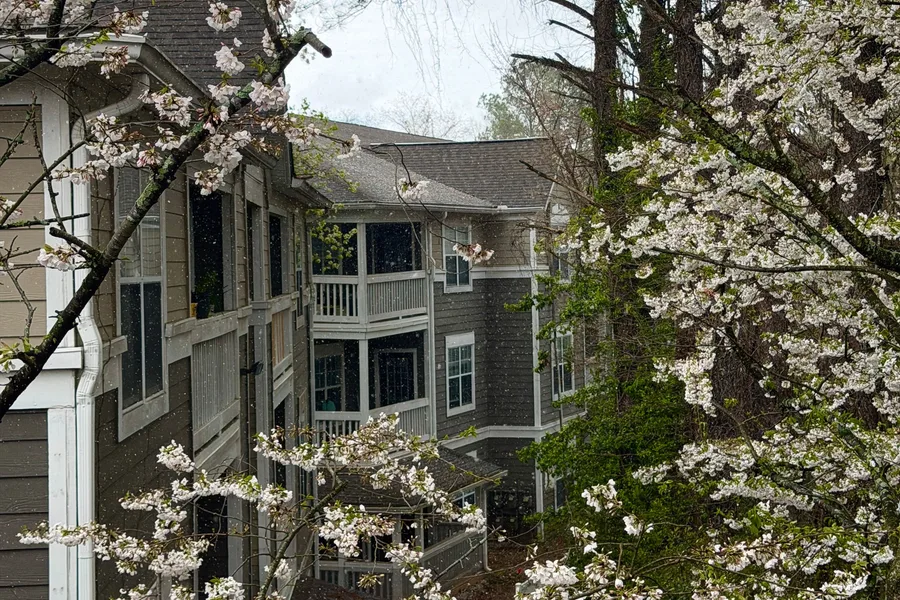
They are not nursing homes, and cannot become them. 24 CFR 891.220 is one sentence long: “Projects may not include facilities for infirmaries, nursing stations, or spaces for overnight care.”
They do come with a service coordinator. 12 U.S.C. 1701q(g)(1) says services “may include (A) meal service adequate to meet nutritional need; (B) housekeeping aid; (C) personal assistance; (D) transportation services; (E) health-related services,” plus education about telemarketing fraud. 24 CFR 891.225(b)(2) funds this from the rental assistance contract, capped at “$15 per unit per month,” and adds a detail worth knowing: if you pay a co-payment for a service, “Such co-payment shall not be included in the Total Tenant Payment.” A service fee is not rent and must not be treated as rent.
They stay affordable for a long time. 12 U.S.C. 1701q(d)(1) requires that all assisted units “be made available for occupancy by very low-income elderly persons for not less than 40 years.”
They are run by nonprofits. The owner must be a private nonprofit organization that “may not be controlled by or be under the direction of persons or firms seeking to derive profit or gain therefrom” (24 CFR 891.205). Of the 11,012 properties in HUD’s elderly-housing file, 2,677 carry a Section 202 capital advance, 2,380 carry a Section 8 202 contract from the older generation of the program, and 177 carry a Section 202 direct loan. A given building may sit under more than one of those.
What to Have Ready Before You Apply

24 CFR 891.410(b) tells the owner what to collect. Working backwards from it, here is the pile to assemble once and photocopy for every property you apply to:
- Proof of age for the 62-year-old — one member is enough
- Social Security numbers and proof for everyone in the household. Under 24 CFR 5.216(g)(1) the card is not the only acceptable proof: “An original document issued by a federal or state government agency, which contains the name of the individual and the SSN of the individual, along with other identifying information” also counts — and paragraph (i) says the owner “must not reject documentation referred to in paragraph (g)”
- Proof of all income — Social Security or SSI award letter, pension statements, annuity or IRA distributions, any wages
- Asset statements — bank, brokerage, retirement accounts, and the income each produced, for the net-assets certification required by 24 CFR 891.415(a)(2)
- Your unreimbursed medical costs for a full year — insurance and long-term care premiums, prescriptions, dental, hearing, vision, mileage to appointments. This is the deduction that moves your rent
- The signed consent forms for wage and claim information from state agencies, required by 24 CFR part 5, subpart B
- A live-in aide’s details, if you need one
- Deposit money — one month’s tenant rent or $50, whichever is greater, and ask about paying it in installments as 24 CFR 891.435(a) permits
One practical note from the rule: if you are missing SSN documentation, 24 CFR 5.216(h)(1) says you “may retain [your] place on the waiting list for the program but cannot become a participant” until you produce it. Get on the list now; chase the paperwork after.
Waiting Lists, Rejections, and Your Rights
The list must be written and in order. 24 CFR 891.410(a) requires the owner to “maintain a written, chronological waiting list showing the name, race, gender, ethnicity, and date of each person applying.”
A closed list is legal. Paragraph (d) of the same section: if the list is so long that you “would not be likely to be admitted for the next 12 months, the Owner may advise the applicant that no additional applications for admission are being considered for that reason.” Ask when it reopens and apply at several properties.
A rejection comes with a written reason and a review. Paragraph (e) requires prompt written notice of the determination, the reasons, and your right to request a review — and states that the review “may not be conducted by a member of the Owner’s staff who made the initial decision to reject the applicant.”
Once you are in, income is rechecked yearly — but a raise does not evict you. Paragraph (g) requires reexamination “at least every 12 months.” Paragraph (g)(3)(i) is the protection: a household stays eligible for subsidy “until the total tenant payment equals or exceeds the gross rent,” and “The termination of subsidy eligibility will not affect the household’s other rights under its lease.” If your income drops again, assistance can resume and you do not have to re-qualify for admission from scratch.
How to Find One Near You
There is no single national application. You apply to each property, which is why the search matters more than the form.
- Search HUD’s own map. HUD publishes the Section 202 Properties dataset on its open-data portal with property names, addresses and on-site phone numbers. It is the same file the numbers in this guide were computed from.
- Look up your county’s income limit at HUD’s income limits page before you call, so you can answer the first question they ask.
- Call the properties and ask four things: Is the waiting list open? What is the current elderly-family deduction amount? Do you accept a benefit award letter as SSN proof? Can the deposit be paid in installments?
- Ask your Area Agency on Aging which local buildings actually have movement. The federal Eldercare Locator points to the agency covering your county.
- Apply to more than one. With median occupancy at 96.3%, one application is a lottery ticket; five is a plan.
If Section 202 Is Not a Fit
- The waiting list is years long. A Housing Choice Voucher or public housing run on separate lists — apply to those too.
- You own your home and want to stay. USDA Section 504 repair grants and Rebuilding Together fix the house instead of moving you.
- Rent is affordable but the bills are not. LIHEAP covers energy costs and Lifeline covers phone and internet.
- You want one screening for everything. NCOA’s BenefitsCheckUp is free and built for people 60 and older.
- Your income is the real problem. SSI and Medicare Savings Programs put money back each month, and both affect the adjusted income this program uses.
- You cannot reach anyone. Dial 2-1-1; our 211 guide explains what that call can and cannot do.
How We Checked This
Every rule and quotation here was read from a primary source on September 2, 2026. The program rules came from the text of 24 CFR part 891 — sections 891.205, 891.220, 891.225, 891.410, 891.415 and 891.435 — and the income and rent rules from 24 CFR part 5, subpart F, sections 5.601, 5.603, 5.609, 5.611, 5.618 and 5.628, plus 5.216 in subpart B. The statute came from 12 U.S.C. 1701q and 42 U.S.C. 1437a on GovInfo.
The numbers are ours, computed from HUD’s files. The income-limit figures come from HUD’s FY 2026 Section 8 Income Limits spreadsheet, downloaded from HUD User; we deduplicated it to one row per HUD income-limit area, which gave 2,657 areas across the 50 states and DC, and took the lowest, highest and middle one-person very low-income limit for each state. The property counts, unit counts and rent figures come from HUD’s Section 202 Properties dataset (coverage December 2025, updated January 2026), 11,012 records; 1,456 of them report no resident data, so the rent, income, age and occupancy medians are drawn from the 9,556 that do.
Four places where the common understanding and the actual rule diverge, and where we followed the rule:
- “Both of you have to be 62.” The definition is of a household, not a person: “one or more persons at least one of whom is 62 years of age or more at the time of initial occupancy” (12 U.S.C. 1701q(k)(1); 24 CFR 891.205).
- “Savings over $100,000 disqualify you, and you cannot own property.” That restriction is 24 CFR 5.618, and paragraph (e) of that section limits it to “the Section 8 (tenant-based and project-based) and public housing programs.” 24 CFR 5.601(e) repeats the limitation. We found no provision in 24 CFR part 891 or part 5 subpart F extending 5.618 to Section 202, and we say so plainly rather than repeating the general advice. Assets still affect your income and must be certified under 24 CFR 891.415(a)(2), and a specific property may apply its own policy — ask, and ask for the citation.
- “Medical expenses over 3% of income come off your rent.” The threshold in 24 CFR 5.611(a)(3) is now ten percent. The 3% figure survives only inside the phase-in relief at 5.611(c)(1), for families who held the deduction as of January 1, 2024, and even there it steps to 5%, then 7.5%, then 10%.
- “If your income rises, you lose the apartment.” 24 CFR 891.410(g)(3)(i) says the opposite: subsidy continues until your total tenant payment reaches the gross rent, and “The termination of subsidy eligibility will not affect the household’s other rights under its lease.”
Two access notes, so you know how the sourcing was done. eCFR’s ordinary web pages redirect automated requests, so the regulation text above was pulled from eCFR’s versioner API against the current title text; the links point to the human-readable sections. HUD.gov itself blocked every request we made, from two different tools, so nothing in this guide relies on a HUD.gov program page — the HUD material here comes from HUD User and HUD’s open-data portal, which were reachable, and from the Code of Federal Regulations and the United States Code. We link the federal Eldercare Locator but do not quote it, because its content did not render for us today.
What we could not verify, and did not claim: whether any particular property has an open waiting list, how long its list is, or what it charges; the exact 2026 dollar value of the inflation-adjusted elderly family deduction, because we did not read it from a primary HUD publication; whether a minimum rent applies to a Section 202 unit and at what amount, because 24 CFR 5.630 is written in terms of PHAs and Section 8 programs and we found no Section 202 figure; and whether an individual owner applies asset policies beyond what the regulations require. HUD’s waiting-time field in the property dataset was empty across all records, so we make no claim about typical waits.
Section 202 properties are owned and run locally by nonprofit organizations, and admission practices vary building to building. The federal rules quoted here set the floor and the outer limits, not what any one property does this month. If something here contradicts what a property manager, your Area Agency on Aging, or HUD tells you, trust them for your case and tell us so we can re-check the guide.
This is general information, not legal or financial advice.
Frequently Asked Questions
Do both my spouse and I have to be 62?
No. The definition is a household, not a person. Both 12 U.S.C. 1701q(k)(1) and 24 CFR 891.205 define an "elderly person" for this program as "a household composed of one or more persons at least one of whom is 62 years of age or more at the time of initial occupancy." One member aged 62 qualifies the household, and the test is applied when you move in. A younger spouse can live in the unit.
How much rent will I actually pay?
Thirty percent of your adjusted monthly income, in most cases. The statute at 12 U.S.C. 1701q(c)(3) and the rule at 24 CFR 5.628 set your total tenant payment as the highest of 30% of monthly adjusted income, 10% of monthly income, or a designated welfare housing payment. Adjusted income is your income after deductions, not your gross. In HUD's own Section 202 property file, the middle property reports an average tenant rent of $392 a month, and the average reported household income at the middle property is $16,792 a year.
Will savings or a house disqualify me?
Read the rule carefully. The $100,000 net-asset cap and the ban on owning a home you could live in sit in 24 CFR 5.618, and that section's own paragraph (e) says it "applies to the Section 8 (tenant-based and project-based) and public housing programs." 24 CFR 5.601(e) says the same. Section 202 is not on that list. Assets still matter in two other ways: the income they produce counts toward annual income, and 24 CFR 891.415(a)(2) requires you to certify your net family assets. Retirement accounts, including IRAs, are excluded from net family assets under 24 CFR 5.603. Ask the property directly what it applies, and ask for the citation.
Is Section 202 the same as assisted living or a nursing home?
No, and federal rule forbids it. 24 CFR 891.220 states that "Projects may not include facilities for infirmaries, nursing stations, or spaces for overnight care." The activities-of-daily-living definition in 24 CFR 891.205 assumes you can feed, wash and dress yourself with occasional help, and adds that you "must be mobile" — while stating that "The mobility requirement does not exclude persons in wheelchairs or those requiring mobility devices." These are apartments with a service coordinator, not a care facility.
What happens if my income goes up after I move in?
You are not evicted. 24 CFR 891.410(g)(3)(i) says a household stays eligible for subsidy "until the total tenant payment equals or exceeds the gross rent," and that "The termination of subsidy eligibility will not affect the household's other rights under its lease." If your income later falls, assistance can resume, and the same paragraph says the household "will not be required to establish its eligibility for admission to the project" all over again.
How big a security deposit can they ask for?
One month's tenant rent or $50, whichever is greater — that number is set by federal rule at 24 CFR 891.435(a), not by the landlord. The same paragraph allows the owner to collect it on an installment basis, which is worth asking about. Deposits must be held in a segregated interest-bearing account, and if you owe nothing at move-out the owner must refund the full balance within 30 days of receiving your forwarding address.
Can I be turned down, and can I challenge it?
Yes to both. Under 24 CFR 891.410(e) an owner that rejects you must "promptly notify the applicant in writing of the determination, the reasons for the determination, and the applicant's right to request a meeting to review the rejection" — and the review "may not be conducted by a member of the Owner's staff who made the initial decision to reject the applicant." Ask for the written reason, then ask for the review in writing.
Why did the property say its waiting list is closed?
Federal rule allows it. 24 CFR 891.410(d) says that if the waiting list is so long that an applicant "would not be likely to be admitted for the next 12 months, the Owner may advise the applicant that no additional applications for admission are being considered for that reason." That is a queue-length decision, not a judgment about you. Apply at several properties, ask each when its list reopens, and ask to be told in writing.
Can I keep my Section 8 voucher and live here too?
No. 24 CFR 891.415(b)(2) prohibits a household from occupying or receiving assistance for a unit under part 891 "while occupying, or receiving assistance for the occupancy of, another unit assisted under any Federal housing assistance program, including any section 8 program." You choose one. If you already hold a voucher, compare what you would pay under each before you give one up.
Sources
- eCFR — 24 CFR 891.205, Section 202 definitions ("Elderly person means a household composed of one or more persons at least one of whom is 62 years of age or more at the time of initial occupancy."; activities of daily living require that a resident "must be able to feed self," "must be able to wash self," "Must be able to dress self," and "must be mobile. The mobility requirement does not exclude persons in wheelchairs or those requiring mobility devices.")
- eCFR — 24 CFR 891.220, Prohibited facilities ("Projects may not include facilities for infirmaries, nursing stations, or spaces for overnight care.")
- eCFR — 24 CFR 891.225(b)(2), Provision of services ("The HUD-approved service costs will be an eligible expense to be paid from project rental assistance, not to exceed $15 per unit per month."; a tenant co-payment for a service "shall not be included in the Total Tenant Payment")
- eCFR — 24 CFR 891.410, Selection and admission of tenants (owners must keep "a written, chronological waiting list" and "promptly inform in writing any rejected applicant of the grounds for any rejection"; an applicant may request a review that "may not be conducted by a member of the Owner's staff who made the initial decision to reject the applicant"; if the waiting list is so long that admission is unlikely "for the next 12 months, the Owner may advise the applicant that no additional applications for admission are being considered"; income and composition are reexamined "at least every 12 months"; "A household shall remain eligible for subsidy until the total tenant payment equals or exceeds the gross rent… The termination of subsidy eligibility will not affect the household's other rights under its lease")
- eCFR — 24 CFR 891.415, Obligations of the household (the household must use the unit "as the household's… principal place of residence" and may not "Occupy, or receive assistance for the occupancy of, a unit… while occupying, or receiving assistance for the occupancy of, another unit assisted under any Federal housing assistance program, including any section 8 program"; the household supplies "any certification of family net assets, as provided by 24 CFR 5.659(e)")
- eCFR — 24 CFR 891.435(a), Security deposits ("the Owner… will require each household… to pay a security deposit in an amount equal to one month's tenant rent or $50, whichever is greater"; "The Owner (or Borrower) may collect the security deposit on an installment basis.")
- eCFR — 24 CFR 5.601, Purpose and applicability (paragraph (d) applies "§ 5.611(a) and (c) through (e)" to the Section 202 program and adds that otherwise "the regulations in part 5, subpart F, generally are not applicable to these programs"; paragraph (e) applies the asset limits of § 5.618 to "the Section 8 (tenant-based and project-based) and public housing programs")
- eCFR — 24 CFR 5.603, Definitions ("Very low income family. A family whose annual income does not exceed 50 percent of the median family income for the area"; "Health and medical care expenses… include medical insurance premiums and long-term care premiums"; net family assets exclude "the value of any account under a retirement plan recognized as such by the Internal Revenue Service, including individual retirement arrangements (IRAs)")
- eCFR — 24 CFR 5.609(b)(8), Annual income exclusions ("Income of a live-in aide, foster child, or foster adult" is excluded from annual income)
- eCFR — 24 CFR 5.611, Adjusted income ("$525 for any elderly family or disabled family, which amount will be adjusted by HUD annually"; unreimbursed health and medical care expenses are deducted only "to the extent the sum exceeds ten percent of annual income"; phased hardship relief sets the threshold at 5 percent, then 7.5 percent, then ten percent, and a separate general hardship gives a 5 percent threshold that "ends when the circumstances… are no longer applicable or after 90 days, whichever comes earlier")
- eCFR — 24 CFR 5.618, Restriction on assistance to families based on assets (net assets over $100,000 and ownership of "real property that is suitable for occupancy by the family as a residence" bar assistance; paragraph (e): "This section applies to the Section 8 (tenant-based and project-based) and public housing programs.")
- eCFR — 24 CFR 5.628, Total tenant payment ("Total tenant payment is the highest of the following amounts, rounded to the nearest dollar: (1) 30 percent of the family's monthly adjusted income; (2) 10 percent of the family's monthly income;" the designated welfare housing payment, or the minimum rent)
- eCFR — 24 CFR 5.216, Disclosure and verification of Social Security Numbers (acceptable proof includes "A valid SSN card issued by the SSA" or "An original document issued by a federal or state government agency, which contains the name of the individual and the SSN"; "The processing entity must not reject documentation referred to in paragraph (g)"; an applicant without it "may retain its place on the waiting list for the program but cannot become a participant")
- 12 U.S.C. 1701q — Supportive housing for the elderly (definition (k)(1): "a household composed of one or more persons at least one of whom is 62 years of age or more at the time of initial occupancy"; (c)(3) rent is "the highest of… (A) 30 percent of the person's adjusted monthly income, (B) 10 percent of the person's monthly income" or the designated welfare housing payment; (d)(1): "All units in housing assisted under this section shall be made available for occupancy by very low-income elderly persons for not less than 40 years."; (g)(1) services "may include (A) meal service adequate to meet nutritional need; (B) housekeeping aid; (C) personal assistance; (D) transportation services; (E) health-related services")
- 42 U.S.C. 1437a(b)(2)(B) — "The term 'very low-income families' means low-income families whose incomes do not exceed 50 per centum of the median family income for the area, as determined by the Secretary with adjustments for smaller and larger families"
- HUD User (HUD Office of Policy Development and Research) — FY 2026 Income Limits, effective May 1, 2026 ("HUD sets income limits that determine eligibility for assisted housing programs including the Public Housing, Section 8 project-based, Section 8 Housing Choice Voucher, Section 202 housing for the elderly, and Section 811 housing for persons with disabilities programs."); state and county figures in this guide were computed from HUD's own FY 2026 Section 8 Income Limits spreadsheet (Section8-FY26.xlsx) on this page
- HUD Open Data — HUD Section 202 Properties ("HUD assisted Multi-Family properties that primarily serve elderly residents"; Date of Coverage 12/2025, Data Updated 01/2026). Property counts, assisted-unit counts and resident figures in this guide were computed from this dataset's 11,012 records.
Keep reading
- Charities That Help With Rent: Catholic Charities USA (2026) Emergency rent help, housing, and food through 170 local Catholic Charities agencies Read guide →
- Home Repair Help 2026: Rebuilding Together & Who Qualifies More than 100 local affiliates repair homes for low-income owners — many at no cost Read guide →
- Home Repair Grants for Seniors 2026: USDA Section 504 A $10,000 USDA grant to fix hazards in your home — for owners 62 and older, with nothing to pay back if you keep the home 3 years Read guide →
This is general information, not legal or financial advice.