Firewood Bank Near Me: Firewood Help for Winter 2026–27
Last updated:
Apply on the official site →The woodpile is getting low, and winter has not really started. If you heat with a wood stove and cannot afford the next load, a firewood bank may be able to help. It works like a food bank, but for firewood.
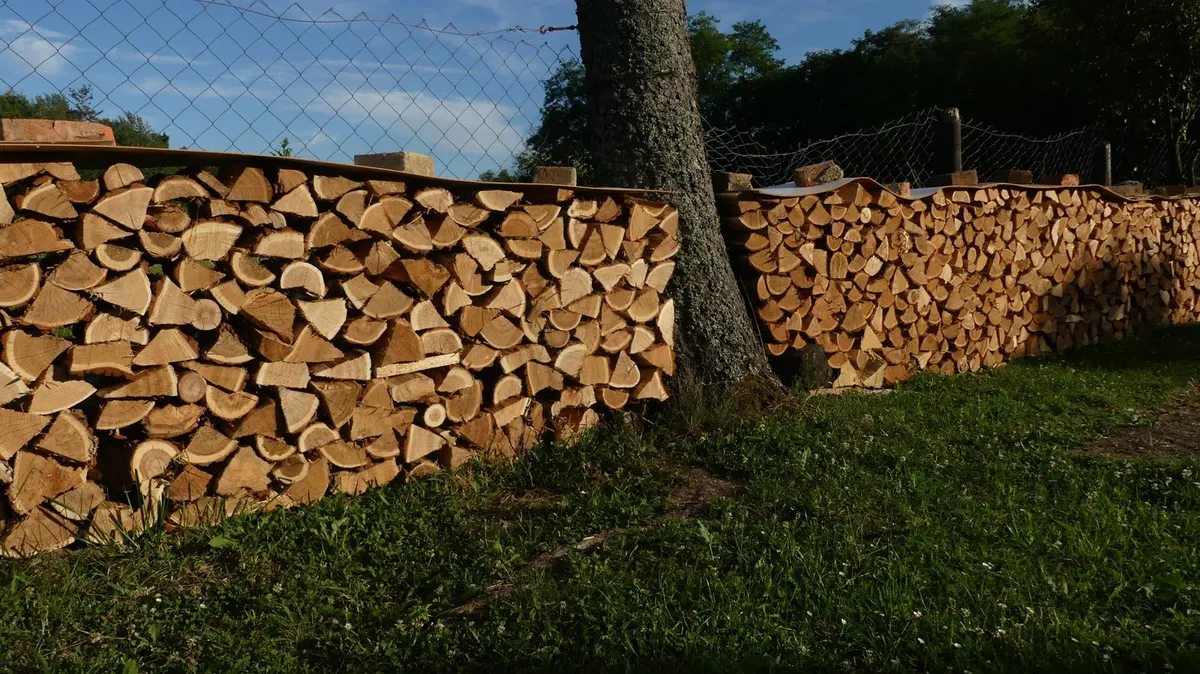
Note: firewood banks are not one government program. Most are small local groups — churches, nonprofits, tribes and volunteers. A few are run by a city or county. This guide uses the national map shared by the Alliance for Green Heat, a 501(c)(3) nonprofit, and the rules we read on five local programs’ own pages. Near the end, we cover government help that can also pay for wood heat.
Esta guía también está disponible en español.
What a Firewood Bank Is
The Alliance for Green Heat explains it this way: “Similar to food banks, firewood banks can be run by nonprofits, churches and other religious organizations, state or local governments, or tribes.” They are “community-led projects that help households struggling to afford heating by supplying them with firewood for free.”
Volunteers usually cut, split and stack the wood. Then you pick it up, or they bring it to your home.
Who gets served first? The Alliance’s 2024–25 report says “many firewood banks prioritize serving the homes of the elderly, single parents, veterans, or those experiencing medical complications or disabilities.”
One thing to know before you click: the Alliance for Green Heat does not hand out firewood itself. Its website, firewoodbanks.org, is built mostly for groups that run firewood banks and want a federal grant. What it offers you is the map.
Find One: The National Map — and Its Hidden Layer
- Go to the Resources page on firewoodbanks.org.
- Scroll to “Firewood Banks Near You.”
- Zoom the map to your area and tap a pin. Most pins show a phone number, and many show a website.
The page describes the map in one sentence: brown circles are programs “first identified” in a 2016 study, and red diamonds are “programs identified since 2022.” That sentence leaves out something important. We downloaded the map’s data on October 10, 2026, and the layers have names:
| Map layer (its own name) | Pins | What it means for you |
|---|---|---|
| ”New and Continuing Firewood Assistance Programs” (red) | 335 | Start here. 326 are in the U.S., 9 are in Canada. |
| ”Mapped 2016 - may be defunct” (brown) | 88 | The map itself warns these may be gone. These pins show only a name — no phone, no website. |
| ”Wood Banks outside North America” (purple) | 18 | Not for U.S. readers. |
So trust red pins more than brown ones. A brown circle near you is a name to search for, not a place to drive to.
Even red pins can be stale:
- 102 of the 326 U.S. pins were last updated in 2022.
- 77 have no website listed, and 36 more link only to a Facebook page.
- A pin is not a promise. The red pin for Albuquerque’s “Firewood for Seniors” links to a city page that now says, “Due to overwhelming demand, we are no longer taking orders.”
- Not every pin is a firewood bank. One New York pin is the state’s HEAP heating-benefit program. Eleven U.S. pins are labeled as businesses.
Is There One in Your State? Our Count
We counted the 326 U.S. pins on the current layer by state.
| Pins | States |
|---|---|
| 20 or more | North Carolina (29), California (29), Oregon (24), Virginia (22), Maine (20) |
| 10 to 19 | Arizona (17), Colorado (16), Alaska (14), Massachusetts (12), Montana (12), New Mexico (11) |
| 5 to 9 | Tennessee, New Hampshire, Washington (9 each); Idaho (8); Vermont, Utah, Nevada (6 each); Pennsylvania, Oklahoma, Missouri (5 each) |
| 3 to 4 | Wyoming, Minnesota, South Carolina, South Dakota (4 each); Michigan, West Virginia, New York, Georgia (3 each) |
| 2 | Indiana, Maryland, Wisconsin, New Jersey, Connecticut, Illinois, Ohio, Florida, Arkansas |
| 1 | Rhode Island, Texas, Nebraska, Iowa, Alabama, Kentucky |
| None | Delaware, Hawaii, Kansas, Louisiana, Mississippi, North Dakota, Washington, D.C. |
What this means for you:
- Most programs are tiny and local. One pin usually serves one town, one county or one tribe — not the whole state.
- Many are for specific groups. 57 U.S. pins are labeled as tribal or tribal-serving. 23 have “senior,” “elder” or “aging” in the name. 9 name veterans.
- Churches run a lot of them. 108 U.S. pins are labeled as faith-based. You do not need to be a member to ask, but ask each one about its rules.
What Local Rules Look Like: Five Real Examples
Every firewood bank sets its own rules. Here is what five programs say on their own pages.
| Program | Who it serves | What its page says |
|---|---|---|
| Warmth for Wake (Wake County, NC — county-run) | Low-income county residents | ”A maximum of two (2) cords of firewood is available for pickup or delivery, by appointment only.” Runs October through March. “100% donor funded.” |
| Gold Country Senior Services (Nevada County, CA) | “Low-income seniors 60 or older who live in Western Nevada County” | You must live alone “or with another age-eligible, low income senior.” Volunteers deliver. Apply by phone or email. |
| Freeport Wood Bank (Maine) | Residents of Freeport or Pownal | ”Firewood Pickup: Saturday Mornings 8-10am.” People in nearby towns are told to contact their town’s General Assistance coordinator. |
| Nez Perce Tribe Senior Firewood Program (Idaho) | Elders, people with disabilities and single parents the Tribe finds eligible | Program stats: “162 Applicants” and “323 cords delivered (6-8 week season).” |
| City of Albuquerque Firewood for Seniors (NM) | Seniors 60 and older in Bernalillo County | ”Due to overwhelming demand, we are no longer taking orders.” |
Three patterns to notice:
- Where you live matters most. Every one of these five has a service area.
- Supply runs out. These programs depend on donated wood and volunteers. Ask early in the season.
- A firewood bank does not pay bills. Warmth for Wake says it “does not provide financial assistance for energy bills (gas, electric or propane).”
How Much Wood to Expect
Firewood is measured in cords. Ask the firewood bank how many pickup loads a cord is, so you know what you are getting.
Do not expect a full winter’s supply. Three numbers from the sources:
- Wake County: a maximum of two cords per household per season.
- Nez Perce Tribe: 323 cords for 162 applicants — about two cords each.
- The 42 firewood banks with 2025–26 federal grants: their listings add up to 9,294 cords a year for 8,165 homes. That is about 1.1 cords per home.
Treat a firewood bank as a bridge, not your whole winter plan. Apply for the government programs below, too.
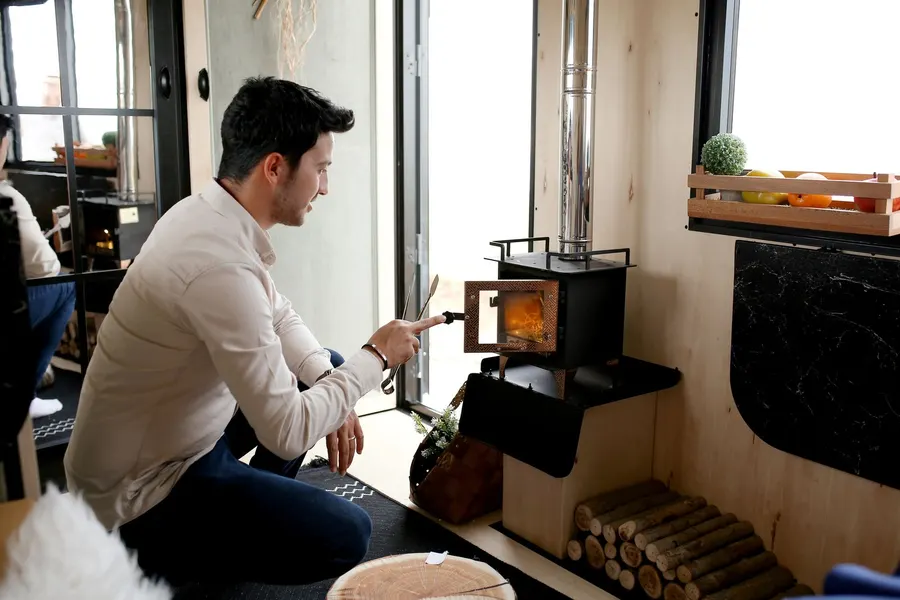
Checklist: Before You Call a Firewood Bank
- Find the red pins near you on the national map. Write down each name and phone number.
- Check that it is still running. Open the program’s own page or call. Do not rely on the pin alone.
- Ask who it serves. Which towns or counties? Is there an age or income rule?
- Ask how to sign up. Phone call, form, or a referral from a caseworker or town office?
- Ask how much wood you can get, and how often.
- Ask pickup or delivery. If pickup: what day and time, and will someone help you load?
- Ask if the wood is dry and ready to burn now. (See the safety section below.)
- Ask about the wait. If there is a list, ask to be put on it today.
Government Help That Can Also Pay for Wood Heat
LIHEAP (heating bill help). LIHEAP is the federal program that helps with heating costs. In some states it can pay for wood. Two examples we read:
- Vermont: “Firewood/wood pellet suppliers don’t have to be certified. Benefits will be paid directly to eligible applicants.”
- Maine: the application asks for “the type of fuel used to heat your home (natural gas, heating oil, kerosene, propane, wood, wood pellets, biobricks, coal, corn, or electricity).”
The Alliance for Green Heat goes further and says “all states subsidize wood fuel via LIHEAP.” We did not check every state, so ask your state’s office. Start with our LIHEAP guide and the income limits by state. If you were turned down, see what to do after a LIHEAP denial.
Weatherization. A tighter home burns less wood. The firewoodbanks.org Resources page points wood-heat households to the Department of Energy’s Weatherization Assistance Program. See our weatherization guide.
Cutting your own on federal land. If you are able to cut wood safely, federal land may be an option.
- National Forests. A federal rule, 36 CFR 223.5, says “free use may be granted to individuals for firewood for personal use.” It is usually limited to “dead, insect-infested, or diseased timber, logging debris, and thinnings.” A local forest officer can approve free use “up to $200 in value in any one fiscal year.” The word is may — each forest decides. Call the ranger district office and ask about a personal-use firewood permit.
- BLM land. The Bureau of Land Management says it “sells between 30,000 to 40,000 cords of firewood every year,” and that “harvesting more than small amounts requires a permit.” Contact your nearest BLM office.
Burn It Safely
Wet wood makes more smoke and less heat. The EPA’s wood-burning advice:
- “Wood burns best at a moisture content of less than 20 percent.”
- “Season wood for at least six months.”
- “Be sure to store wood outdoors, off the ground, with only the top covered” — covering the sides traps moisture.
- Never burn household trash, and “do not burn wet or green (unseasoned) wood.”
Firewood banks that get the federal grant must test their wood with a moisture meter and “do your utmost to deliver seasoned wood (under 20% moisture content).” It is fair to ask a firewood bank whether the wood is ready to burn this winter or needs to dry first.
The EPA also says to “buy and burn locally cut firewood” so tree-killing insects do not travel with it. A local firewood bank already fits that advice.
If There Is No Firewood Bank Near You
- Call 211. Ask for “firewood assistance” or “heating fuel help.” See our 211 guide.
- Call your Community Action Agency. These local agencies often take LIHEAP applications and know the small local programs. See our Community Action Agency guide.
- Ask about a fuel fund. See our guide to nonprofit fuel funds.
- Try the Salvation Army. Three pins on the national map are Salvation Army wood or heat programs (in South Carolina, Virginia and Minnesota). See our Salvation Army guide.
- Also have gas or electric heat? Check your state’s winter shutoff rules.
How We Checked This
What we opened and read ourselves, on October 10, 2026. The Alliance for Green Heat’s firewoodbanks.org home, Funding Overview, About Us, FAQ, Resources and 2025-2026 Grantees pages; its 2024-2025 Annual Report; the national map data file (all 441 pins); the pages of Warmth for Wake, Gold Country Senior Services, Freeport Wood Bank, the Nez Perce Tribe Senior Firewood Program and the City of Albuquerque; Vermont’s Fuel Assistance page; MaineHousing’s HEAP page; 36 CFR 223.5 and 223.8 (eCFR, title 36 issue of October 7, 2026); the BLM Forest Product Permits page; and the EPA’s Best Wood-Burning Practices page. We also confirmed the Alliance for Green Heat’s 501(c)(3) status in ProPublica’s nonprofit database (EIN 26-4816955, Takoma Park, Maryland).
Something you only see in the sources themselves.
- The map’s “may be defunct” layer. The web page calls the brown circles programs “first identified” in 2016. Only the map’s data file shows that layer’s name: “Mapped 2016 - may be defunct.” It has 88 pins with no contact details.
- The state count is ours. The site does not list programs by state. We counted: 326 U.S. pins in 44 states, none in six states or D.C.
- Numbers that do not line up. The page says there are “at least 225 firewood banks in operation in the United States.” The map’s current layer has 326 U.S. pins. The page says the 2016 study “identified 65” firewood banks. The 2016 layer has 88 pins. The site does not explain either gap.
- A pin updated this year, a program that is closed. The Albuquerque record was last updated on the map in January 2026. The city page it links to is a 2022 news post that says orders are closed.
- A partner program that has ended. The firewoodbanks.org About page still lists the EPA’s Burn Wise program as a partner. The EPA’s own page now says: “The Burn Wise Program ran from 2009 to 2025. The website serves as a historic record; EPA is no longer updating program content as of October 30, 2025.” The burning advice is still posted, and we quote it above.
- Fewer grants this year. The Alliance’s report counts 83 firewood banks funded in 2024–25. Its 2025–26 page lists 42. The FAQ says that this cycle, firewood banks “must currently source, or have a plan to source, some or all firewood from federally managed lands.”
Where the common belief and the source do not match.
- “There is a national firewood program I can apply to.” There is not. The federal money goes to firewood banks as grants, not to households. You ask a local firewood bank.
- “If it’s on the map, it’s open.” The map has a whole layer marked “may be defunct,” and 102 current U.S. pins were last updated in 2022.
- “A firewood bank will heat my home all winter.” The listed totals for this year’s grantees work out to about 1.1 cords per home.
What we could not check.
- We did not call any firewood bank. We cannot tell you which have wood today or how long the wait is.
- We read only five local programs’ pages out of 326 U.S. pins. Rules elsewhere will differ.
- The U.S. Forest Service website (fs.usda.gov) did not load for us, by direct request or in a browser. So we quote the federal rule itself, not any forest’s permit page. Permit fees and limits for each forest are not in this guide.
- We did not check LIHEAP wood-heat rules in every state — only Vermont’s and Maine’s pages.
- We did not find a government page defining the size of a cord that would load for us, so we do not give one here.
- Cords and homes for 2025–26 are each grantee’s listed yearly figures, not audited results.
- firewoodbanks.org is English-only. We did not find Spanish materials.
Firewood banks are local nonprofit, church, tribal or local-government programs. Each sets its own rules. LIHEAP, weatherization and federal firewood permits are government programs.
Last updated: October 10, 2026
This is general information, not legal or financial advice.
Frequently Asked Questions
How do I find a firewood bank near me?
Open the national firewood bank map on the Alliance for Green Heat's firewoodbanks.org Resources page and zoom to your area. On October 10, 2026, we counted 326 U.S. pins in 44 states on the map's current layer. Then call or open the program's own page before you go. Some pins are out of date.
Is firewood from a firewood bank free?
Usually, yes. The Alliance for Green Heat describes firewood banks as community projects that help households "by supplying them with firewood for free." But every firewood bank is local and sets its own rules on who qualifies, how much wood you get, and whether it delivers. Ask when you call.
Who qualifies for free firewood?
It depends on the program. Many serve only one town, county or tribe. Some are only for seniors: for example, Gold Country Senior Services in California serves low-income seniors 60 or older in Western Nevada County. The Alliance for Green Heat says many firewood banks put older adults, single parents, veterans and people with disabilities first.
How much firewood can I get?
Often about one or two cords for the season. Wake County, North Carolina, sets a maximum of two cords per household. Across the 42 firewood banks funded for 2025–26, the listed totals work out to about 1.1 cords per home. That is usually not enough to heat a home all winter, so apply for LIHEAP too.
Can LIHEAP pay for firewood?
In some states, yes. Vermont's fuel assistance page says firewood and wood pellet suppliers do not have to be certified and the benefit is paid directly to eligible applicants. Maine's application lists wood, wood pellets and biobricks as heating fuels. Ask your state's LIHEAP office how wood heat is handled where you live.
Sources
- Alliance for Green Heat — firewoodbanks.org, Resources page, read October 10, 2026 ("As of February 2026, we know there are at least 225 firewood banks in operation in the United States, with new firewood banks being discovered each month."; "A 2016 report by Clarisse Hart ... identified 65 firewood banks in operation across the country."; "The map shows those first identified by Hart as brown circles while the red rhombuses indicate programs identified since 2022 in North America."; "all states subsidize wood fuel via LIHEAP")
- National firewood bank map embedded on that page (Google My Maps, "Firewood Assistance Programs"), map data downloaded and counted October 10, 2026 (map description: "Last updated by Clarisse Hart and Darian Dyer in January 2026"; three layers: "New and Continuing Firewood Assistance Programs" 335 pins, "Mapped 2016 - may be defunct" 88 pins, "Wood Banks outside North America" 18 pins; our count of the first layer: 326 U.S. pins in 44 states and 9 in Canada)
- Alliance for Green Heat — firewoodbanks.org, Funding Overview, About Us and FAQ pages, read October 10, 2026 ("Similar to food banks, firewood banks can be run by nonprofits, churches and other religious organizations, state or local governments, or tribes."; FAQ: firewood banks "are community-led projects that help households struggling to afford heating by supplying them with firewood for free"; "Founded by John Ackerly in Maryland in 2009, the Alliance for Green Heat is an 501(c)(3) nonprofit organization"; grantees must "Use moisture meter to test wood and do your utmost to deliver seasoned wood (under 20% moisture content)")
- Alliance for Green Heat — Firewood Bank Assistance Program 2024-2025 Annual Report (PDF), read October 10, 2026 (grants "totaling $875,060, were distributed to 83 firewood bank programs"; "grantees served approximately 15,053 homes with 14,114 cords of wood"; "Many firewood banks prioritize serving the homes of the elderly, single parents, veterans, or those experiencing medical complications or disabilities.")
- Alliance for Green Heat — 2025-2026 Grantees page, read and totaled October 10, 2026 (42 grantees in 17 states; the page lists "Cords Per Year" and "Homes Served Per Year" for each — our totals: 9,294 cords and 8,165 homes)
- Wake County, North Carolina — Warmth for Wake, read October 10, 2026 ("a seasonal energy assistance outreach program that is 100% donor funded"; "The program begins in October and ends in March of each year."; "A maximum of two (2) cords of firewood is available for pickup or delivery, by appointment only."; "The program does not provide financial assistance for energy bills")
- Gold Country Senior Services (Nevada County, California) — Senior Firewood Program, read October 10, 2026 ("Low-income seniors 60 or older who live in Western Nevada County and are struggling to heat their home."; "Lives alone or with another age-eligible, low income senior"; "To apply, please call (530) 615-4541")
- Freeport Wood Bank (Maine) — home page, read October 10, 2026 ("If you are a resident of Freeport or Pownal and need firewood, click on 'Need Firewood' or call"; residents of neighboring towns: "contact your local General Assistance Program coordinator"; "Firewood Pickup: Saturday Mornings 8-10am")
- Nez Perce Tribe Forestry & Fire Management — Senior Firewood Program, read October 10, 2026 ("162 Applicants (elders, disabled and single parents)"; "323 cords delivered (6-8 week season)")
- City of Albuquerque Department of Senior Affairs — Senior Affairs Offers Free Firewood to Seniors (news post dated September 19, 2022), read October 10, 2026 ("Due to overwhelming demand, we are no longer taking orders.") — this page is what the national map's Albuquerque pin links to
- Vermont Department for Children and Families — Fuel Assistance, read October 10, 2026 ("Firewood/wood pellet suppliers don't have to be certified. Benefits will be paid directly to eligible applicants.")
- MaineHousing — Home Energy Assistance Program (HEAP), read October 10, 2026 (applicants report "The type of fuel used to heat your home (natural gas, heating oil, kerosene, propane, wood, wood pellets, biobricks, coal, corn, or electricity).")
- 36 CFR 223.5 and 223.8 — free use of National Forest timber by individuals (eCFR versioner API, title 36 issue of October 7, 2026) ("Free use may be granted to individuals for firewood for personal use"; "Except in unusual cases, the material will be restricted to dead, insect-infested, or diseased timber, logging debris, and thinnings."; forest officers may grant free use "up to $200 in value in any one fiscal year")
- Bureau of Land Management — Forest Product Permits, read October 10, 2026 ("the BLM sells between 30,000 to 40,000 cords of firewood every year"; "Harvesting more than small amounts requires a permit")
- U.S. EPA — Burn Wise, Best Wood-Burning Practices, read October 10, 2026 ("Wood burns best at a moisture content of less than 20 percent."; "Season wood for at least six months. Be sure to store wood outdoors, off the ground, with only the top covered"; page banner: "The Burn Wise Program ran from 2009 to 2025. The website serves as a historic record; EPA is no longer updating program content as of October 30, 2025.")
Keep reading
- Ohio PIPP Plus Income Limits 2026 & What You'll Pay Ohio PIPP Plus bills you 5% of income for gas and 5% for electric — but joining cuts your HEAP benefit by 75% Read guide →
- California CARE Program 2026: Income Limits & How to Apply CARE takes 30-35% off a California electric bill — and a one-person household gets the same $43,280 income limit as a two-person household Read guide →
- Help Paying Bills for Veterans 2026: VFW vs American Legion The VFW's $2,500 bill grant is for active-duty members only — and it made 13 grants in fiscal year 2025 Read guide →
This is general information, not legal or financial advice.