Home Sharing for Seniors 2026: Find a Program by State
Last updated:
Apply on the official site →You have a spare bedroom and a tax bill that keeps going up. Or you are 68, your rent just rose again, and you cannot find a place you can afford. Home sharing puts those two people together.

Note: home sharing programs are not one government program. Most are run by local nonprofits. This guide uses the national list kept by the National Shared Housing Resource Center (NSHRC), a 501(c)(3) nonprofit network, and the rules we read on six programs’ own pages. One of those six, Pennsylvania’s SHARE, is a state program run through local Area Agencies on Aging. We also cover what federal rules say about SSI, SNAP, Section 8 and taxes when you share a home.
Esta guía también está disponible en español.
What Home Sharing Is
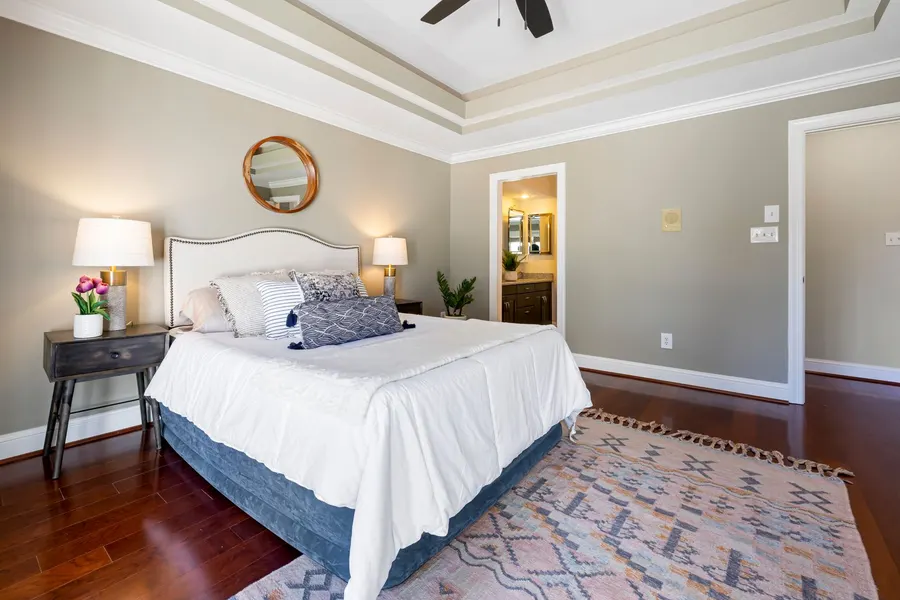
NSHRC explains it this way: “Homesharing enables two or more unrelated people to share housing for their mutual benefit. A person offers a private bedroom and shared common area in exchange for rent, help around the house or a combination of the two.”
There are two sides:
- The home provider (or host) has a spare room. Many are older homeowners. Renters can sometimes be hosts too.
- The home seeker (or guest) needs an affordable place to live. Seekers can be any age, including other seniors.
A home sharing program is the go-between. NSHRC says programs on its list must be nonprofits. They screen applicants, match people one by one, help write a home sharing agreement, and check in after the move.
It is not home care. NSHRC says housemates might cook, drive to appointments or do extra chores, but they “are not expected to provide personal care for the home provider.”
The National List — and Who Checks It
- Go to the NSHRC Program Directory.
- Scroll the list to your state, or tap “View List of Programs.”
- Call or open the website of the program near you. NSHRC will not match you. Its site says, “We do not offer homesharing opportunities.”
Two things to know before you trust any list:
- No state regulates these programs. NSHRC’s FAQ says: “Homeshare programs are not regulated by any state.”
- NSHRC does not inspect them. Programs “have to apply and self-certify” that they follow best practices, “but NSHRC does not inspect programs.”
So ask each program how it screens people. A checklist is below.
Is There a Program in Your State? Our Count
The list file is titled “NSHRC Programs in the U.S. 3/2026.” We downloaded it on October 12, 2026, and counted every row.
| Listings | States |
|---|---|
| 18 | California |
| 11 | Pennsylvania (county SHARE programs — see below) |
| 3 | New Jersey |
| 2 each | Colorado, Florida, Illinois, Maryland, New York, Washington |
| 1 each | Delaware, Hawaii, Idaho, Michigan, Minnesota, North Carolina, Oregon, South Dakota, Texas, Vermont |
| None | The other 31 states and Washington, D.C. |
Total: 54 listings in 19 states.
What this means for you:
- More than half are in two states. California and Pennsylvania have 29 of the 54.
- Most programs serve one city or county, not the whole state. A listing in your state may still be hours away.
- There used to be far more. NSHRC’s own history page says that by the late 1980s its directory “listed over 400 programs in the US.”
- Not on the list does not always mean nothing exists. Pennsylvania’s own page names four SHARE counties that the NSHRC list leaves out (see below). Call your Area Agency on Aging and ask.
What Local Rules Look Like: Six Real Examples
Every program sets its own rules. Here is what six say on their own pages.
| Program | Who it serves | Cost and rules on its page |
|---|---|---|
| HomeShare Vermont | Twelve Vermont counties and three towns in Rutland County. “There are no age or income restrictions." | "There is no fee to apply.” If matched, a fee “ranging from $60 to $500, depending on your income.” “Most people pay $120-$250.” A two-week trial comes first. |
| New York Foundation for Senior Citizens (New York) | Adult hosts and guests. “One of the matchmates must be age 60 or older.” | The page calls it a “free Home Sharing Program.” Social work staff screen and check references. |
| St. Ambrose Homesharing (Baltimore, MD) | Baltimore City and County. | ”Rent averages $500-$700 per month.” Seekers pay a $20–$50 interview fee and a match fee that is double it. Providers pay “a $50 application fee” and a match fee equal to one-third of one month’s rent. |
| HIP Housing (San Mateo County, CA) | “Home Seekers must live, work, or attend school in San Mateo County.” | Matches a provider with a seeker who pays rent, or one “who exchanges household duties for reduced rent.” The page lists no fee. |
| Delaware Senior Home Shares | Hosts are “individuals aged 55 and over who have a spare room.” | Application “includes a background check and personal references.” Started in 2024. The page lists no fee. |
| Pennsylvania SHARE (state program) | Participants “must be at least 18 years of age and one of the individuals in the match must be over 60.” | Run through local Area Agencies on Aging in 14 counties. The page lists no fee. |
Three patterns to notice:
- Where you live matters most. Every one of the six has a service area.
- “Senior” means different things. One program has no age rule. Two require one person to be 60 or older. One sets 55 for hosts.
- Fees range from none to a share of the rent. Ask for the fee sheet before your interview.
Pennsylvania: the state page and the national list do not match
Pennsylvania’s SHARE is a state program, not a private nonprofit. The Pennsylvania Department of Aging page says SHARE “is currently available in Bucks, Carbon, Crawford, Lackawanna, Lancaster, Lehigh, Monroe, Montgomery, Northampton, Northumberland, Pike, Snyder, Union, and Wayne counties.”
When we compared that page with the NSHRC list:
- Four counties are on the state page but not the national list: Lancaster, Montgomery, Northampton and Northumberland.
- Two counties are on the national list but not the state page: Adams and Allegheny.
- Crawford County has a phone number on the national list. The state page says “Temporarily not accepting SHARE inquiries.”
- Carbon County’s phone is “TBD” on the national list. The state page gives a number.
If you live in Pennsylvania, use the state page. It also posts a list of open SHARE homes that it says “is updated each month.”
How a Match Usually Works
HomeShare Vermont spells out its steps. Other programs are similar.
- Apply. By mail or online.
- Background and reference checks.
- Interview. Staff visit the home if you are the host. “Family members can participate in the interview if you would like.”
- Introductions. Staff tell you about people who might fit. You decide whom to meet. “It is up to people in the program to decide who they want to live with.”
- Trial stay. In Vermont it is two weeks. The guest “must keep their current housing to have a place to go back to in case it doesn’t work out.”
- Written agreement. It covers “rent, services, housekeeping, visitors, schedules and notice that would be given to end the match.”
- Follow-up. Staff stay in touch.
A match is not certain. HomeShare Vermont says, “We can’t guarantee to find a match for everyone.”
Checklist: Questions to Ask a Home Sharing Program
- Do you serve my town or county?
- Is there an age rule for the host, the guest, or the match?
- What do you charge, and when? Is any fee refunded if the match ends early?
- What checks do you run on the other person? Criminal background? References? A past-landlord reference?
- Do you visit the home before a match?
- Is there a trial stay? How long?
- Will you help us write the agreement? Does it cover rent, chores, guests, and how much notice ends the match?
- What happens after move-in? How often do you check in? Whom do I call if there is a problem?
- If I rent my home: do I need my landlord’s written OK first?
- If I own a condo or live under an HOA: do the building or association rules allow a housemate? Ask the board or manager before you sign.
- If I get SSI, SNAP, Section 8 or live in senior housing: see the next section before you sign.
Before You Sign: How Sharing a Home Can Affect Benefits and Taxes
Programs match people. They do not decide your benefits. Here is what the federal rules say. Rules below are federal rules for 2026. Tell each office about the change and ask how it applies to you.
SSI
If you are the host and get SSI: rent you collect is income. The rule says “Rents are payments you receive for the use of real or personal property such as land, housing, or machinery,” and that Social Security subtracts your “ordinary and necessary expenses” of renting (20 CFR 416.1121). What is left can lower your SSI check.
If you are the guest and get SSI: what you pay matters.
- Pay your full share of the household bills, and the room does not cut your check. “If you pay your pro rata share toward monthly household operating expenses, you are living in your own household and are not receiving in-kind support and maintenance from anyone else in the household” (20 CFR 416.1133). Your share is the household’s rent or mortgage, property tax and utilities, divided by the number of people.
- Or pay the rent the host charges, if it is high enough. A “business arrangement exists when the amount of monthly required rent to be paid equals or exceeds the presumed maximum value” (20 CFR 416.1130). That value is “one-third of your Federal benefit rate plus” $20. With the 2026 rate of $994, our math puts it at about $351.33 a month.
- Pay less than that, and the gap can count against you. Social Security “will impute as in-kind support and maintenance the difference” between your rent and the lower of that value or the room’s market rent.
- Food no longer counts. The rule now says, “Food is not included in the calculations of in-kind support and maintenance.”
This matters most for reduced rent in exchange for chores. The rules we read do not say how Social Security treats chores you do in place of rent. Ask Social Security before you agree to a low-rent or no-rent match. For the basics, see our SSI guide.
SNAP (food stamps)
SNAP looks at who buys and cooks food together, not who shares a roof.
- A person “living with others, but customarily purchasing food and preparing meals for home consumption separate and apart from others” can be their own SNAP household (7 CFR 273.1).
- Roomers: “Individuals to whom a household furnishes lodging for compensation, but not meals, may participate as separate households.”
- If you buy and cook together, you are one household, and both incomes count.
- If the host provides meals as part of the deal, the guest may be a “boarder.” Boarders cannot get SNAP on their own.
Rent you collect is also income you must report. See our SNAP guide.
Section 8 vouchers and subsidized housing
- Do not move someone in without approval. A voucher family “must request PHA approval to add any other family member as an occupant of the unit,” and “no other person” may live there (24 CFR 982.551).
- “Shared housing” is a voucher option, but your housing agency can say no. The rule says the agency “is not required to permit families” to use it. It must allow it when needed as a reasonable accommodation for a person with a disability (24 CFR 982.601).
- The owner can live in the home, but “an assisted person may not be related by blood or marriage to a resident owner” (24 CFR 982.615).
If you live in public housing or a Section 202 senior building, ask the manager first. See our guides to Section 8 vouchers and Section 202 senior apartments.
Taxes
Rent is taxable income. The IRS says: “Cash or the fair market value of property or services you receive for the use of real estate or personal property is taxable to you as rental income.”
Read that again: services count too. If a housemate does chores in place of rent, the IRS treats the fair market value of that help as rental income to you.
You can usually subtract part of your home costs. The IRS says you “generally must divide your total expenses between the rental use and the personal use.” Free tax preparers can help. See AARP Tax-Aide vs. VITA.
If There Is No Program Near You
- Call your Area Agency on Aging. Ask if any local group does home sharing or “shared housing.” See our Eldercare Locator guide.
- Call 211 and ask for “home sharing” or “shared housing.” See our 211 guide.
- Read a do-it-yourself guide. HomeShare Vermont wrote a guide to making a match on your own “for people with a home to share outside of our service area.”
- Be careful with websites and apps. NSHRC says it “promotes non-profit, comprehensive, person-centered programs rather than web-based, online matching portals.” A website does not interview anyone or visit the home.
- Check other senior housing help. See Section 202 senior apartments and a full benefits screen with BenefitsCheckUp. If you would rather stay in your home without a housemate, an aging in place village may offer rides and volunteer help for yearly dues.
- Get an agreement in writing even without a program. If a match goes wrong, see free legal help.
How We Checked This
What we opened and read ourselves, on October 12, 2026. NSHRC’s home, About, FAQs, Program Criteria and Program Directory pages, and the directory’s list file (every row); the home sharing pages of HomeShare Vermont (two pages), the New York Foundation for Senior Citizens, St. Ambrose Housing Aid Center, HIP Housing, Delaware Senior Home Shares and Pennsylvania Home of the Sparrow; the Pennsylvania Department of Aging SHARE page; 20 CFR 416.1121, 416.1124, 416.1130, 416.1131, 416.1133 and 416.1140 (eCFR, title 20 issue of September 30, 2026); 7 CFR 273.1 (title 7 issue of October 8, 2026); 24 CFR 982.551, 982.601, 982.615, 982.616 and 982.617 (title 24 issue of September 28, 2026); and IRS Topic 414 and Topic 415. We also confirmed NSHRC’s 501(c)(3) status in ProPublica’s nonprofit database (EIN 03-0336024, South Burlington, Vermont).
Something you only see in the sources themselves.
- The state count is ours. NSHRC’s site does not total its list. We counted: 54 listings in 19 states, none in 31 states or D.C.
- One listing is there twice, and one link goes somewhere else. “Union-Snyder AAA” in Lewisburg, Pennsylvania, appears on two rows. The first row’s website link goes to Pennsylvania Home of the Sparrow — a nonprofit in Chester County, on the other side of the state, whose own shared housing program matches older homeowners with women seeking housing.
- The national list and Pennsylvania’s page disagree on six counties and two phone entries (details above).
- NSHRC shares an address with one of its members. NSHRC’s mailing address — 412 Farrell Street, Suite 300, South Burlington, Vermont — is the same address the list gives for HomeShare Vermont.
- A stale page. NSHRC’s About page still says the next World Homeshare Congress “will be held in Liverpool, England in 2020.”
- Five checks or six? HomeShare Vermont’s What We Do page says “six different background checks.” Its Share Your Home page says “five different state and federal background checks.”
- Chores are income. The IRS sentence quoted above names “services” you receive for the use of real estate. Program pages we read describe service exchanges but do not mention taxes.
Where the common belief and the source do not match.
- “There is a national program I can sign up with.” There is not. NSHRC says, “We do not offer homesharing opportunities.” You apply to a local program.
- “A listed program has been vetted.” Programs self-certify. NSHRC says it “does not inspect programs,” and no state regulates them.
- “A housemate can be my caregiver.” NSHRC says housemates “are not expected to provide personal care.”
- “Home sharing is only for seniors.” HomeShare Vermont has “no age or income restrictions.” Its hosts last year “ranged in age from 27 to 99.”
What we could not check.
- We did not call any program. We cannot tell you which have open rooms or how long a match takes.
- We read six programs’ pages out of 54 listings. Rules elsewhere will differ.
- Social Security’s website (ssa.gov) blocks our direct requests, so the SSI section quotes the federal rules themselves. We did not read Social Security’s staff manual. We could not confirm how it treats chores done in place of rent.
- The $351.33 figure is our own math (one-third of $994, plus $20). It is not printed in the rule.
- We did not read each state’s SNAP policy or the rule on how SNAP counts rent you collect.
- We did not check state or local landlord-tenant, zoning or property tax rules. Home of the Sparrow tells hosts to “check with their township on shared housing rules and regulations.”
- We did not check whether sharing your home changes a state property tax break for seniors. Ask your tax office.
- The list file is dated 3/2026. Programs may have opened or closed since.
- NSHRC’s site is English-only. We did not find Spanish materials.
Home sharing programs on the NSHRC list are local nonprofit programs, except Pennsylvania’s SHARE, a state program run through local Area Agencies on Aging. Each sets its own rules. SSI, SNAP and Section 8 are government programs.
Last updated: October 14, 2026
This is general information, not legal or financial advice.
Frequently Asked Questions
What is home sharing for seniors?
Home sharing is when two or more unrelated people share a home. One person offers a private bedroom and shared common areas. The other pays rent, helps around the house, or both. Nonprofit home sharing programs screen both people, introduce them, and help them write an agreement.
How do I find a home sharing program near me?
Start with the Program Directory of the National Shared Housing Resource Center (NSHRC), a nonprofit network. On October 12, 2026, its list had 54 listings in 19 states. NSHRC does not match people itself. You contact the local program on the list.
Does home sharing cost money?
It depends on the program. The New York Foundation for Senior Citizens calls its program free. HomeShare Vermont charges nothing to apply and a match fee of $60 to $500, based on income, only if it finds you a match. St. Ambrose in Baltimore charges interview, application and match fees. Ask before you apply.
Will home sharing affect my SSI or SNAP?
It can. For SSI, rent you collect counts as income, and a room you get for less than a set amount can count as support. For SNAP, a roomer who pays for a room but buys and cooks food separately can be a separate household. Report the change and ask your office how it applies to you.
Is a home sharing housemate a caregiver?
No. NSHRC says housemates might cook meals, drive to appointments or do extra chores, but they "are not expected to provide personal care for the home provider." If you need help with bathing, dressing or medicine, ask your Area Agency on Aging about home care.
Sources
- National Shared Housing Resource Center (NSHRC) — home page and FAQs, read October 12, 2026 ("a network of independent non-profit homesharing programs across the United States"; "We do not offer homesharing opportunities."; "Homeshare programs are not regulated by any state. Programs that join the National Shared Housing Resource Center Network have to apply and self-certify that their program meets best practice criteria practice, but NSHRC does not inspect programs."; "Homesharers are not expected to provide personal care for the home provider.")
- NSHRC — Program Directory page and its "View List of Programs" file (PDF titled "NSHRC Programs in the U.S. 3/2026"), downloaded and counted October 12, 2026 (our count: 54 listings in 19 states — California 18, Pennsylvania 11, New Jersey 3; no listing in 31 states or Washington, D.C.)
- NSHRC — Program Criteria and About pages, read October 12, 2026 (listed programs must be "a non-profit 501(c)3 under IRS rules or operating under the umbrella of a non-profit corporation"; staff or volunteers "trained to screen program applicants which may include a one-on one process of interviews, background and reference checks"; founded in 1980 by Maggie Kuhn; by the late 1980s "their program directory listed over 400 programs in the US")
- HomeShare Vermont — What We Do and Share Your Home pages, read October 12, 2026 ("There is no fee to apply."; match fee "ranging from $60 to $500, depending on your income"; "Most people pay $120-$250."; "a two-week trial period"; "There are no age or income restrictions to be eligible for the program."; "Housemates provide an average of 8 hours of service a week plus pay a small rent or help with utility bills.")
- New York Foundation for Senior Citizens — Home Sharing, read October 12, 2026 ("NYFSC's free Home Sharing Program helps link adult 'hosts' with extra private spaces in their homes or apartments with appropriate adult 'guests'"; "One of the matchmates must be age 60 or older.")
- St. Ambrose Housing Aid Center (Baltimore) — Homesharing, read October 12, 2026 ("Rent averages $500-$700 per month with flexible (often month to month) leases."; "For Homeseekers: An in-person interview fee of $20-$50 depending on annual income and a match fee that is double the interview fee."; "For Homeproviders: A $50 application fee and a one-time match fee at the start of a successful match that equals one-third of the one month's rent.")
- HIP Housing (San Mateo County, California) — Home Sharing Program, read October 12, 2026 ("Home Seekers must live, work, or attend school in San Mateo County."; a provider can be matched with a seeker "who exchanges household duties for reduced rent")
- Delaware Senior Home Shares — home page, read October 12, 2026 ("Senior Citizens: Individuals aged 55 and over who have a spare room and would like to share their home."; "started in 2024")
- Pennsylvania Department of Aging — Apply to the Shared Housing and Resource Exchange (SHARE) Program, read October 12, 2026 ("SHARE participants must be at least 18 years of age and one of the individuals in the match must be over 60."; "SHARE is currently available in Bucks, Carbon, Crawford, Lackawanna, Lancaster, Lehigh, Monroe, Montgomery, Northampton, Northumberland, Pike, Snyder, Union, and Wayne counties."; Crawford County: "Temporarily not accepting SHARE inquiries")
- 20 CFR 416.1130, 416.1131, 416.1133, 416.1140 and 416.1121 — SSI rules on shelter you receive, sharing household costs, and rent you collect (eCFR versioner API, title 20 issue of September 30, 2026) ("You are not receiving in-kind support and maintenance in the form of room or rent if you are paying the amount charged under a business arrangement."; "If you pay your pro rata share toward monthly household operating expenses, you are living in your own household"; "Rents are payments you receive for the use of real or personal property such as land, housing, or machinery.")
- 7 CFR 273.1 — SNAP household concept (eCFR versioner API, title 7 issue of October 8, 2026) (a household can be "An individual living with others, but customarily purchasing food and preparing meals for home consumption separate and apart from others"; "Roomers. Individuals to whom a household furnishes lodging for compensation, but not meals, may participate as separate households.")
- 24 CFR 982.551, 982.601, 982.615 and 982.617 — Section 8 voucher family obligations and shared housing (eCFR versioner API, title 24 issue of September 28, 2026) ("The family must request PHA approval to add any other family member as an occupant of the unit."; "In general, the PHA is not required to permit families ... to use any of these special housing types"; "An assisted person may not be related by blood or marriage to a resident owner.")
- IRS — Topic no. 414, Rental income and expenses, and Topic no. 415, Renting residential and vacation property, read October 12, 2026 ("Cash or the fair market value of property or services you receive for the use of real estate or personal property is taxable to you as rental income.")
Keep reading
- Habitat for Humanity 2026: Who Qualifies & How to Apply Affordable-mortgage homeownership and home repairs through local Habitat affiliates Read guide →
- Salvation Army Rent & Utility Bill Help 2026: How to Apply Emergency rent, mortgage, and utility bill help at 6,400 local Salvation Army service centers Read guide →
- Can You Get Section 8 With an Eviction? 2026 HUD Rules HUD's 5-year eviction rule only covers evictions from federally assisted housing — and Chicago and Philadelphia both cut that look-back to 3 years Read guide →
This is general information, not legal or financial advice.