Farmers Market Coupons for Seniors: SFMNP 2026 Limits
Last updated:
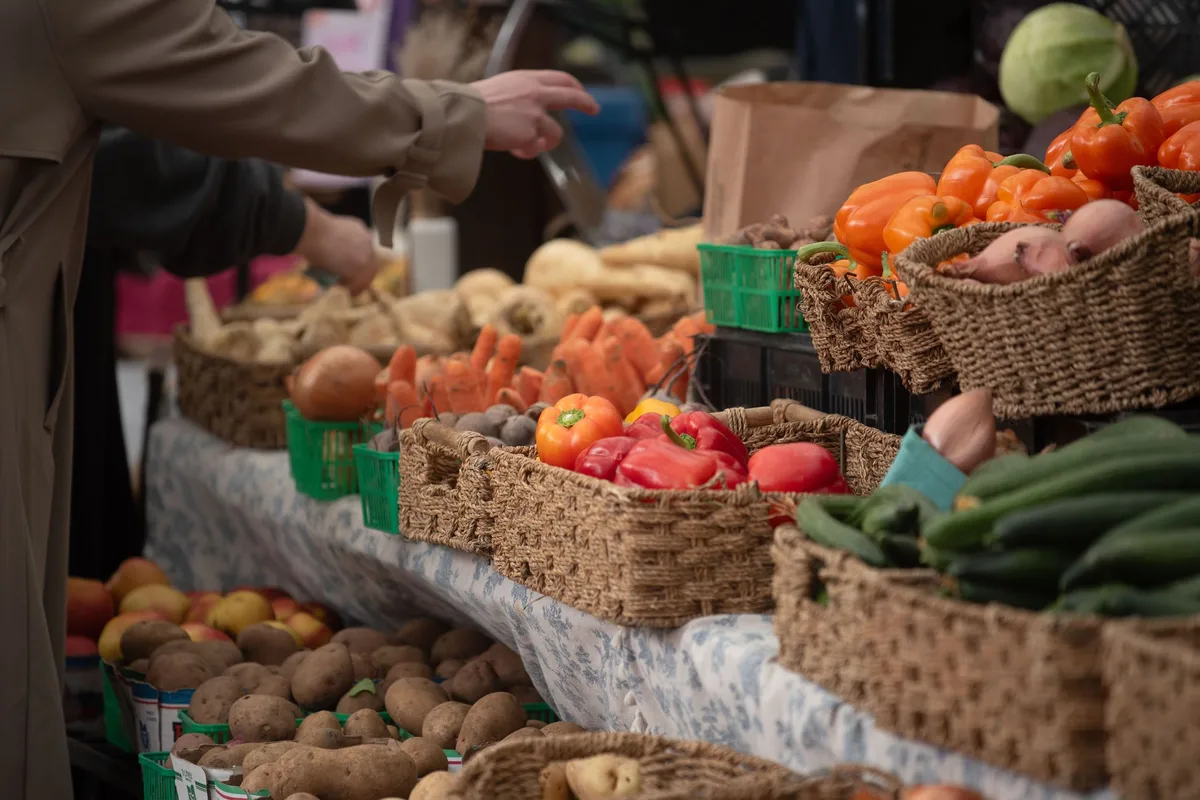
Apply on the official site →If you are 60 or older, there is a federal program that hands you coupons to spend on fresh fruit and vegetables at your local farmers market. It is called the Senior Farmers’ Market Nutrition Program (SFMNP), and it is small, quiet, and easy to miss.
Small matters here. This is not SNAP. Federal rules put the whole year’s benefit between $20 and $50. But it is free produce you were not buying otherwise, the market season is open right now across most of the country, and the income line is more generous than the one on the better-known senior food programs.
Who Qualifies
There are two federal tests, and then some state options on top.
- You are at least 60. 7 CFR 249.6 says participants “must be not less than 60 years of age.”
- Your household income is at or below 185% of the poverty guidelines — or you are already certified for another means-tested program your state has designated, in which case the state can accept you as automatically income eligible.
Two optional doors are written into the same rule, and whether they are open depends on your state:
- A state may treat Native Americans age 55 or older as categorically eligible. Washington State does this.
- A state may treat people under 60 with disabilities who live in housing occupied mainly by older adults, where congregate meals are served, as categorically eligible.
Neither is automatic. If either describes you, ask — do not assume.
The 2026 Income Numbers
FNS publishes the 185% table each year. The current one took effect July 1, 2026 and runs through June 30, 2027:
| Household size | 185% per year | 185% per month |
|---|---|---|
| 1 person | $29,526 | about $2,461 |
| 2 people | $40,034 | about $3,337 |
| 3 people | $50,542 | about $4,212 |
| 4 people | $61,050 | about $5,088 |
| Each additional person | + $10,508 | + $876 |
Those are the figures for the 48 contiguous states, D.C., Guam and the Territories. Alaska is higher — $36,908 a year, about $3,076 a month, for one person.
Two qualifiers worth holding onto:
- 185% is a ceiling, not a promise. The rule sets a maximum; a state may run its program at a lower line. Pennsylvania publishes $29,526 for one person in 2026, matching the federal figure, but your state’s table is the one that decides your case.
- You may not need the math at all. If you are already certified for another means-tested program your state has designated, the rule lets the agency count you as income eligible on that basis. Bring proof of what you are already on.
How Much You Actually Get
7 CFR 249.8 sets the band: the federal benefit “may not be less than $20 per year or more than $50 per year” per participant. Where your state sits inside that band is its own decision.
Pennsylvania hands each senior five $5 checks — $25 for the season. Other states run a card instead: in Washington, the vendor scans your benefit card and you enter a PIN, the same as a debit card.
This is annual, not monthly. One issuance, one season, then you reapply next year.
And it is free. Certification “must be performed at no cost to the applicant,” and participants “must receive SFMNP benefits free of charge.”
What the Coupons Buy — and the Part That Trips People Up
The federal list is short: fresh, unprepared, locally grown fruits, vegetables, honey, and herbs, bought from authorized farmers, farmers markets, roadside stands, or community supported agriculture programs. “Locally grown” means grown inside your state’s borders, though a state may extend that to bordering areas of adjacent states.
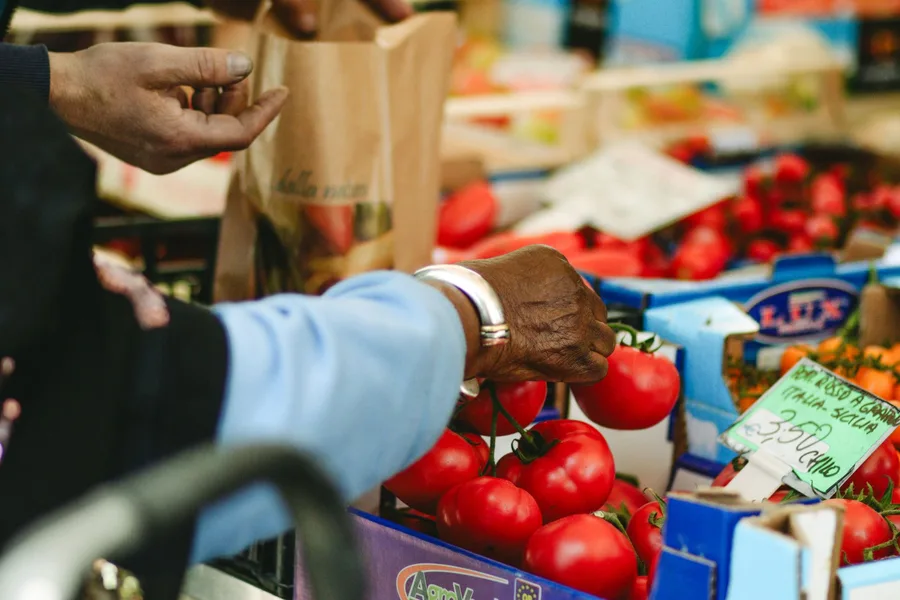
The federal rule then names what is not eligible, and the list surprises almost everyone:
- Dried fruits and vegetables — raisins, prunes, sun-dried tomatoes, dried chili peppers
- Nuts of any kind, even raw
- Potted fruit or vegetable plants; potted or dried herbs
- Maple syrup, cider, honey-adjacent processed goods, seeds
- Wild rice, eggs, meat, cheese, seafood
Anything “processed or prepared beyond their natural state” is out, apart from ordinary harvesting and cleaning. So a jar of jam at the same stall is not covered, and neither is a loaf of bread.
Then there is the trap. Federal rules set the outer limit of what is allowed; each state writes its own eligible-foods list in its State Plan, and that list can be narrower. Pennsylvania’s checks, for example, are good for “Pennsylvania fresh fruits and vegetables only,” with “no processed food like jams, honey, nuts, cider or baked goods,” and no citrus or other tropical fruit — so honey, which the federal rule permits, is off the table there.
Read the sheet that comes with your coupons before you shop. It is the state list, not the federal one, that the vendor is working from.
How to Apply
- Find out whether your state runs it. USA.gov is blunt about this: “SFMNP and CSFP are not available in every state.” It points people to USDA’s FNS contacts directory to find and contact the state program.
- Go through your Area Agency on Aging. This is the near-universal route. Washington says applicants “must apply through their local area agencies on aging (AAAs) or contracted SFMNP providers”; California says the same; Pennsylvania routes seniors through the County Aging office. If you do not know yours, the Eldercare Locator at 1-800-677-1116 will tell you.
- Expect a short application, not an investigation. The rule requires a “clear and simple application process.” Most applicants sign a statement that their household size and income are within the limit; states may ask for documentation, and must ask for it if you are getting more than $50 through a CSA model.
- You must hear back within 15 days. The regulation requires notice of eligibility, ineligibility, or placement on a waiting list within 15 days of your application.
- Send someone in your place if you cannot go. At the state’s discretion, you may name an authorized representative — a proxy — to apply, shop, or pick up your foods for you. You sign a statement designating them, and you can do it at any point in the season.
The Calendar Is the Whole Game
This is the part that decides whether you get anything, and it is why so many eligible seniors miss it every year.
- Sign-up happens in the spring. Coupons go out “on a first come first serve basis,” and states close enrollment when the supply is gone — not when the season ends.
- The redemption window runs through the fall, and the dates differ. Washington’s market season is June 1 through October 31. Pennsylvania’s runs June 1 through November 30. California set its 2026 window at June 15 through November 30. Your coupons expire on your state’s date, and unspent coupons are simply lost.
- Certification does not carry over. The rule is explicit: participants “may be certified only for the current fiscal year’s SFMNP period of operation,” and prior-year certifications “may not be carried over.” Everyone reapplies annually. The upside is that being turned away one year says nothing about the next.
- A waiting list is a real position, not a brush-off. If funds are gone but more may become available, the local agency must keep a list with your name and the date you contacted them, and tell you within 15 days that you are on it.
If you are reading this in the middle of the season with no coupons in hand, make the call anyway. Ask two questions: whether anything is left this year, and what date sign-up opens next year. Then put that date on the calendar.
If SFMNP Is Not Available Where You Are
- Your state does not run it. SNAP is in every state and has its own rules for households with someone 60 or older.
- You want groceries, not a market trip. The senior food box (CSFP) is a monthly USDA package. Its income line is 150% of poverty rather than 185% — tighter — but the food is far more than $50 a year.
- You are not sure what else you are missing. BenefitsCheckUp screens you for senior programs by ZIP code in one sitting.
- Leaving the house is the hard part. Meals on Wheels delivers prepared meals to older adults at home.
- You need food this week. A food bank does not require certification.
If you are not sure where to start, dial 2-1-1. Our 211 guide explains what that call can and cannot do.
How We Checked This
We re-read the federal regulation and the income table from the primary sources on September 1, 2026, mid-season, to make sure nothing here had drifted since publication.
Nothing changed. 7 CFR 249.6 still reads “Participants must be not less than 60 years of age” with the same two optional state doors, and still caps income at “not more than 185 percent of the annual poverty income guidelines.” 7 CFR 249.8 still says the federal benefit “may not be less than $20 per year or more than $50 per year.” The 185% table is still the one FNS published in the Federal Register on April 29, 2026 (document 2026-08323), effective July 1, 2026 through June 30, 2027: $29,526 for one person, $40,034 for two, $50,542 for three, $61,050 for four, plus $10,508 per additional member, and $36,908 for one person in Alaska. Every figure in the table above matches that document.
Three things in the regulation that consumer summaries leave out, and that change what you should expect at the counter:
- You probably do not need pay stubs. 7 CFR 249.6(b)(2)(i) requires most applicants to provide, “at a minimum, a signed statement affirming that their household size and income does not exceed the maximum income eligibility standard in use by the State agency.” Documentation and verification are state options, not a federal requirement — with one exception written into the next paragraph: a state that “offers a benefit of more than $50 per participant through a CSA program” must require documentation from everyone getting that higher benefit.
- Your neighbor cannot get a bigger book of coupons than you. 7 CFR 249.8(c)(1) says “All SFMNP participants living in the areas served by the State agency must be offered the same amount of SFMNP benefits, regardless of the program model(s) used by that State agency.” If a state runs both coupons and a farm-share model, the total value has to match.
- Signing up twice is a defined violation. 7 CFR 249.6(d)(1) requires the agency to warn every applicant about “the illegality of dual participation, i.e., obtaining SFMNP benefits from more than one service delivery area or from more than one SFMNP program model (coupon system and CSA program) within the same service delivery area.” Applying in two counties to improve your odds is not a gray area.
An access note. eCFR’s ordinary web pages redirected our automated requests, so the regulation text was read through eCFR’s own versioner API against the current Title 7 text; the links in this guide point to the human-readable sections. Federalregister.gov’s HTML pages did the same, so the income table was read from the Federal Register’s raw text file for document 2026-08323.
What we could not verify. Which states are actually operating SFMNP this season, whether coupons remain unissued in any particular state today, each state’s own eligible-foods list, and each state’s income table where it sits below the federal 185% ceiling. Those are published state by state and change annually, and USA.gov’s own warning still stands: “SFMNP and CSFP are not available in every state.” The state-specific details in this guide come from the Pennsylvania, Washington and California program pages as read on August 19, 2026, and were not re-fetched.
SFMNP is a federal program administered by state and local agencies; participating states, benefit amounts, eligible-food lists, income tables, sign-up periods, and season dates all vary by state and change from year to year, and the figures above are the 2026 federal rules and guidelines rather than your state’s published table.
This is general information, not legal or financial advice.
Frequently Asked Questions
What is the income limit for senior farmers market coupons in 2026?
Federal rules cap it at 185% of the poverty guidelines. Using the table FNS published for July 1, 2026 through June 30, 2027, that is $29,526 a year — about $2,461 a month — for a one-person household in the 48 contiguous states and D.C., and $40,034 a year, about $3,337 a month, for two people. Alaska is higher, at $36,908 for one person. Your state may set its limit lower than 185%, and it publishes its own table, so ask your local agency for the figure it is actually using.
How much are the coupons worth?
Federal rules say the benefit "may not be less than $20 per year or more than $50 per year" per participant. Where your state lands inside that band is its choice. Pennsylvania, for example, gives each senior five $5 checks, or $25 for the season. It is a once-a-year benefit, not a monthly one.
Do I have to be 60, or does 55 count?
The federal floor is 60. Two exceptions exist and both are optional for your state: a state may treat Native Americans age 55 or older as categorically eligible, and it may treat people under 60 with disabilities who live in senior housing where congregate meals are served as categorically eligible. Washington State, for instance, uses the first option. Neither is automatic nationwide — ask your state.
Can I use the coupons on eggs, nuts, or maple syrup?
No. The federal rule names those exclusions directly: potted plants, potted or dried herbs, wild rice, "nuts of any kind (even raw)," maple syrup, cider, seeds, eggs, meat, cheese, and seafood are not eligible, and neither are dried fruits and vegetables such as raisins, prunes, and sun-dried tomatoes. The federal list of what you can buy is fresh, unprepared, locally grown fruits, vegetables, honey, and herbs — but your state's list can be narrower than the federal one, so check the sheet that comes with your coupons.
Is this the same as the senior food box?
No, and the two are often confused. The food box is the Commodity Supplemental Food Program (CSFP), which is a monthly package of USDA foods with an income limit of 150% of poverty. SFMNP is a once-a-year set of coupons for fresh produce at farmers markets with an income limit of 185%. You can be over the line for one and under it for the other, so it is worth asking about both.
Does it cost anything to apply?
No. The regulation says certification "must be performed at no cost to the applicant" and that participants "must receive SFMNP benefits free of charge." There is no application fee and no charge for the coupons. Anyone asking you to pay to sign up, or to pay to move up a waiting list, is not running the program.
I did not sign up this spring. Is it too late for 2026?
It depends on your state and on whether it has coupons left. States hand them out on a first-come, first-served basis and many close enrollment when the supply runs out, but the redemption season generally runs into the fall, so a mid-season call is worth making. Certification only lasts for the current fiscal year in any case — everyone reapplies each year, so ask your local agency both whether anything is left now and when next year's sign-up opens.
Sources
- 7 CFR 249.1 — SFMNP general purpose (the program exists to "Provide resources in the form of fresh, nutritious, unprepared, locally grown fruits, vegetables, honey, and herbs from farmers' markets, roadside stands, and community supported agriculture (CSA) programs to low-income seniors")
- 7 CFR 249.6 — Participant eligibility ("Participants must be not less than 60 years of age, except that State agencies may exercise the option to deem Native Americans who are 55 years of age or older as categorically eligible"; State agencies "may, at their discretion, also deem disabled individuals less than 60 years of age who are currently living in housing facilities occupied primarily by older individuals where congregate nutrition services are provided, as categorically eligible"; "Participants must have a maximum household income of not more than 185 percent of the annual poverty income guidelines, or be determined automatically income eligible based on current participation/eligibility to receive benefits in another means-tested program"; "Certification for the SFMNP must be performed at no cost to the applicant"; "Applicants for the SFMNP must be notified of their eligibility or ineligibility for benefits, or of their placement on a waiting list … within 15 days from the date of application"; "Participants may be certified only for the current fiscal year's SFMNP period of operation")
- 7 CFR 249.8 — Level of benefits and eligible foods ("The Federal SFMNP benefit level received by each participant, whether individual or household, may not be less than $20 per year or more than $50 per year"; "Eligible foods may not be processed or prepared beyond their natural state except for usual harvesting and cleaning processes"; "Dried fruits or vegetables, such as prunes (dried plums), raisins (dried grapes), sun-dried tomatoes, or dried chili peppers are not considered eligible foods"; "Potted fruit or vegetable plants, potted or dried herbs, wild rice, nuts of any kind (even raw), maple syrup, cider, seeds, eggs, meat, cheese, and seafood are also not eligible"; "'Locally grown' means produce grown only within a State's borders"; "Participants must receive SFMNP benefits free of charge"; State agencies "must identify in the State Plan the fresh, nutritious, unprepared, locally grown fruits, vegetables, honey, and herbs that are eligible for purchase")
- FNS/USDA — 2026/2027 Income Eligibility Guidelines, published April 29, 2026, effective July 1, 2026 through June 30, 2027 (185% of poverty for the 48 contiguous states, D.C., Guam and Territories: 1 person $29,526 a year / $2,461 a month; 2 people $40,034 / $3,337; 3 people $50,542 / $4,212; 4 people $61,050 / $5,088; add $10,508 a year per additional family member; Alaska 1 person $36,908 / $3,076)
- HHS — Annual Update of the HHS Poverty Guidelines, published January 15, 2026 (2026 guideline for the 48 contiguous states and DC: $15,960 for 1 person, $21,640 for 2, $27,320 for 3, $33,000 for 4, add $5,680 per additional person)
- USA.gov — Food assistance programs for older adults ("Senior Farmers Market Nutrition Program (SFMNP) - Provides coupons for fresh fruits, vegetables, honey, and herbs. You can use the coupons at farmers markets, roadside stands, and community farms."; "SFMNP and CSFP are not available in every state."; eligibility "60 or older" and "Have an income at or below 185% of the federal poverty income guidelines"; "Use these search filters to find and contact your state SFMNP and CSFP programs.")
- Pennsylvania Department of Agriculture — Farmers Market Nutrition Programs ("Each eligible senior recipient receives 5 - $5 SFMNP checks"; "Seniors must be 60 years of age or older"; 2026 income limit of $29,526 for a one-person household; "FMNP season runs from June 1-November 30 each year"; "The checks can be redeemed for Pennsylvania fresh fruits and vegetables only. No processed food like jams, honey, nuts, cider or baked goods. Also citrus and other tropical fruits are not allowed."; checks are distributed "on a first come first serve basis" through County Aging offices)
- Washington State DSHS — Senior Farmers Market Nutrition Program ("Washington residents age 60 or older and Native Americans/Alaska Natives age 55 or older with a monthly income below 185% of the federal poverty level are eligible"; "The SFMNP market season is from June 1 through October 31 each year"; benefits are issued on a card — "Vendors will scan your card and participants will enter a PIN number to authorize purchases"; "Individuals eligible to receive SFMNP benefits must apply through their local area agencies on aging (AAAs) or contracted SFMNP providers")
- California Department of Food and Agriculture — Senior Farmers' Market Nutrition Program ("California residents who are 60 years of age or older, with a monthly income at or below 185% of the federal poverty level"; benefits redeemable "from June 15 through November 30, 2026 at the listed Authorized Farmers Markets"; participants "must apply through their local area agencies on aging (AAA)"; "first come first served basis")
Keep reading
- Find a Food Bank Near You: Feeding America Guide (2026) Free groceries through 250+ food banks and 60,000+ local pantries Read guide →
- Period Supplies Near You 2026: Where to Get Pads & Tampons SNAP and WIC cannot buy pads or tampons — local nonprofit programs give period supplies to people who need them Read guide →
- Diaper Bank Near You 2026: Get Diapers & Who Qualifies SNAP and WIC cannot buy diapers — diaper banks give them out at no cost Read guide →
This is general information, not legal or financial advice.