Rides to the Doctor for Seniors 2026: Medicaid vs Nonprofits
Last updated:
Apply on the official site →If you are 60 or older and can no longer drive yourself, the hardest part of a doctor’s appointment is often the twelve miles before it. Missing that appointment is not a small thing: it is how a manageable condition turns into a hospital stay.
There is help, but it is scattered across four completely separate systems, and the one most seniors assume will cover it — Medicare — is the one that does not.
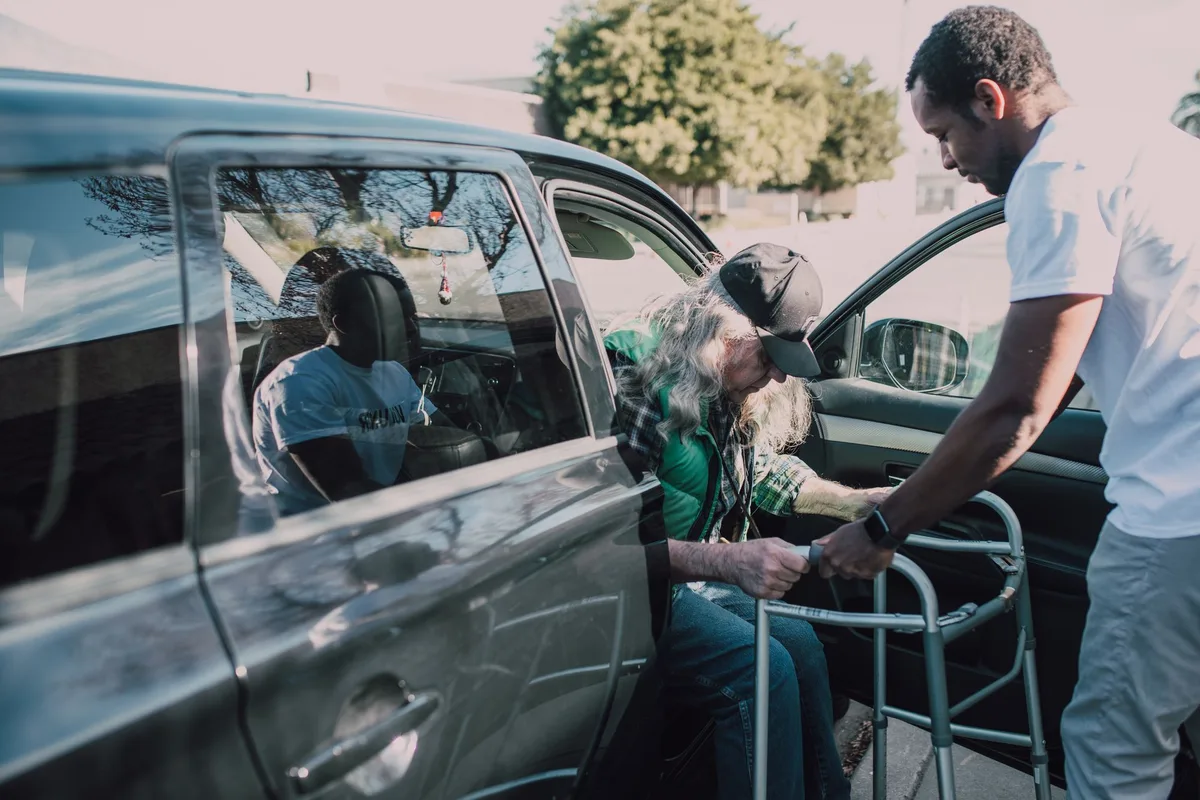
This guide compares the four routes, using the federal rules and the organizations’ own pages rather than the summaries in between. The single most useful thing in it is probably the Medicaid definition of “transportation,” which is far broader than the ride itself.
The Short Answer
| Route | Who it is for | What it actually is | What it costs you |
|---|---|---|---|
| Medicaid NEMT | People with Medicaid | Your state must ensure transportation to providers; delivered by broker, van, bus pass, or mileage | Nothing, when approved |
| Medicare | Everyone 65+ on Medicare | Ambulance only, and only when another vehicle is unsafe | 20% after the Part B deductible |
| Area Agency on Aging | Anyone 60+ | Older Americans Act supportive service, run locally | Free or a voluntary sliding contribution — never a means test |
| Nonprofits | Anyone, no income test | Volunteer drivers and community vans; often disease-specific | Usually free; availability is the limit |
Veterans have a fifth route, VA beneficiary travel, which is covered further down.
Route 1: Medicaid — The Only Route Federal Law Actually Requires
If you have Medicaid, the ride is not a favor. Two federal provisions put it on the state.
The regulation, 42 CFR 431.53, is two sentences long. A state plan must:
“(a) Specify that the Medicaid agency will ensure necessary transportation for beneficiaries to and from providers; and (b) Describe the methods that the agency will use to meet this requirement.”
That rule has existed for decades. What most people have not caught up with is that Congress wrote the same requirement into the Medicaid statute itself in December 2020. The Consolidated Appropriations Act, 2021 (Pub. L. 116-260, division CC, section 209) amended 42 U.S.C. 1396a(a)(4)(A) to require every state plan to include “a specification that the single State agency … will ensure necessary transportation for beneficiaries under the State plan to and from providers and a description of the methods that such agency will use to ensure such transportation.”
Before that, non-emergency medical transportation — NEMT, the term you will hear on the phone — rested on a regulation that an administration could have rewritten. Now it rests on statute. That is the difference between a policy and a law, and it is worth knowing if you are ever told the ride is “not really a benefit."
"Transportation” Means More Than the Vehicle
This is the part of the rule almost nobody quotes. 42 CFR 440.170(a) defines transportation as “expenses for transportation and other related travel expenses determined to be necessary by the agency to secure medical examinations and treatment for a beneficiary,” and then lists what travel expenses include:
- The ride itself — “by ambulance, taxicab, common carrier, or other appropriate means.”
- Meals and lodging — “en route to and from medical care, and while receiving medical care.”
- An attendant — “the cost of an attendant to accompany the beneficiary, if necessary, and the cost of the attendant’s transportation, meals, lodging, and, if the attendant is not a member of the beneficiary’s family, salary.”
Read that last line twice. The federal definition contemplates Medicaid paying a wage to a non-relative escort who travels with you, plus that person’s meals and lodging. This matters most for the situation that strands people: a specialist three hours away, an early morning procedure, and no one who can take a day off to go along.
None of this is automatic. The words “determined to be necessary by the agency” do real work — your state decides what is necessary, what documentation it wants, and what it will authorize. But the ceiling is much higher than the ride, and you cannot be given something you never asked for.
How the Ride Gets Delivered
States may run a brokerage program under 42 CFR 440.170(a)(4) — one company that arranges everything. The regulation names what those services include: “wheelchair vans, taxis, stretcher cars, bus passes and tickets, secured transportation containing an occupant protection system that addresses safety needs of disabled or special needs individuals, and other forms of transportation otherwise covered under the state plan.”
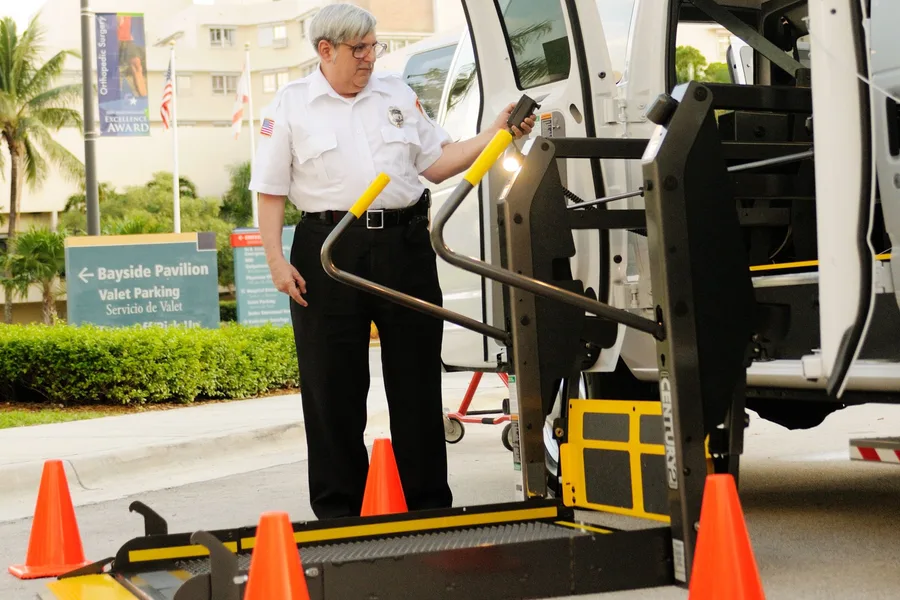
Two lines in the broker rules are worth having ready if things go wrong. A broker must have “oversight procedures to monitor beneficiary access and complaints and ensure that transportation is timely and that transport personnel are licensed, qualified, competent, and courteous.” And the contract must state that a broker “may not withhold necessary non-emergency medical transportation from a Medicaid beneficiary or provide non-emergency medical transportation that is not the most appropriate and a cost-effective means of transportation for that beneficiary for the purpose of financial gain, or for any other purpose.”
“Courteous” is a federal requirement. Complaint monitoring is a federal requirement. If a driver is three hours late or refuses a wheelchair, the complaint is not a courtesy — it is part of the contract the state is required to audit.
There is also a screening floor. 42 U.S.C. 1396a(a)(87), added by the same 2020 law, requires states to verify that every NEMT provider and individual driver — the statute names “a transportation network company,” meaning rideshare, and excludes public transit authorities — is not on the HHS Inspector General’s exclusion list, holds “a valid driver’s license,” and comes from a provider that discloses driving history and traffic violations to the state.
What to Say on the Phone
Call the member services number on your Medicaid or managed care card and use the exact phrase “non-emergency medical transportation.” Then ask, in this order:
- Who arranges it — the state, the health plan, or a broker? Get the broker’s own number.
- How far in advance must I book? (Many states require several days for routine trips.)
- Do you cover a wheelchair-accessible vehicle, and how do I request one?
- Do you reimburse mileage to a driver I know, and what does that person have to submit?
- Can an escort ride with me, and is that approved separately?
- Where do I file a complaint if a ride does not show?
Get the answers in writing or in the plan’s secure message system. A trip that is denied is easier to appeal when the denial is written down.
Route 2: Medicare — Why It Almost Never Pays
Medicare covers ambulances, not rides. 42 CFR 410.40(e)(1) sets the test plainly: Medicare covers ambulance services “only if they are furnished to a beneficiary whose medical condition is such that other means of transportation are contraindicated.” Medicare’s own consumer page says the same thing in plainer words — Part B covers ground ambulance “when traveling in any other vehicle could endanger your health” — and adds the cost: after the Part B deductible, “you pay 20% of the Medicare-approved amount.”
Three narrower points from the same page:
- Non-emergency ambulance can be covered when you have a written order from your doctor saying it is medically necessary. Medicare’s example is a person with end-stage renal disease traveling to dialysis.
- Repeat trips trigger review. If you get scheduled, non-emergency ambulance transport three or more round trips in a 10-day period, or weekly for three weeks, your ambulance company may have to request prior authorization before the fourth round trip in 30 days.
- You should get a warning in advance. The ambulance company must give you an Advance Beneficiary Notice of Noncoverage when the service is non-emergency and it believes Medicare may not pay.
Medicare Advantage is a different question. Under 42 CFR 422.102, a Medicare Advantage plan may offer “services that are not included in the basic benefits,” and many plans use that authority to include a set number of rides to medical appointments each year. This is a plan-by-plan benefit approved by CMS, not a Medicare benefit — two people on Medicare in the same town can have completely different answers. Check your plan’s Evidence of Coverage, or ask during Open Enrollment, when a transportation benefit is a legitimate reason to compare plans.
Route 3: Your Area Agency on Aging
Every county in the country is covered by an Area Agency on Aging, funded under the Older Americans Act. Transportation is not a side project there — 42 U.S.C. 3030d(a)(2) names “transportation services to facilitate access to supportive services or nutrition services” as one of the supportive services the whole grant program exists to fund, and a separate paragraph lists “escort” among the in-home and community services.
The National Institute on Aging describes what this looks like on the ground: “Various state and local agencies, nonprofit organizations, and companies offer transportation services for older adults,” and “Some transportation services are free. These include programs from state and local governments and some nonprofit organizations.”
The Cost-Sharing Rule Almost No One Is Told
Here is where the Older Americans Act rules do something specific and useful, and where they differ from the rules for meals.
Meals under the Act cannot be charged for at all. Rides can — but on a leash. 45 CFR 1321.9 lets a state allow cost sharing for Act-funded services, then prohibits it for a short list: information and assistance, ombudsman and legal services, congregate and home-delivered meals, and services delivered through Tribal organizations. Transportation is not on that list, so a sliding scale for rides is permitted.
Every one of these limits applies to it:
- The scale must “be based solely on individual income and the cost of delivering services.”
- You are determined eligible to cost share “based solely on a confidential declaration of income and with no requirement for verification.” You say what your income is. They do not get to audit you.
- Cost sharing is prohibited “by a low-income older individual if the income of such individual is at or below the Federal poverty level.”
- “Means testing … is prohibited.” Income cannot be used to deny or limit your eligibility at all.
- “Services shall not be denied because the older individual or family caregiver will not or cannot make a cost sharing contribution.”
- The scale must “explain there is no obligation to contribute, and the contribution is voluntary,” and be run “so as not to cause a service recipient to feel intimidated, or otherwise feel pressured into making a contribution.”
So if a local ride program hands you a fee schedule, the right question is not “can I afford it” but “is this a required fee, or the voluntary sliding contribution the federal rule describes?” If the program is funded under the Older Americans Act, it is the second one, and the ride does not depend on your paying it.
How to reach yours: call the Eldercare Locator at 800-677-1116, the free national number the National Institute on Aging points to, and ask for transportation in your county.
Route 4: Nonprofits
The nonprofit route has no income test and no enrollment. Its limit is a different one: whether a program exists where you live, and whether a driver is free on the day you need one.

Rides in Sight is the place to start. It is a free public service of ITNAmerica, which describes itself as “the nation’s only nonprofit transportation network dedicated to helping older adults and individuals with mobility challenges maintain their independence.” Rides in Sight is “an information and referral service that helps older and mobility-challenged adults find local transportation options,” searchable by ZIP code or by state and county, and reachable at 855-607-4337. ITNAmerica calls it “the nation’s largest searchable database of transportation providers.”
Two honest caveats, both from ITNAmerica’s own pages. The database warns that its information “is up to date to the best of ITNAmerica’s knowledge, but should always be verified with the local providers” — so call before you count on a listing. And the underlying problem is real: ITNAmerica notes that “75% of older adults live in rural or suburban areas with little or no public transportation.”
If your appointment is cancer-related, the American Cancer Society runs Road To Recovery, which gives “free rides to cancer-related medical appointments” using “trained volunteer drivers.” The one hard rule from its page: “Patients must be traveling to a cancer-related medical appointment.” Other requirements vary locally — a caregiver may have to come along if you cannot walk unassisted. Call 1-800-227-2345, and call early: the program says “it can take several business days to coordinate your ride.” Its volunteer drivers must be between 18 and 84, hold a valid license, and pass a background check.
If the care is far from home, Mercy Medical Angels, a 501(c)(3) nonprofit, arranges free long-distance medical travel — “angel flights in the Mid-Atlantic region … commercial tickets, ground transportation, or even gas cards nationwide.”
Beyond the national names, ask your hospital or clinic’s social worker, your faith community, and your senior center. Many volunteer driver programs are one county wide and are never listed anywhere national.
If You Are a Veteran
VA beneficiary travel, in 38 CFR part 70, is a reimbursement program rather than a ride service, and it runs alongside anything else you qualify for.
Who is eligible (38 CFR 70.10) includes a veteran traveling for care of a service-connected disability at any rating, a veteran rated 30% or more traveling for any condition, a veteran receiving VA pension, and a veteran who is “unable to defray the expenses of that travel” as the section defines it. An attendant that VA determines you medically need is eligible too.
What it pays. VA pays a per-mile rate it sets — VA’s current published rate is 41.5 cents a mile — plus tolls, and, with advance approval, meals and lodging capped by regulation at “50 percent of the amount allowed for government employees.”
The deductible, and the part people miss. VA withholds $3 one-way, $6 round trip, up to $18 a month. Two protections sit in the regulation: 38 CFR 70.31 stops the deduction after “six one-way trips” in a calendar month, and requires VA to waive it entirely “when it would cause the beneficiary severe financial hardship,” which the section defines to include any beneficiary receiving a VA pension or with income under the statutory threshold. VA says it applies qualifying waivers automatically, but you can also request one in person or in writing — worth doing if you travel often and no waiver has appeared.
A Checklist Before You Call
Have these ready and one call usually does it:
- The appointment date, time, address, and clinic phone number
- Whether the appointment is medical, and if so what kind (some programs are disease-specific)
- Your Medicaid, Medicare, or health plan ID card
- Whether you use a wheelchair, walker, oxygen, or need help to the door
- Whether someone will ride with you, and whether they need a seat
- Your ZIP code and county — county is what determines which agency serves you
- A return-trip plan: many programs book the trip home separately
And two habits that prevent most problems: book earlier than feels necessary — several business days is normal for volunteer and broker programs alike — and ask what happens if the ride does not show, before you need the answer.
If None of This Works
- You could not reach anyone. Dial 2-1-1; our 211 guide explains what that call can and cannot do.
- The real problem is the cost of the visit, not the ride. Community health centers charge on a sliding scale, and hospital charity care can erase a bill you have already received.
- You are on Medicare and money is tight. Medicare Savings Programs and Extra Help free up more each month than most ride programs are worth, and a Medicare Savings Program is often the door into Medicaid — and therefore into NEMT.
- You want one screening for everything at once. NCOA’s BenefitsCheckUp is free and built for people 60 and older.
- Getting out for food is the harder trip. Meals on Wheels and the senior food box program bring food to you instead.
How We Checked This
Every rule and quotation here was read from a primary source on September 1, 2026. The Medicaid transportation requirements came from the text of 42 CFR 431.53 and 42 CFR 440.170 on eCFR; the Medicare ambulance test from 42 CFR 410.40 and Medicare’s own coverage page; the Older Americans Act cost-sharing limits from 45 CFR 1321.9; the VA rules from 38 CFR part 70 and VA’s published rate page; and the nonprofit details from ITNAmerica, Rides in Sight, the American Cancer Society, and Mercy Medical Angels themselves.
Three places where the common understanding and the actual rule diverge, and where we followed the rule:
- “Medicaid transportation is just a regulation.” It has been in the Medicaid statute since December 2020. We read the amendment note in the United States Code on GovInfo: 42 U.S.C. 1396a(a)(4)(A) was amended by Pub. L. 116-260, division CC, section 209(a)(1), the Consolidated Appropriations Act, 2021, and the same law added paragraph (a)(87) on driver screening.
- “Transportation means the vehicle.” The federal definition in 42 CFR 440.170(a)(3) also covers meals and lodging “while receiving medical care” and an attendant’s transportation, meals, lodging, and salary when the attendant is not a family member. We have not seen that in any consumer summary of NEMT, and it is the reason we tell readers to ask about an escort explicitly.
- “If the senior ride program has a fee schedule, you have to pay it.” Under 45 CFR 1321.9, an Older Americans Act sliding scale must be described as voluntary, cannot be verified against your income, cannot apply at all at or below the federal poverty level, and cannot be used to deny service. Means testing is prohibited outright.
Two access notes, so you know how the sourcing was done. eCFR’s ordinary web pages redirected our automated requests, so the regulation text above was pulled from eCFR’s own versioner API against the current title text rather than the browsable page; the links in this guide point to the human-readable eCFR sections. Medicaid.gov’s NEMT page returned HTTP 403 to automated fetching, so nothing in this guide relies on it — the Medicaid statements come from the Code of Federal Regulations, the United States Code, and the National Institute on Aging instead.
What we could not verify, and did not claim: the mileage-reimbursement rules, advance-booking windows, trip limits, and wheelchair-vehicle availability in any particular state, because those are set state by state and change; whether a given Medicare Advantage plan includes a transportation benefit; whether an Area Agency on Aging or nonprofit program actually operates in your county today; and what any ITNAmerica affiliate charges its riders, since we found no fee figures published on ITNAmerica’s own pages. We also did not attempt a state-by-state NEMT table, because we could not read it from a primary source.
Non-emergency medical transportation, Older Americans Act services, and volunteer driver programs are designed and run locally, and the details change year to year. The federal rules quoted here set the floor and the outer limits, not what any one program offers this week. If something here contradicts what your state Medicaid agency, health plan, Area Agency on Aging, or local nonprofit tells you, trust them for your case and tell us so we can re-check the guide.
This is general information, not legal or financial advice.
Frequently Asked Questions
Does Medicare pay for a ride to the doctor?
No, not for an ordinary ride. Medicare Part B covers ambulance transportation, and only when your condition makes any other vehicle unsafe. The regulation at 42 CFR 410.40(e)(1) says Medicare covers ambulance services "only if they are furnished to a beneficiary whose medical condition is such that other means of transportation are contraindicated." Medicare.gov puts it the same way: Part B covers ground ambulance "when traveling in any other vehicle could endanger your health." Even then you pay 20% of the approved amount after the Part B deductible. A taxi, a van, or a neighbor's car to a routine checkup is not a Medicare benefit.
Does Medicaid have to give me a ride to my appointment?
Your state has to ensure one. 42 CFR 431.53 says a state plan must "Specify that the Medicaid agency will ensure necessary transportation for beneficiaries to and from providers" and must describe how it will do it. Since December 2020 that requirement also sits in the statute itself, at 42 U.S.C. 1396a(a)(4)(A). What the rules do not do is fix the shape of the ride: your state decides whether it uses a broker, a van company, bus passes, or mileage paid back to a driver you know. Ask your state Medicaid agency or your managed care plan how their non-emergency medical transportation, or NEMT, is arranged.
Will Medicaid pay for someone to go with me?
The federal definition allows it. 42 CFR 440.170(a)(3) lists, among covered travel expenses, "the cost of an attendant to accompany the beneficiary, if necessary, and the cost of the attendant's transportation, meals, lodging, and, if the attendant is not a member of the beneficiary's family, salary." The same paragraph covers "the cost of meals and lodging en route to and from medical care, and while receiving medical care." These are federal ceilings, not automatic approvals — your state decides what is necessary and how to document it — but if you need an escort or an overnight stay to reach a specialist, ask, and ask in writing.
I do not have Medicaid. Who else gives rides to seniors?
Two routes worth trying in order. First, your Area Agency on Aging: transportation is a listed Older Americans Act supportive service under 42 U.S.C. 3030d(a)(2), and you can find your agency through the Eldercare Locator at 800-677-1116. Second, the nonprofit network: Rides in Sight, a free service of the nonprofit ITNAmerica, keeps a national database of local ride providers searchable by ZIP code, and has a live line at 855-607-4337. If your appointment is cancer-related, the American Cancer Society's Road To Recovery gives free rides with volunteer drivers — call 1-800-227-2345.
Can my Area Agency on Aging charge me for a ride?
It can ask, within tight limits, and it cannot cut you off for not paying. Under 45 CFR 1321.9, cost sharing is allowed for Older Americans Act services other than meals, legal and ombudsman services, information and assistance, and Tribal services — so rides can carry a sliding scale. But the scale must be "based solely on individual income and the cost of delivering services," you are determined eligible to cost share "based solely on a confidential declaration of income and with no requirement for verification," means testing is prohibited outright, cost sharing is prohibited for anyone at or below the federal poverty level, and "Services shall not be denied because the older individual or family caregiver will not or cannot make a cost sharing contribution."
Can Medicaid pay a friend or family member for gas?
Sometimes, and it depends entirely on your state. The federal rule at 42 CFR 440.170(a)(2) says transportation is normally furnished "only by a provider to whom a direct vendor payment can appropriately be made," with an exception for states that run a brokerage program. Many states do pay mileage to an individual driver, but nothing in the federal regulation guarantees it. Ask your state Medicaid agency, by name, whether it offers "individual transportation participant" or mileage reimbursement, and what the driver has to submit.
I am a veteran. Is there a separate program?
Yes, and it pays money back rather than sending a vehicle. VA beneficiary travel, in 38 CFR part 70, reimburses eligible veterans at a rate VA sets — currently 41.5 cents a mile — plus tolls, and meals and lodging when VA approves an overnight stay. A deductible of $3 one-way or $6 round trip applies, capped at $18 a month, and 38 CFR 70.31 requires VA to waive it entirely "when it would cause the beneficiary severe financial hardship," which includes veterans receiving a VA pension. Eligibility is listed in 38 CFR 70.10 and includes travel for a service-connected condition and low-income veterans.
Is there one phone number to start with?
There are two, and they do different jobs. Call the Eldercare Locator at 800-677-1116 to reach the Area Agency on Aging for your county, which knows the publicly funded rides in your town. Call Rides in Sight at 855-607-4337 to search the nonprofit and community ride database for your ZIP code. If you have Medicaid, call the member services number on your card first and ask specifically for "non-emergency medical transportation" — that is the phrase that gets you to the right desk.
Sources
- eCFR — 42 CFR 431.53, Assurance of transportation ("A State plan must— (a) Specify that the Medicaid agency will ensure necessary transportation for beneficiaries to and from providers; and (b) Describe the methods that the agency will use to meet this requirement.")
- eCFR — 42 CFR 440.170(a), Transportation ("'Transportation' includes expenses for transportation and other related travel expenses determined to be necessary by the agency to secure medical examinations and treatment for a beneficiary."; travel expenses include "the cost of meals and lodging en route to and from medical care, and while receiving medical care" and "the cost of an attendant to accompany the beneficiary, if necessary, and the cost of the attendant's transportation, meals, lodging, and, if the attendant is not a member of the beneficiary's family, salary"; brokerage services "include wheelchair vans, taxis, stretcher cars, bus passes and tickets, secured transportation…, and other forms of transportation otherwise covered under the state plan"; brokers must have "oversight procedures to monitor beneficiary access and complaints and ensure that transportation is timely and that transport personnel are licensed, qualified, competent, and courteous"; a broker "may not withhold necessary non-emergency medical transportation from a Medicaid beneficiary… for the purpose of financial gain, or for any other purpose")
- 42 U.S.C. 1396a(a)(4)(A) — Social Security Act 1902(a)(4)(A), as amended by Pub. L. 116-260 (Consolidated Appropriations Act, 2021), div. CC, title II, sec. 209(a)(1), which inserted "a specification that the single State agency described in paragraph (5) will ensure necessary transportation for beneficiaries under the State plan to and from providers and a description of the methods that such agency will use to ensure such transportation"
- 42 U.S.C. 1396a(a)(87) — driver and provider screening for nonemergency medical transportation, added by Pub. L. 116-260, sec. 209(b)(4)(A) (applies to "any provider (including a transportation network company) or individual driver of nonemergency transportation to medically necessary services receiving payments under such plan (but excluding any public transit authority)"; each driver must not be on the HHS Inspector General exclusion list, must have "a valid driver's license," and each provider must have a process to disclose driving history to the State Medicaid program)
- eCFR — 42 CFR 410.40(e)(1), Medicare coverage of ambulance services ("Medicare covers ambulance services… only if they are furnished to a beneficiary whose medical condition is such that other means of transportation are contraindicated.")
- Medicare.gov — Ambulance services coverage (Part B "covers ground ambulance transportation when traveling in any other vehicle could endanger your health"; "After you meet the Part B deductible, you pay 20% of the Medicare-approved amount"; non-emergency ambulance may be covered "if you have a written order from your doctor," for example dialysis transport; prior-authorization demonstration applies at "3 or more round trips in a 10-day period")
- eCFR — 42 CFR 422.102, Supplemental benefits (a Medicare Advantage organization "may offer… services that are not included in the basic benefits"; supplemental benefits are approved plan by plan, not part of Original Medicare)
- 42 U.S.C. 3030d — Older Americans Act grants for supportive services, which lists "transportation services to facilitate access to supportive services or nutrition services" and, separately, "escort" among in-home and community services
- eCFR — 45 CFR 1321.9(c)(2)(xi), Cost sharing for Older Americans Act services (a sliding contribution scale must "Be based solely on individual income and the cost of delivering services" and "Explain there is no obligation to contribute, and the contribution is voluntary"; "Individuals shall be determined eligible to cost share based solely on a confidential declaration of income and with no requirement for verification"; cost sharing is prohibited "By a low-income older individual if the income of such individual is at or below the Federal poverty level" and for information and assistance, ombudsman and legal services, congregate and home-delivered meals, and services delivered through Tribal organizations; "Means testing… is prohibited"; "Services shall not be denied because the older individual or family caregiver will not or cannot make a cost sharing contribution")
- National Institute on Aging (NIH) — Services for Older Adults Living at Home ("Various state and local agencies, nonprofit organizations, and companies offer transportation services for older adults."; "Some transportation services are free. These include programs from state and local governments and some nonprofit organizations."; "For people who do not have access to a ride, Medicaid provides transportation for emergency medical care and for doctor's appointments. Medicare provides transportation via ambulance for health care emergencies and limited nonemergencies (such as a ride to a dialysis facility)."; Eldercare Locator 800-677-1116)
- Rides in Sight (a program of ITNAmerica) — free national database of local transportation providers searchable by ZIP code or state and county, toll-free 855-607-4337 ("Rides in Sight (RIS) is an information and referral service that helps older and mobility-challenged adults find local transportation options"; "Information in the RIS database is up to date to the best of ITNAmerica's knowledge, but should always be verified with the local providers.")
- ITNAmerica — nonprofit transportation network ("the nation's only nonprofit transportation network dedicated to helping older adults and individuals with mobility challenges maintain their independence"; Rides in Sight is "the nation's largest searchable database of transportation providers"; "75% of older adults live in rural or suburban areas with little or no public transportation"; more than 1.6 million rides supported; 479 Main St., Westbrook, ME)
- American Cancer Society — Road To Recovery ("giving free rides to cancer-related medical appointments" using "trained volunteer drivers"; "Patients must be traveling to a cancer-related medical appointment."; "It can take several business days to coordinate your ride, so please call us at 1-800-227-2345 well in advance of your appointment date."; volunteer drivers "must be between the ages of 18 and 84, have a valid driver's license, pass a background check")
- Mercy Medical Angels — 501(c)(3) nonprofit providing free medical transportation ("From angel flights in the Mid-Atlantic region to commercial tickets, ground transportation, or even gas cards nationwide")
- eCFR — 38 CFR 70.10, 70.30 and 70.31, VA beneficiary travel (eligible persons include a veteran receiving VA pension and a veteran "unable to defray the expenses of that travel"; VA pays "the per mile rate established by the Secretary" plus tolls, and meals and lodging "not to exceed 50 percent of the amount allowed for government employees"; "VA shall not deduct any amounts in a calendar month after the completion of six one-way trips for which deductions were made in such calendar month"; "VA shall waive the deductible under this section when it would cause the beneficiary severe financial hardship")
- VA.gov — Reimbursed VA travel expenses and mileage rate ("We currently pay 41.5 cents ($0.415) per mile for approved, health-related travel."; "The current deductible is $3 one-way or $6 round-trip for each appointment, up to $18 total each month.")
Keep reading
- Low-Cost Clinics Near You: Community Health Centers 2026 Medical and dental care on a sliding scale — with or without insurance Read guide →
- Free Medicare Help for Open Enrollment 2026: SHIP Checklist SHIP counselors are not paid per enrollment — and Medicare Open Enrollment runs October 15 to December 7, 2026 Read guide →
- Medicare Savings Program vs Extra Help: Can You Get Both? Filing one application can start the other — but only in one direction Read guide →
This is general information, not legal or financial advice.