Low-Cost Clinics Near You: Community Health Centers 2026
Last updated:
Apply on the official site →Community health centers are local clinics that give medical, dental, and mental health care to anyone who needs it — whether or not you have insurance, and no matter what you can pay. This guide explains who can use a health center, how the sliding fee scale works in 2026, what services you can get, and how to find a health center near you.

What Is a Community Health Center?
A community health center is a local clinic funded in part by the federal government through the Health Resources and Services Administration (HRSA). These clinics — sometimes called federally qualified health centers, or FQHCs — are built to serve neighborhoods and rural areas where care is hard to find or afford.
The core promise is simple: HRSA says health centers “provide primary medical and dental care to people of all ages, whether or not they have health insurance,” with services “on a sliding fee scale based on your ability to pay.” No one is turned away for lack of money.
Health centers are widespread. HRSA funds about 1,400 health centers running more than 16,600 service sites across all 50 states, D.C., and the U.S. territories. In 2025 they served over 32.7 million patients — the most in the program’s 60-year history.
Who Can Use a Community Health Center?
Almost anyone can. Health centers are open to people of all ages and are designed especially for people who are uninsured, underinsured, or living on a low income. You can go to a health center if you:
- Have no insurance — you pay on the sliding fee scale (below)
- Have Medicaid, Medicare, or CHIP — health centers accept them
- Have private insurance — the center bills it like any other clinic
- Are unsure about your coverage — staff can help you apply for Medicaid or a Marketplace plan
HRSA is direct about this: “You can get care at a HRSA-funded health center regardless of your ability to pay.” About 90% of health center patients have incomes under 200% of the federal poverty level, but there is no income test to walk in the door — income only affects how much you are charged.
How the Sliding Fee Scale Works in 2026
The sliding fee discount is how health centers keep care affordable. Under HRSA’s rules, the discount is based solely on your family size and income — not on your insurance, immigration status, or anything else — and every health center must offer it.
Here is the structure:
- Income at or below 100% of the federal poverty guidelines: you get a full discount. You pay only a small “nominal” charge, if anything.
- Income above 100% and up to 200% of the guidelines: you get a partial discount on a sliding scale — the closer your income is to the bottom, the bigger the discount.
- Income above 200% of the guidelines: the sliding fee discount does not apply. HRSA’s manual says “No discounts are provided to individuals and families with annual incomes above 200 percent of the current FPG,” so you pay the center’s regular fees (your insurance is billed if you have it). The center still may not turn you away: “no patient shall be denied service due to an individual’s inability to pay.”
Applying the 2026 federal poverty guidelines for the 48 contiguous states and D.C., the income lines that set your discount are:
| Household size | 100% of poverty (full discount) | 200% of poverty (top of sliding scale) |
|---|---|---|
| 1 | $15,960 | about $31,920 |
| 2 | $21,640 | about $43,280 |
| 3 | $27,320 | about $54,640 |
| 4 | $33,000 | about $66,000 |
| Each additional person | +$5,680 | +$11,360 |
The 100% column is the official 2026 poverty guideline; the 200% column is calculated from it. Alaska and Hawaii use higher guidelines. Each health center sets its own fee schedule within these federal rules, so the exact dollar amount you pay varies by clinic — ask to see the sliding fee schedule.
Three Rules the Clinic’s Flyer May Not Spell Out
These come from the federal compliance manual rather than from any clinic’s handout, and they are worth knowing before you sit down at the desk.
- The middle band has to have real steps in it. Between 100% and 200% of the poverty guidelines, a health center must offer at least three discount pay classes. A center cannot lump everyone above the poverty line into one price.
- A “nominal” charge has a ceiling. If a center charges a nominal fee to people at or below 100% of poverty, that fee must be less than what someone in the first pay class above 100% pays, and it must be nominal from the patient’s point of view — the rule says centers should look at things like Medicare and Medicaid copay amounts to set it, not at what the service costs them.
- Medical and dental can be on different schedules. A center is allowed to run more than one sliding fee schedule — for example, separate ones for medical and dental, or for services it delivers itself versus services it contracts out. That is why your dental discount may not match your medical discount at the same clinic. Ask for the schedule that covers the service you need.
One more thing the rules make explicit: a health center must assess you for the discount based on income and family size only, and it has to tell patients the discount exists. If nobody mentions it, ask — the obligation is theirs.
What Community Health Centers Cover
Health centers provide comprehensive primary care — not just a single service. Depending on the location, you can typically get:
- Medical care — checkups, sick visits, chronic conditions like diabetes and high blood pressure, immunizations
- Dental care — cleanings, fillings, and other dental services
- Mental health and substance use care — counseling and treatment
- Prescriptions, prenatal and women’s health care, children’s care, and often eye care
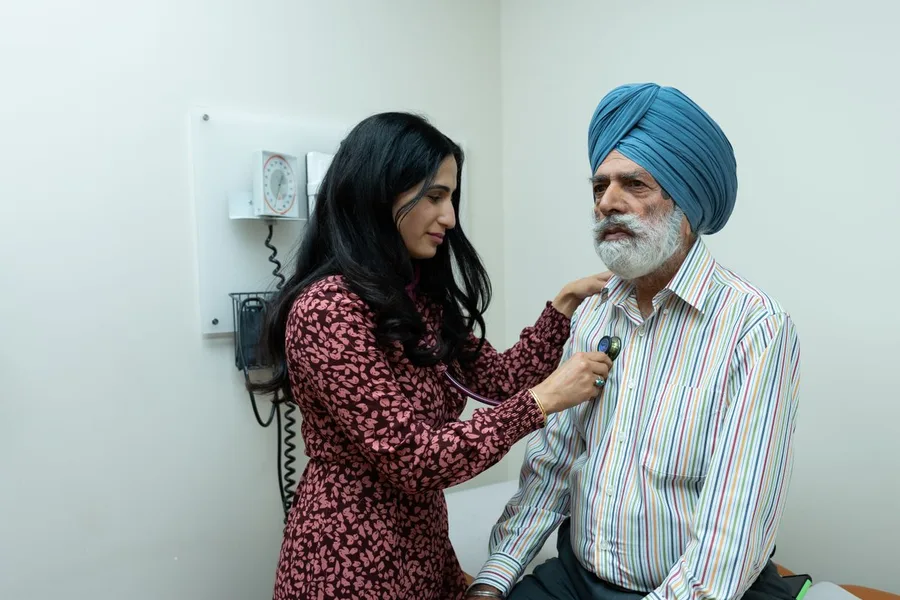
Their staff can include “doctors, dentists, therapists, social workers, eye doctors, obstetricians/gynecologists, pediatricians, case managers, and other medical staff,” according to HRSA’s Bureau of Primary Health Care. Because services differ from clinic to clinic, call the center near you to confirm what it offers.
How to Find a Health Center Near You
There are two easy ways to find a health center:
- Use HRSA’s free finder. Go to findahealthcenter.hrsa.gov and enter your address, ZIP code, or city. The tool maps the health centers closest to you with their addresses and phone numbers.
- Call HRSA. The HRSA Contact Center — 1-877-464-4772 (TTY 1-877-897-9910), 8 a.m. to 8 p.m. ET on weekdays — can help you find health centers and services in your area.
Then call the center directly to ask how to become a patient, what services it offers, and how the sliding fee scale works there.
What to Bring to Get the Sliding Fee Discount
To set your discount, the health center needs to confirm your family size and income. Bring or be ready to show:
- Proof of income — recent pay stubs, a benefit letter, or a tax return
- Proof of household size — who lives with you and depends on your income
- A photo ID if you have one, and your insurance card if you have coverage

You do not need insurance, and — because the discount is based only on family size and income — you do not need to prove immigration status to get care. If you are unsure what to bring, ask the center when you call; staff will tell you exactly what they need.
One Visit Can Open Other Doors
If a health center is helping you because money is tight, you may qualify for other programs too. Health center staff can often help you apply for Medicaid or, for your kids, CHIP — both free or low-cost coverage. And if you qualify for one benefit, you may qualify for others: see our guides to food stamps (SNAP) and the Lifeline phone and internet discount, which can lower your monthly bills by up to $9.25.
How We Checked This
The rules in this guide come from the federal source that governs them, not from a clinic’s marketing page: Chapter 9 of the HRSA Health Center Program Compliance Manual, which is what HRSA holds health centers to. That is where the requirement that “no patient shall be denied service due to an individual’s inability to pay” is written, along with the full discount at or below 100% of the poverty guidelines, the ban on any discount above 200%, the minimum of three pay classes in between, and the rule that eligibility for the discount is assessed on income and family size alone. We read it directly on August 22, 2026.
We also opened HRSA’s consumer pages the same day, and one thing is worth flagging: the Am I Eligible? page carries a “Date Last Reviewed: March 2022” stamp. It is still accurate on the basics — anyone may use a community health center, insured or not, and what you pay is set by a sliding scale at each facility — but when a plain-language federal page and the compliance manual are both available, we quote the manual, because that is the document a health center is actually audited against.
The dollar columns are arithmetic, not quotations. The 100% column is the published 2026 HHS poverty guideline; the 200% column is that figure doubled. Each health center sets its own schedule inside the federal floor and ceiling, so the number you are charged comes from your clinic’s schedule, not from this table. Ask to see it — the manual requires the center to have one and to tell patients about it.
The income figures shown are for 2026 in the 48 contiguous states and D.C.; the 200% figures are calculated from the official federal poverty guidelines, and each health center sets its own sliding fee schedule within federal rules. This is general information, not legal or financial advice. Information verified on official government websites (HRSA and HHS) as of August 3, 2026.
Frequently Asked Questions
Can I go to a community health center without insurance?
Yes. HRSA-funded health centers serve people whether or not they have health insurance, and no one is turned away because they cannot pay. If you are uninsured, you pay on a sliding fee scale based on your income and family size. Health centers also accept Medicaid, Medicare, CHIP, and private insurance, and staff can help you apply for coverage if you qualify.
How much does a community health center cost?
It depends on your income and family size. By federal rule, health centers give a full discount — you pay only a small nominal charge, if anything — to people with income at or below 100% of the federal poverty guidelines, and partial discounts on a sliding scale for income up to 200% of the guidelines. If you have insurance, the center bills it as usual. Ask each center for its own sliding fee schedule.
Who qualifies for the sliding fee scale?
The sliding fee discount is based solely on your family size and income, according to HRSA rules. At a minimum, it must be offered to everyone with income at or below 200% of the federal poverty guidelines. In 2026 that is about $31,920 a year for one person and about $66,000 for a family of four in the 48 contiguous states and D.C. The center will ask for proof of income and household size to set your discount.
What services do community health centers offer?
Health centers provide comprehensive primary care for all ages, including medical care, dental care, mental health and substance use care, and often prescriptions, prenatal care, and eye care. Their staff can include doctors, dentists, therapists, social workers, eye doctors, OB/GYNs, pediatricians, and case managers. Exact services vary by location, so check with the center near you.
How do I find a community health center near me?
Use HRSA's free 'Find a Health Center' tool at findahealthcenter.hrsa.gov and enter your address, ZIP code, or city to see the clinics closest to you. You can also call the HRSA Contact Center at 1-877-464-4772 (TTY 1-877-897-9910), 8 a.m. to 8 p.m. ET on weekdays. Call the center directly to ask about services, the sliding fee scale, and how to become a patient.
Sources
- HRSA — Get Health Care (health centers provide primary medical and dental care to people of all ages, whether or not they have insurance, on a sliding fee scale based on ability to pay)
- HRSA — Am I Eligible? (you can get care at a HRSA-funded health center regardless of your ability to pay)
- HRSA Bureau of Primary Health Care — Compliance Manual, Chapter 9: Sliding Fee Discount Program (eligibility based solely on family size and income; full discount at or below 100% FPG, partial discounts up to 200% FPG)
- HRSA Bureau of Primary Health Care — About the Health Center Program (services and program scope; ~1,400 health centers, 16,600+ sites, 32.7 million patients in 2025)
- HRSA — Find a Health Center (search by address, ZIP code, or city)
- HHS ASPE — 2026 Poverty Guidelines (basis for the 100% and 200% figures)
Keep reading
- Free Medicare Help for Open Enrollment 2026: SHIP Checklist SHIP counselors are not paid per enrollment — and Medicare Open Enrollment runs October 15 to December 7, 2026 Read guide →
- Medicare Savings Program vs Extra Help: Can You Get Both? Filing one application can start the other — but only in one direction Read guide →
- Emergency Medicaid 2026: Who Qualifies & How to Apply Federal law says applicants for emergency-only coverage "need not present a social security number or document immigration status" (42 CFR 435.406(b)) Read guide →
This is general information, not legal or financial advice.