No-Cost Eye Exam 2026: EyeCare America Eligibility Checklist
Last updated:
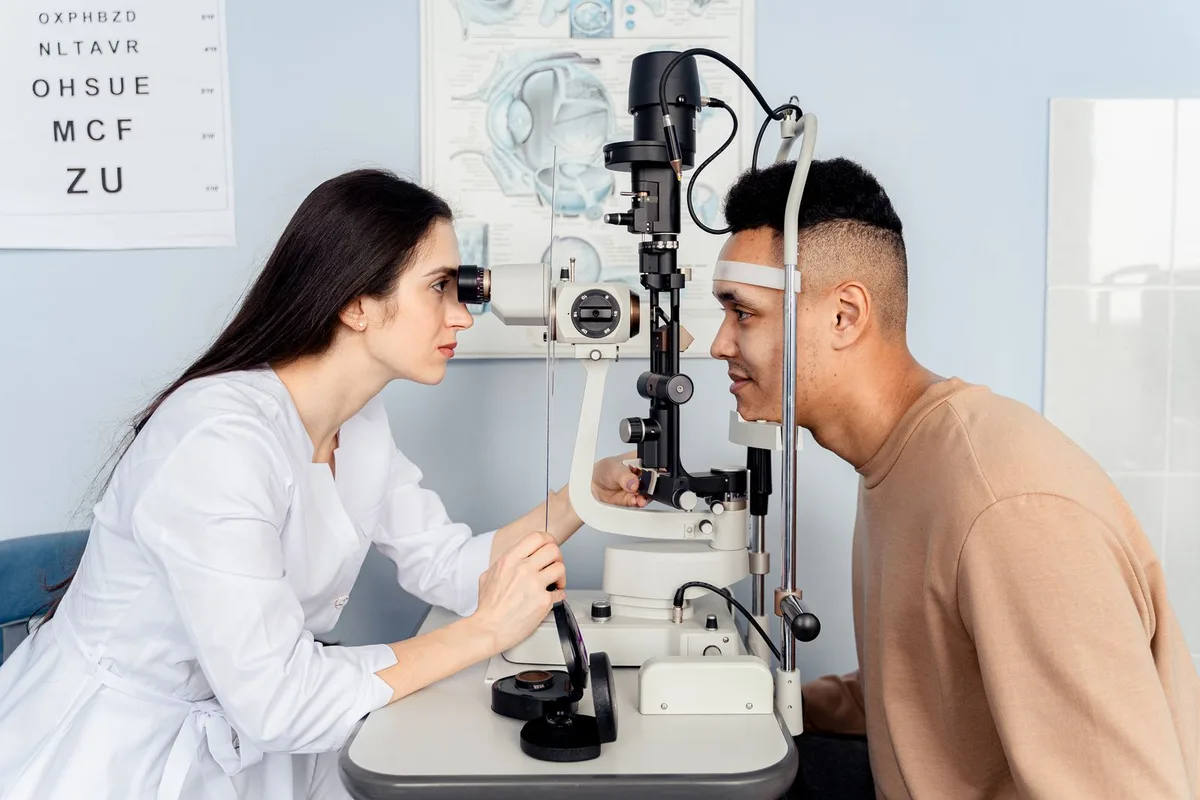
Apply on the official site →If you have not seen an eye doctor in years because there was never a good month to pay for it, there is a program that has been quietly doing this for four decades: EyeCare America, run by the American Academy of Ophthalmology. It matches you with a volunteer ophthalmologist near you for a medical eye exam with no out-of-pocket cost — plus up to a year of follow-up care for anything that exam finds.
The thing almost every other page about this program gets wrong: it is no longer a seniors-only program.
The Change Most Websites Missed
For most of its history, EyeCare America was a seniors program. The Academy’s own news release from October 18, 2025 describes a $1.5 million gift from the Knights Templar Eye Foundation that funded “the largest expansion of the EyeCare America program since it began 40 years ago, transforming it from a seniors-only program to one that serves people aged 18 and older.” The same release says the program “at the time offered no out-of-pocket cost medical eye exams only for those age 65 and older.”
That change is now reflected on the program’s eligibility page, which lists the age requirement as 18 years old or older.
Why the expansion happened is worth a sentence, because it tells you who this is aimed at. The Academy had been running a pilot at a community health center in Delaware that used an AI-powered screening tool to spot diabetic eye disease during ordinary primary care visits. More than 30% of the patients screened there showed signs of diabetic eye disease that needed further evaluation — and many of them were too young to qualify for the program that was supposed to help them. Lowering the age floor was the fix.
So if a senior-services directory told you that you were too young for this program, check the date on that page.
The Eligibility Checklist — All Five Rules
The Academy publishes exactly five requirements. You must meet all of them.
| # | Requirement | What it means in practice |
|---|---|---|
| 1 | A U.S. citizen or legal resident | Legal residents qualify, not only citizens |
| 2 | 18 years old or older | Changed from 65 in October 2025 |
| 3 | Not belong to an HMO or a PPO, nor have private insurance nor benefits through the Department of Veterans Affairs | This is the rule that disqualifies most people who apply |
| 4 | Not seen by an ophthalmologist in three or more years | A visit to an optometrist for glasses is a different kind of appointment — the rule names ophthalmologists |
| 5 | Not seen by an EyeCare America volunteer ophthalmologist in the past | One person, one referral |
Two of these deserve a closer look.
Rule 3 is about the kind of coverage, not about income. There is no income limit published for this program and no asset test. What rules you out is having private insurance, an HMO, a PPO, or VA benefits. Notice what the list does not name: Medicare and Medicaid appear nowhere in it, in either direction. That gap matters, because Medicare Advantage plans are generally HMOs or PPOs while Original Medicare is not. We are not going to tell you how your own coverage will be scored — the questionnaire answers that in seconds, and guessing is how people talk themselves out of care they could have had.
Rule 5 means this is a one-time program. The Academy is explicit: patients seen through EyeCare America are not eligible to apply again. It is one referral per person, so it is worth using when you actually need an eye exam rather than to replace a routine check you can get another way.
What You Get — and What You Do Not
This is the part that causes the most disappointment, so read the right-hand column first.
| Covered | Not covered |
|---|---|
| A medical eye exam by a volunteer ophthalmologist | Refraction exams or prescriptions for eyeglasses or contact lenses |
| Up to one year of follow-up visits for any condition diagnosed at that exam | Eyeglasses and contact lenses themselves |
| All of the above at no out-of-pocket cost to you | Fees for procedures or surgeries, including laser surgery |
| Associated costs — anesthesia, medications, injections, diagnostic tests, surgical facility fees |
If glasses are the only thing you need, do not apply. The Academy says so directly on its own page and points people instead to its resources list of organizations that help with discounted eyewear. Submitting a referral questionnaire for glasses uses up your one-time eligibility on an exam that will not include a glasses prescription.
The distinction is between a medical eye exam — checking for glaucoma, diabetic eye disease, macular degeneration, cataracts — and a vision exam, which measures the lens strength you need. EyeCare America is the first kind.
How to Apply — Four Steps
- Answer the referral questionnaire on the Academy’s patients page. You can fill it out for yourself or on behalf of someone else. It is free, and the Academy says your information is shared only with the EyeCare America office you are referred to and is not sold.
- Get your answer right away. The questionnaire tells you immediately whether you qualify. If you do not, the Academy says it will point you to other resources.
- Call the doctor’s office. If you are matched, you get an email with the volunteer office’s phone number. You make the appointment yourself and tell them EyeCare America referred you for a medical eye exam. Wait times and travel distance vary by area.
- Send back the Patient Survey within 45 days of the appointment, online or on the downloadable form. This is how the program keeps running, and it is the one thing the program asks of you in return.
If you would rather ask a person first: 877-887-6327, 8 a.m. to 2 p.m. Pacific time, Monday through Friday, or eyecareamerica@aao.org.
What This Program Is Not
- It is not an emergency service. The Academy states that EyeCare America is not an emergency or urgent care program and cannot provide same-day or emergency referrals. If something is wrong with your eye right now — sudden vision loss, injury, severe pain — go to an ophthalmologist, another provider, or an emergency department instead of filling out a form.
- It is not a government program. It is run by the American Academy of Ophthalmology, a nonprofit association of eye physicians and surgeons, co-sponsored by the Knights Templar Eye Foundation with additional support from Alcon. The exams come from volunteer doctors.
- It never charges a fee. There is no application cost, and no one should ever ask you to pay to be referred or to move up a list. If a website offers to file this for you for a fee, it is not the program.
If You Do Not Qualify
Rule 3 turns away a lot of people, and rule 5 eventually turns away everyone who has used it once. Other routes to eye care:
- A community health center. Federally Qualified Health Centers charge on a sliding scale based on your income and see patients regardless of insurance — and, as the Delaware pilot shows, more of them are adding eye screening. Our guide to finding a community health center explains how to find one and what to expect to pay.
- Medicaid. Adult vision coverage is a state option and varies widely, but where it exists it covers exams and often glasses — which EyeCare America does not. See Medicaid eligibility and how to apply.
- The bill already arrived. Nonprofit hospitals are required to have financial assistance policies. Our guide to hospital charity care covers how to ask.
- You are 65 or older and not sure what else you are missing. BenefitsCheckUp is a free nonprofit screening tool that checks dozens of programs at once, and Donated Dental Services is the closest equivalent to this program on the dental side.
- You do not know where to start. Dial 2-1-1. Our 211 guide explains what that call can and cannot do.
How We Checked This
Everything above came from the American Academy of Ophthalmology’s own pages, read directly on August 22, 2026: the EyeCare America program page, the Patients & Caregivers page that publishes the five eligibility rules and the covered/not-covered lists, the October 18, 2025 news release announcing the age change, and the resources page for people who only need glasses.
We wrote this guide because the widely repeated description of this program is out of date. Search for a no-cost eye exam today and most results — directories, senior-services listings, older articles — still describe EyeCare America as a program for people 65 and older. That was correct until October 2025 and is not correct now. The primary source is the reason we can say so: the Academy’s own release states what the age limit used to be and what changed it.
Two other things we say here that summaries usually leave out, both taken from the eligibility page rather than from other write-ups: that this is a one-time referral you cannot use twice, and that the insurance rule names HMOs, PPOs, private insurance and VA benefits while naming neither Medicare nor Medicaid. We report that gap as a gap. We do not tell you how your coverage will be judged, because the Academy does not publish that and we will not invent it.
EyeCare America is a nonprofit program, not a government benefit. Eligibility rules, covered services, wait times and the availability of a volunteer ophthalmologist near you can change, and they are the Academy’s to set. If your answer from the program differs from anything here, trust the program for your case and tell us so we can re-check this page.
Last updated: August 22, 2026. This is general information, not legal, medical, or financial advice. EyeCare America is a program of the American Academy of Ophthalmology, a nonprofit organization — not a government agency. We are not affiliated with it and we never charge fees.
Frequently Asked Questions
Is EyeCare America only for seniors 65 and older?
Not anymore. The Academy lowered the age floor to 18 and announced the change on October 18, 2025; its own eligibility page now lists "18 years old or older" as the requirement. Many directory sites, senior-services pages and older articles still say 65+, because that was true for the program's first four decades. If you were told you were too young, that answer may have come from an outdated page.
Does EyeCare America pay for glasses?
No. The program covers a medical eye exam and up to one year of follow-up care for a condition found at that exam. It does not cover refraction exams, prescriptions for eyeglasses or contact lenses, the glasses or contacts themselves, surgery or procedure fees, or associated costs like anesthesia, medications, injections, diagnostic tests, or surgical facility fees. The Academy says plainly that if glasses are all you need, you should not submit the questionnaire — use its resources page instead.
Can I use EyeCare America if I have Medicare or Medicaid?
The published requirement rules out belonging to an HMO or a PPO, having private insurance, or having benefits through the Department of Veterans Affairs. It does not name Medicare or Medicaid either way. That distinction matters because Medicare Advantage plans are usually HMOs or PPOs while Original Medicare is not. We are not going to guess your case: the referral questionnaire gives an answer immediately, so let it decide rather than assuming you are out.
How many times can I use EyeCare America?
Once, ever. The Academy states that it is a one-time referral program and that patients already seen through EyeCare America are not eligible to apply again — that is also one of the five eligibility rules. Save it for a real exam rather than a check-up you could get elsewhere.
What if my eye problem is urgent?
Do not use the referral questionnaire. The Academy says the program is not an emergency or urgent care service and cannot make same-day or emergency referrals, and it directs anyone with an urgent eye problem to an ophthalmologist, another health care provider, or an emergency department right away.
Is EyeCare America a government program?
No. It is a public service program of the American Academy of Ophthalmology, a nonprofit association of eye physicians and surgeons, co-sponsored by the Knights Templar Eye Foundation with additional support from Alcon. The care is provided by volunteer ophthalmologists. No government agency runs it, and there is no application fee.
Sources
- EyeCare America — program page, American Academy of Ophthalmology ("EyeCare America® is a public service program of the American Academy of Ophthalmology that provides uninsured and underinsured individuals 18 years and older with access to medical eye exams."; "EyeCare America is co-sponsored by the Knights Templar Eye Foundation, Inc., with additional support from Alcon.")
- EyeCare America — Patients & Caregivers, American Academy of Ophthalmology (the five eligibility requirements: "A U.S. citizen or legal resident", "18 years old or older", "Not belong to an HMO or a PPO, nor have private insurance nor benefits through the Department of Veterans Affairs", "Not seen by an ophthalmologist in three or more years", "Not seen by an EyeCare America volunteer ophthalmologist in the past"; "EyeCare America is a one-time referral program. Patients seen through EyeCare America are not eligible to apply again."; covered care is "a medical eye exam/care only and up to one year of follow-up visits for any condition diagnosed in the initial exam at no out-of-pocket cost to you"; the not-covered list; "EyeCare America is not an emergency or urgent care program and cannot provide same-day or emergency referrals."; Patient Survey due within 45 days; phone 877.887.6327, 8 a.m. to 2 p.m. PT, Monday through Friday)
- American Academy of Ophthalmology news release, October 18, 2025 — "EyeCare America Expands Access to Sight-Saving Eye Care to People Age 18 and Older" (a $1.5 million gift from the Knights Templar Eye Foundation supports "the largest expansion of the EyeCare America program since it began 40 years ago, transforming it from a seniors-only program to one that serves people aged 18 and older"; the program "at the time offered no out-of-pocket cost medical eye exams only for those age 65 and older"; the Delaware FQHC pilot at Henrietta Johnson Medical Center, where "more than 30 percent of patients screened" showed signs of diabetic eye disease needing further evaluation)
- EyeCare America — Resources page, American Academy of Ophthalmology (the referral list for people who need discounted eyeglasses, which the program itself does not provide)
Keep reading
- Low-Cost Clinics Near You: Community Health Centers 2026 Medical and dental care on a sliding scale — with or without insurance Read guide →
- Free Medicare Help for Open Enrollment 2026: SHIP Checklist SHIP counselors are not paid per enrollment — and Medicare Open Enrollment runs October 15 to December 7, 2026 Read guide →
- Medicare Savings Program vs Extra Help: Can You Get Both? Filing one application can start the other — but only in one direction Read guide →
This is general information, not legal or financial advice.