Red Cross Help After a House Fire 2026: What You Get
Last updated:
Apply on the official site →A house fire takes your home in minutes, and then you have to decide where to sleep tonight. The American Red Cross has volunteers on call for this every day. “The vast majority of disasters we respond to are home fires,” it says — about 65,000 disasters a year.

Note: the American Red Cross is a nonprofit, not a government agency. In its own words, “The Red Cross is a charity, not a government agency.” What it gives depends on the size of the disaster and on your local chapter. The one government program in this guide is FEMA, covered below — and FEMA usually does not help after a single house fire.
Esta guía también está disponible en español.
Tonight: Who to Call
- 9-1-1 first. The Red Cross’s own home fire page lists this as step one. Then tell family you are safe.
- Your local Red Cross. The same page says: “If you need help after a home fire, please contact your local Red Cross.” Find your chapter by ZIP code on the Red Cross chapter finder.
- Or 1-800-RED-CROSS (1-800-733-2767). The Red Cross FAQ says to “contact your local chapter or 1-800-RED-CROSS for immediate assistance following a disaster.”
If nobody from the Red Cross has come by, call yourself. Its local volunteers are “always ready—24/7, 365 days a year.”
Do not go back inside. The Red Cross says to “Stay out of fire-damaged homes until local fire authorities say it is safe to re-enter,” and to throw away any food “exposed to heat, smoke or soot.”
What the Red Cross Gives — and What It Does Not
These come straight from the Red Cross’s shelter and service-site page and its FAQ.
| Usually available | Not provided |
|---|---|
| A safe place to sleep, meals, snacks and water — “always provided at no cost” | Replacing groceries lost in a power outage — the FAQ answers this one with “No.” |
| First aid, “Refilling lost prescriptions,” “Replacing lost eyeglasses” | Search and rescue, evacuation, “advanced medical care” |
| Emotional support and mental health help | Pet sheltering itself — the FAQ leaves this to other groups (see below) |
| Clean-up supplies and phone charging | Ongoing rent or utility bill payments |
| A caseworker for “recovery planning and financial assistance (for those who qualify)“ | |
| Help finding transitional housing if your home “will not be ready right away” |
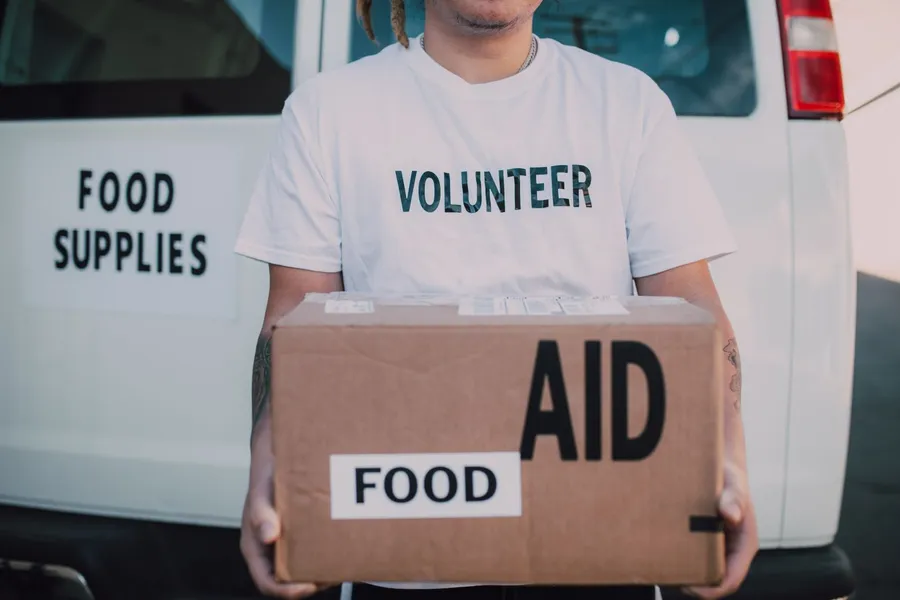
About money. The Red Cross lists “Providing emergency financial assistance in the immediate aftermath of a disaster” as part of its work. We did not find a dollar amount for home fires on any national Red Cross page. What you get after a single house fire is decided locally. Ask the volunteer or caseworker directly: “Is there financial assistance, and what do I need to show?”
Cash Help After a Big Disaster: The Written Rules
After large disasters — hurricanes, floods, tornadoes — the Red Cross posts the rules for its damage-based disaster assistance. On its Hurricane Lowell page (Kauaʻi, Hawaii, open on September 19, 2026), a household must meet all three:
- Your main home before the disaster (renter or homeowner) was in the confirmed disaster area.
- The head of household shows proof of identity and where you lived.
- Your main home was destroyed or has significant structural damage that needs extensive repairs.
The page shows examples. A home with “more than 18 inches of water in the first floor living space” qualifies. A home “that can be lived in while repairs are made is not eligible.” Renters count the same as owners.
- Bring a photo ID. Accepted IDs include a state ID, a Tribal ID, “A consular ID,” “A passport from another country,” a green card and a work permit with your photo.
- No ID? You can still come. But “Your case will not be opened the same day,” and a caseworker calls within 7 days.
- Not a loan. “Red Cross disaster assistance is not a loan and does not need to be repaid.”
- Registration can close. The Red Cross’s 2026 Wisconsin tornado page now says “The initial registration for immediate financial assistance has closed.” If you are in a disaster area, go early.
”Is This Red Cross Text Real?”
After a big disaster, the Red Cross may text people whose homes records show as damaged. Its sample text says to call 1-800-733-2767 with a reference number and ends: “We won’t ask for bank / social security info.”
That line matters. FEMA’s application does ask for your Social Security number and bank account, according to USAGov. The Red Cross invitation does not. So:
- Don’t tap links in a text. Call 1-800-733-2767 yourself.
- Anyone who says they are the Red Cross and asks for your bank or Social Security number is not following the Red Cross’s own script. Hang up.
No Papers? You Can Still Get Help
The Red Cross is clear on this. “We don’t require people to show any kind of identification to enter a Red Cross shelter, just their name and where they were living before the disaster.” For money, it “will only request documents to verify an individual’s identity and where they lived before a disaster.” It says people “do not need to be American citizens” to get its help, and that its workers “will not question individuals about their citizenship status.”
If you or someone in your family worries about immigration, you may also want our guide on emergency Medicaid, which covers emergency care regardless of immigration status.
Pets: Read the Fine Print
The shelter page says “Pets are welcome.” The FAQ lists “pet sheltering” among services “not provided by the Red Cross.” Both are true: the shelter page explains that “pets may need to be housed in a different location,” in pet shelters “supported by animal welfare groups.” Service animals are always welcome and are not counted as pets. Bring your pet, and a shelter worker will help sort it out when you arrive.
The Next Weeks: Money, Papers and a Place to Live

The Red Cross’s Recovering Financially page gives practical steps:
- Stop the bills for a home you can’t live in. Tell the utility and phone companies “so they can stop billing immediately.”
- Call your creditors before the due date and ask for more time.
- Call your insurance company (renter’s or homeowner’s) as soon as you can. Keep receipts for hotels and supplies. Don’t throw out damaged items before the adjuster sees them.
- Replace lost documents. Social Security cards: 1-800-772-1213. Driver’s license: your state DMV. Birth certificates: your state’s vital records office.
For rent, deposits and furniture, the Red Cross itself points to its Resource Directory, which is “powered by findhelp.” These charities and services may also help:
- 211 — one free call to find local rent, deposit and utility help.
- The Salvation Army — local service centers with emergency help for rent and bills.
- Catholic Charities — housing help for people of any religion.
- St. Vincent de Paul — person-to-person home visits and rent help.
- Food stamps (SNAP) — if your income dropped or you lost food in the fire, apply or tell your SNAP office about the change.
- Free legal aid — if you rent and your landlord is refusing repairs or keeping your deposit.
What About FEMA?
FEMA is the federal government’s disaster agency, but it has a hard rule. USAGov says: “You must live in a presidentially declared disaster area to receive financial assistance from FEMA.” A single house fire almost never gets that declaration.
When there is no declaration, USAGov sends people to the Red Cross “if it is offering assistance near you” and to your state social services agency. If your fire was part of a declared wildfire or other big disaster, apply at DisasterAssistance.gov or call 1-800-621-3362. That is FEMA’s official application site.
Before the Next One: Free Smoke Alarms
The Red Cross installs smoke alarms for free. Its Sound the Alarm page says you can “Sign up for a home fire safety visit, including a FREE smoke alarm installation for your household, from your local Red Cross.” It adds that “Availability depends on your location.” It also says working smoke alarms “can cut the risk of death by half.” Sign up with your ZIP code on the Sound the Alarm page.
How We Checked This
What we opened and read ourselves, on September 19, 2026. The American Red Cross’s Disaster Relief page, its home fire recovery page, the shelter and service-site page, the FAQ (Getting Assistance section), the Hurricane Lowell assistance page in English and its Spanish section, the 2026 Wisconsin tornado page, Recovering Financially, the Resource Directory, Sound the Alarm, the Disaster Action Team page, the Spanish Obtener Ayuda page and USAGov’s How to apply for disaster assistance page.
Something you only see in the source itself. The Red Cross’s Disaster Relief page has a link labeled “Home Fire Relief.” It does not open a relief page. It opens the Home Fire Campaign — a smoke-alarm prevention and volunteer page with nothing on how to get help after a fire. The only instruction we found for someone whose home just burned is one line on a separate page: “please contact your local Red Cross.” That is why this guide puts the phone number first.
A second one, for Spanish readers. On the Hurricane Lowell page, the top line says “Para español, desplácese hacia abajo o haga clic aquí.” The “haga clic aquí” link goes to the 2026 Wisconsin tornado page, where registration “has closed.” The real Spanish text is further down the same Lowell page. The Spanish section also says a DMV representative will be at the service center to issue a temporary license. The English section does not say that. And the Spanish Get Help page marks the local chapter finder “(en inglés).”
Where the common belief and the source do not match.
- “The Red Cross hands every fire family a set amount of cash.” No national page gives an amount. Financial help is “for those who qualify,” and what you get after a single house fire is decided locally.
- “You need ID to go to a shelter.” No — “just their name and where they were living before the disaster.”
- “Only homeowners qualify.” The rule says “renter or homeowner.”
- “Any damage qualifies after a hurricane.” A home “that can be lived in while repairs are made is not eligible.”
- “FEMA will help after my fire.” Only in a “presidentially declared disaster area.”
- “The Red Cross replaces food from a power outage.” The FAQ answers “No.”
What we could not check.
- We did not call any Red Cross chapter. We cannot say what a given chapter gives after a single house fire, how much money, or how fast.
- No dollar amount. No national Red Cross page we read lists a dollar figure for home fire or damage-based assistance.
- The chapter finder needs a ZIP code and returns results by script; we did not test it by ZIP.
- fema.gov and DisasterAssistance.gov returned HTTP 403 to us, so the FEMA rules above come from USAGov’s page, not FEMA’s own.
- The 65,000 figure. The Disaster Relief page says “about 65,000 disasters every year”; the Disaster Action Team page says “over 60,000 emergencies.” We use the first and note both.
- The Hurricane Lowell page is temporary. Service-site hours, the invitation texts and the Spanish link may change or disappear after that response ends.
The American Red Cross is a nonprofit, not a government agency. Its services and rules vary by disaster and by local chapter. FEMA rules are federal and apply only in declared disaster areas.
Last updated: September 19, 2026
This is general information, not legal or financial advice.
Frequently Asked Questions
Does the Red Cross help after a house fire?
Yes. The Red Cross says "The vast majority of disasters we respond to are home fires," and its home fire page tells you: "If you need help after a home fire, please contact your local Red Cross." You can also call 1-800-RED-CROSS (1-800-733-2767). Call yourself — do not wait for someone else to call for you.
Does the Red Cross give you money after a fire?
Sometimes, and not the same way everywhere. The Red Cross lists "emergency financial assistance in the immediate aftermath of a disaster" as part of its work, and its service sites offer caseworkers for "financial assistance (for those who qualify)." We could not find a published dollar amount on any national Red Cross page. Ask the Red Cross worker or caseworker what your chapter can give. After large disasters, the rules are written down: your main home had to be destroyed or badly damaged, and you need proof of who you are and where you lived.
Do I need ID or papers to get help?
Not for a shelter. The Red Cross says it does not "require people to show any kind of identification to enter a Red Cross shelter, just their name and where they were living before the disaster." For financial assistance, it asks only for documents that show your identity and where you lived before the disaster — a consular ID or a passport from another country counts. It says you "do not need to be American citizens" to get help.
Does the Red Cross pay rent or utility bills?
Not as an ongoing program. The Red Cross says its purpose is "to meet the immediate disaster-caused needs" of families. For rent or bills that are not caused by a disaster, it points people to its Resource Directory, run by findhelp. The better calls for that are 211, the Salvation Army, Catholic Charities and St. Vincent de Paul.
Can FEMA help me after a house fire?
Usually not. USAGov says "You must live in a presidentially declared disaster area to receive financial assistance from FEMA." A single house fire is almost never a declared disaster. When there is no declaration, USAGov itself sends people to the Red Cross and to state social service agencies.
I got a text saying the Red Cross wants me to apply. Is it a scam?
It might be real. After Hurricane Lowell, the Red Cross posted a sample text that asks you to call 1-800-733-2767 with a reference number and says "We won't ask for bank / social security info." Don't tap links in the text. Call 1-800-733-2767 yourself. If someone asks for your bank or Social Security number, hang up.
Sources
- American Red Cross — Disaster Relief, read September 19, 2026 ("We respond to an emergency every 8 minutes."; "From small house fires to multi-state natural disasters, the American Red Cross goes wherever we're needed"; "We respond to an average of about 65,000 disasters every year"; "95% of our disaster relief workers are volunteers"; "The vast majority of disasters we respond to are home fires"; "Our purpose is to meet the immediate disaster-caused needs of individuals, families, and communities."; recovery work includes "Providing emergency financial assistance in the immediate aftermath of a disaster"; "The Red Cross is a charity, not a government agency, and individuals who have disaster-caused needs do not need to be American citizens to access our services."; "The Red Cross will only request documents to verify an individual's identity and where they lived before a disaster when providing financial assistance."; the page's "Home Fire Relief" link opens the Home Fire Campaign page)
- American Red Cross — Recovering After a Fire, read September 19, 2026 ("If you need help after a home fire, please contact your local Red Cross"; first steps: call 9-1-1, let friends and family know you are safe, get injured people and animals to medical or veterinary help, "Stay out of fire-damaged homes until local fire authorities say it is safe to re-enter."; "Discard any food that has been exposed to heat, smoke or soot.")
- American Red Cross — Find Open Shelters and Disaster Relief Services, read September 19, 2026 ("American Red Cross services, including food and shelter, are always provided at no cost"; service sites offer meals, first aid, "Refilling lost prescriptions," "Replacing lost eyeglasses," charging stations, clean-up supplies and "Access to caseworkers who can help you with disaster recovery planning and financial assistance (for those who qualify)"; "We don't require people to show any kind of identification to enter a Red Cross shelter, just their name and where they were living before the disaster."; "Pets are welcome" and "depending on the situation, pets may need to be housed in a different location"; "Service animals are always welcome"; "If your home will not be ready right away, we will help you locate transitional housing.")
- American Red Cross — FAQ, Getting Assistance, read September 19, 2026 ("Please contact your local chapter or 1-800-RED-CROSS for immediate assistance following a disaster."; "Once emergent needs are met the Red Cross works one-on-one with clients to help them plan their recovery."; "Will the Red Cross replace groceries or food lost because of a power outage? No."; services "not provided by the Red Cross" include "evacuation coordination, search and rescue, advanced medical care, pet sheltering and medical sheltering"; the donor line is 1-800-RED CROSS (1-800-733-2767))
- American Red Cross — Hurricane Lowell Disaster Assistance, read September 19, 2026 (three requirements: "Pre-disaster primary residence (renter or homeowner) in a confirmed disaster-impacted geographic area," "Head of household provides proof of identity and residence," "Primary residence was destroyed or suffered significant structural damage that requires extensive repairs"; accepted photo IDs include a state ID, a Tribal ID, "A consular ID," "A passport from another country"; "If we are unable to complete your case on site, then we will contact you within 7 days."; without a photo ID "Your case will not be opened the same day"; examples: a home "is considered eligible for assistance because it has more than 18 inches of water in the first floor living space" and "A home that can be lived in while repairs are made is not eligible"; sample invitation text: "Call 1-800-733-2767 by [Date] with reference #[Reference Number]. We won't ask for bank / social security info."; "Red Cross disaster assistance is not a loan and does not need to be repaid."; the Spanish "haga clic aquí" link at the top points to the 2026 Wisconsin tornadoes page)
- American Red Cross — 2026 Tornadoes in Wisconsin, Financial Assistance, read September 19, 2026 ("The initial registration for immediate financial assistance has closed."; "If you have received an invitation to apply for financial assistance, please call 1-800-RED-CROSS (800-733-2767)")
- American Red Cross — Recovering Financially, read September 19, 2026 ("notify the utility company and other service companies, such as the phone company, so they can stop billing immediately"; "Call any creditors and ask for more time to pay."; a table of where to replace lost documents, with Social Security at 1-800-772-1213)
- American Red Cross — Resource Directory, read September 19, 2026 ("The Red Cross Resource Directory is powered by findhelp, a social care network that connects people with free and reduced cost services in local communities.")
- American Red Cross — Sound the Alarm, read September 19, 2026 ("Sign up for a home fire safety visit, including a FREE smoke alarm installation for your household, from your local Red Cross."; "Availability depends on your location."; "Home fires claim seven lives every day, but having working smoke alarms can cut the risk of death by half.")
- American Red Cross — Disaster Action Team volunteer page, read September 19, 2026 ("Every year, the Red Cross responds to over 60,000 emergencies—most are local, personal crises like home fires."; volunteers are "always ready—24/7, 365 days a year")
- American Red Cross — Obtener Ayuda (Spanish Get Help page), read September 19, 2026 ("contacte con la Cruz Roja local (en inglés)" — the local chapter finder is English-only)
- USAGov — How to apply for disaster assistance, last updated March 23, 2026, read September 19, 2026 ("You must live in a presidentially declared disaster area to receive financial assistance from FEMA."; apply at DisasterAssistance.gov, the FEMA app, 1-800-621-3362 or a Disaster Recovery Center; you will need "Your Social Security number" and "Bank account information for direct deposit"; "If the disaster you experienced was not declared an emergency federally… You may be able to get free shelter and food through the Red Cross")
Keep reading
- Habitat for Humanity 2026: Who Qualifies & How to Apply Affordable-mortgage homeownership and home repairs through local Habitat affiliates Read guide →
- Salvation Army Rent & Utility Bill Help 2026: How to Apply Emergency rent, mortgage, and utility bill help at 6,400 local Salvation Army service centers Read guide →
- Can You Get Section 8 With an Eviction? 2026 HUD Rules HUD's 5-year eviction rule only covers evictions from federally assisted housing — and Chicago and Philadelphia both cut that look-back to 3 years Read guide →
This is general information, not legal or financial advice.